


Read the exclusions and the claims process section. Where do repairs happen? Is there an approved network? Is a courtesy car included, and for how long? Who decides the valuation in a total loss, and is there an independent appeal route? In several European markets there is an ombudsman or supervisory authority you can escalate to — knowing that before a claim is worth more than a 5% discount.
- Vehicle details: model, trim, engine, current mileage
- Accurate annual mileage and usage type
- Storage: garage, driveway, street
- Driver history and named drivers
- Coverage limits and third-party liability
- Deductible level, normalised across quotes
- Valuation method: agreed value, actual cash value or stated value
- Exclusions: track use, paint, tires, roof, modifications
- Claims process, repair network and escalation route
Run that checklist three times, with three insurers, and you will know more about your own coverage than most people learn in a decade of renewing automatically.
Frequently asked questions
Is sports car insurance more expensive than regular car insurance?
Generally yes, because sports cars cost more to repair, carry higher horsepower and present greater theft appeal. The exact premium still depends on the model, driver, location, annual mileage, deductible and coverage type — a low-value sports car driven carefully by an experienced driver can price close to a family hatchback.
What is the cheapest sports car to insure in 2026?
The available 2026 data places the Mazda Miata at the low end, at roughly $1,980 per year. That is a market average, not a quote — your own figure will move with your driver profile, mileage, deductible and location.
Do I need special insurance for a sports car?
Not always. A standard auto policy can cover a sports car perfectly well. A specialist policy becomes worthwhile when you need agreed value, scheduled modifications, low-mileage pricing or an exotic repair network. Compare policy wording, not the insurer’s label.
Does sports car insurance cover modifications?
Only when they are declared and the policy schedules them. Undisclosed modifications create a valuation gap and can give the insurer grounds to reduce or refuse a claim — even where the modification had nothing to do with the damage.
How much does full coverage sports car insurance cost per month?
The 2026 average monthly cost for full coverage is $416. That is a national average across the category; model-level costs range from around $165 per month for a Mazda Miata to around $591 per month for a Maserati Quattroporte.
Can I get cheap sports car insurance with low annual mileage?
Often, yes. Low annual mileage — 4,000 miles a year, for example — is one of the strongest rating signals available, and specialist or collector-style policies price limited-mileage use aggressively. Confirm the mileage cap in writing and never exceed it without notifying the insurer.
What is agreed value coverage for a sports car?
Agreed value coverage pays a pre-agreed sum if the car is written off, instead of a depreciated actual cash value. It is particularly useful for exotics, modified cars and appreciating models, but it usually comes with mileage limits, secure storage requirements and a valuation on file.
The bottom line on sports car coverage
Four things matter more than anything else in this market. Costs vary enormously by model — from roughly $1,980 a year for a Mazda Miata to roughly $7,090 for a Maserati Quattroporte, against a $1,726 annual and $416 monthly full coverage average. Coverage structure beats headline price: valuation method, deductible and add-ons decide what you actually receive. Disclosure protects the claim: modifications, mileage and usage must be declared in writing. And you should compare specialist and standard quotes side by side before choosing.
To put it plainly: the industry is not designed to make this easy. It is designed to make the default option feel safe. Renewing automatically, accepting the cheapest screen result, assuming the policy covers the car you actually built — those are the three decisions that generate most of the claim files I used to handle.
If I were renewing a sports car policy myself this month, I would spend one hour with a modification list, an honest mileage figure and three quotes normalised to the same deductible, then read the valuation clause twice. That hour protects more value than any discount code will ever save.
So before you renew, ask the only question that really matters: if I filed a claim tomorrow, would this sports car coverage replace my car at the value I believe it is worth? If you cannot answer that with confidence, you have not finished shopping yet.
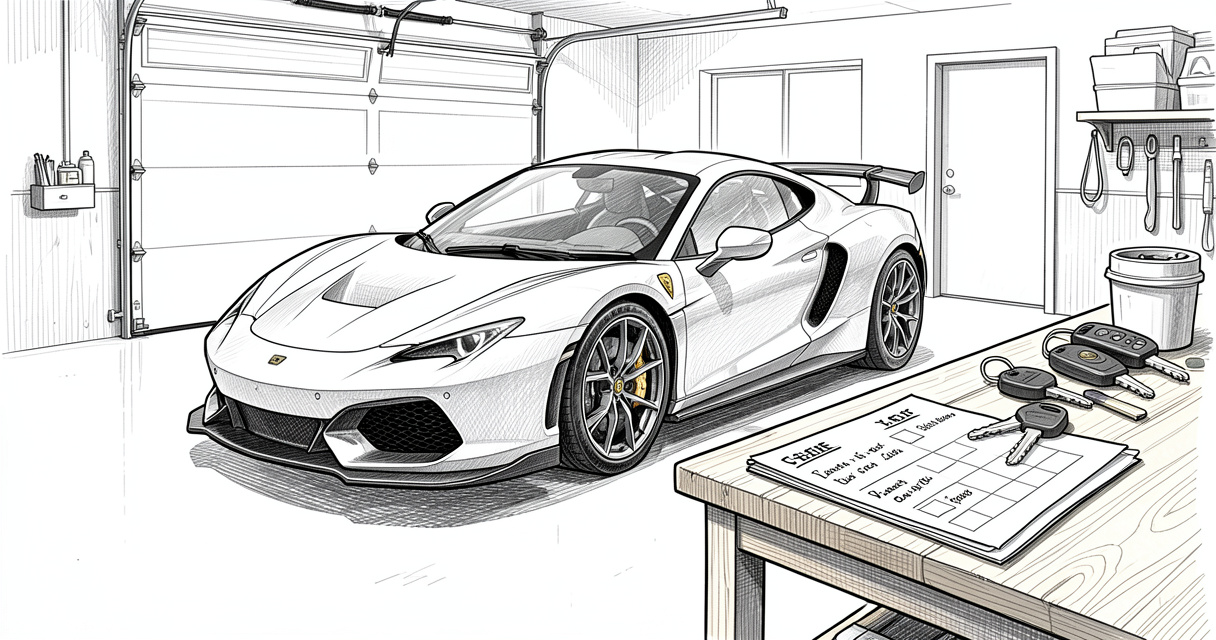
Two quotes that differ by $300 a year rarely differ only in price. One may settle on actual cash value, exclude cosmetic paint repairs, or require a higher excess for theft. Normalise the deductible, the limits and the valuation method across every quote before you compare a single figure.
Review Exclusions Before You Buy
Read the exclusions and the claims process section. Where do repairs happen? Is there an approved network? Is a courtesy car included, and for how long? Who decides the valuation in a total loss, and is there an independent appeal route? In several European markets there is an ombudsman or supervisory authority you can escalate to — knowing that before a claim is worth more than a 5% discount.
- Vehicle details: model, trim, engine, current mileage
- Accurate annual mileage and usage type
- Storage: garage, driveway, street
- Driver history and named drivers
- Coverage limits and third-party liability
- Deductible level, normalised across quotes
- Valuation method: agreed value, actual cash value or stated value
- Exclusions: track use, paint, tires, roof, modifications
- Claims process, repair network and escalation route
Run that checklist three times, with three insurers, and you will know more about your own coverage than most people learn in a decade of renewing automatically.
Frequently asked questions
Is sports car insurance more expensive than regular car insurance?
Generally yes, because sports cars cost more to repair, carry higher horsepower and present greater theft appeal. The exact premium still depends on the model, driver, location, annual mileage, deductible and coverage type — a low-value sports car driven carefully by an experienced driver can price close to a family hatchback.
What is the cheapest sports car to insure in 2026?
The available 2026 data places the Mazda Miata at the low end, at roughly $1,980 per year. That is a market average, not a quote — your own figure will move with your driver profile, mileage, deductible and location.
Do I need special insurance for a sports car?
Not always. A standard auto policy can cover a sports car perfectly well. A specialist policy becomes worthwhile when you need agreed value, scheduled modifications, low-mileage pricing or an exotic repair network. Compare policy wording, not the insurer’s label.
Does sports car insurance cover modifications?
Only when they are declared and the policy schedules them. Undisclosed modifications create a valuation gap and can give the insurer grounds to reduce or refuse a claim — even where the modification had nothing to do with the damage.
How much does full coverage sports car insurance cost per month?
The 2026 average monthly cost for full coverage is $416. That is a national average across the category; model-level costs range from around $165 per month for a Mazda Miata to around $591 per month for a Maserati Quattroporte.
Can I get cheap sports car insurance with low annual mileage?
Often, yes. Low annual mileage — 4,000 miles a year, for example — is one of the strongest rating signals available, and specialist or collector-style policies price limited-mileage use aggressively. Confirm the mileage cap in writing and never exceed it without notifying the insurer.
What is agreed value coverage for a sports car?
Agreed value coverage pays a pre-agreed sum if the car is written off, instead of a depreciated actual cash value. It is particularly useful for exotics, modified cars and appreciating models, but it usually comes with mileage limits, secure storage requirements and a valuation on file.
The bottom line on sports car coverage
Four things matter more than anything else in this market. Costs vary enormously by model — from roughly $1,980 a year for a Mazda Miata to roughly $7,090 for a Maserati Quattroporte, against a $1,726 annual and $416 monthly full coverage average. Coverage structure beats headline price: valuation method, deductible and add-ons decide what you actually receive. Disclosure protects the claim: modifications, mileage and usage must be declared in writing. And you should compare specialist and standard quotes side by side before choosing.
To put it plainly: the industry is not designed to make this easy. It is designed to make the default option feel safe. Renewing automatically, accepting the cheapest screen result, assuming the policy covers the car you actually built — those are the three decisions that generate most of the claim files I used to handle.
If I were renewing a sports car policy myself this month, I would spend one hour with a modification list, an honest mileage figure and three quotes normalised to the same deductible, then read the valuation clause twice. That hour protects more value than any discount code will ever save.
So before you renew, ask the only question that really matters: if I filed a claim tomorrow, would this sports car coverage replace my car at the value I believe it is worth? If you cannot answer that with confidence, you have not finished shopping yet.
What details do I need for a sports car insurance quote? Registration, exact model and trim, engine code, current mileage, annual mileage estimate, storage location and type, security devices, driver licence details, claims history for the last five years, and a complete list of modifications with values. Have the modification list written down before you start — not reconstructed from memory mid-call.
Compare Coverage, Not Just Price
Two quotes that differ by $300 a year rarely differ only in price. One may settle on actual cash value, exclude cosmetic paint repairs, or require a higher excess for theft. Normalise the deductible, the limits and the valuation method across every quote before you compare a single figure.
Review Exclusions Before You Buy
Read the exclusions and the claims process section. Where do repairs happen? Is there an approved network? Is a courtesy car included, and for how long? Who decides the valuation in a total loss, and is there an independent appeal route? In several European markets there is an ombudsman or supervisory authority you can escalate to — knowing that before a claim is worth more than a 5% discount.
- Vehicle details: model, trim, engine, current mileage
- Accurate annual mileage and usage type
- Storage: garage, driveway, street
- Driver history and named drivers
- Coverage limits and third-party liability
- Deductible level, normalised across quotes
- Valuation method: agreed value, actual cash value or stated value
- Exclusions: track use, paint, tires, roof, modifications
- Claims process, repair network and escalation route
Run that checklist three times, with three insurers, and you will know more about your own coverage than most people learn in a decade of renewing automatically.
Frequently asked questions
Is sports car insurance more expensive than regular car insurance?
Generally yes, because sports cars cost more to repair, carry higher horsepower and present greater theft appeal. The exact premium still depends on the model, driver, location, annual mileage, deductible and coverage type — a low-value sports car driven carefully by an experienced driver can price close to a family hatchback.
What is the cheapest sports car to insure in 2026?
The available 2026 data places the Mazda Miata at the low end, at roughly $1,980 per year. That is a market average, not a quote — your own figure will move with your driver profile, mileage, deductible and location.
Do I need special insurance for a sports car?
Not always. A standard auto policy can cover a sports car perfectly well. A specialist policy becomes worthwhile when you need agreed value, scheduled modifications, low-mileage pricing or an exotic repair network. Compare policy wording, not the insurer’s label.
Does sports car insurance cover modifications?
Only when they are declared and the policy schedules them. Undisclosed modifications create a valuation gap and can give the insurer grounds to reduce or refuse a claim — even where the modification had nothing to do with the damage.
How much does full coverage sports car insurance cost per month?
The 2026 average monthly cost for full coverage is $416. That is a national average across the category; model-level costs range from around $165 per month for a Mazda Miata to around $591 per month for a Maserati Quattroporte.
Can I get cheap sports car insurance with low annual mileage?
Often, yes. Low annual mileage — 4,000 miles a year, for example — is one of the strongest rating signals available, and specialist or collector-style policies price limited-mileage use aggressively. Confirm the mileage cap in writing and never exceed it without notifying the insurer.
What is agreed value coverage for a sports car?
Agreed value coverage pays a pre-agreed sum if the car is written off, instead of a depreciated actual cash value. It is particularly useful for exotics, modified cars and appreciating models, but it usually comes with mileage limits, secure storage requirements and a valuation on file.
The bottom line on sports car coverage
Four things matter more than anything else in this market. Costs vary enormously by model — from roughly $1,980 a year for a Mazda Miata to roughly $7,090 for a Maserati Quattroporte, against a $1,726 annual and $416 monthly full coverage average. Coverage structure beats headline price: valuation method, deductible and add-ons decide what you actually receive. Disclosure protects the claim: modifications, mileage and usage must be declared in writing. And you should compare specialist and standard quotes side by side before choosing.
To put it plainly: the industry is not designed to make this easy. It is designed to make the default option feel safe. Renewing automatically, accepting the cheapest screen result, assuming the policy covers the car you actually built — those are the three decisions that generate most of the claim files I used to handle.
If I were renewing a sports car policy myself this month, I would spend one hour with a modification list, an honest mileage figure and three quotes normalised to the same deductible, then read the valuation clause twice. That hour protects more value than any discount code will ever save.
So before you renew, ask the only question that really matters: if I filed a claim tomorrow, would this sports car coverage replace my car at the value I believe it is worth? If you cannot answer that with confidence, you have not finished shopping yet.
How do I compare sports car insurance quotes? With identical inputs, at least three insurers, and the coverage compared line by line rather than the price compared at the bottom.
Prepare Your Vehicle and Driver Details
What details do I need for a sports car insurance quote? Registration, exact model and trim, engine code, current mileage, annual mileage estimate, storage location and type, security devices, driver licence details, claims history for the last five years, and a complete list of modifications with values. Have the modification list written down before you start — not reconstructed from memory mid-call.
Compare Coverage, Not Just Price
Two quotes that differ by $300 a year rarely differ only in price. One may settle on actual cash value, exclude cosmetic paint repairs, or require a higher excess for theft. Normalise the deductible, the limits and the valuation method across every quote before you compare a single figure.
Review Exclusions Before You Buy
Read the exclusions and the claims process section. Where do repairs happen? Is there an approved network? Is a courtesy car included, and for how long? Who decides the valuation in a total loss, and is there an independent appeal route? In several European markets there is an ombudsman or supervisory authority you can escalate to — knowing that before a claim is worth more than a 5% discount.
- Vehicle details: model, trim, engine, current mileage
- Accurate annual mileage and usage type
- Storage: garage, driveway, street
- Driver history and named drivers
- Coverage limits and third-party liability
- Deductible level, normalised across quotes
- Valuation method: agreed value, actual cash value or stated value
- Exclusions: track use, paint, tires, roof, modifications
- Claims process, repair network and escalation route
Run that checklist three times, with three insurers, and you will know more about your own coverage than most people learn in a decade of renewing automatically.
Frequently asked questions
Is sports car insurance more expensive than regular car insurance?
Generally yes, because sports cars cost more to repair, carry higher horsepower and present greater theft appeal. The exact premium still depends on the model, driver, location, annual mileage, deductible and coverage type — a low-value sports car driven carefully by an experienced driver can price close to a family hatchback.
What is the cheapest sports car to insure in 2026?
The available 2026 data places the Mazda Miata at the low end, at roughly $1,980 per year. That is a market average, not a quote — your own figure will move with your driver profile, mileage, deductible and location.
Do I need special insurance for a sports car?
Not always. A standard auto policy can cover a sports car perfectly well. A specialist policy becomes worthwhile when you need agreed value, scheduled modifications, low-mileage pricing or an exotic repair network. Compare policy wording, not the insurer’s label.
Does sports car insurance cover modifications?
Only when they are declared and the policy schedules them. Undisclosed modifications create a valuation gap and can give the insurer grounds to reduce or refuse a claim — even where the modification had nothing to do with the damage.
How much does full coverage sports car insurance cost per month?
The 2026 average monthly cost for full coverage is $416. That is a national average across the category; model-level costs range from around $165 per month for a Mazda Miata to around $591 per month for a Maserati Quattroporte.
Can I get cheap sports car insurance with low annual mileage?
Often, yes. Low annual mileage — 4,000 miles a year, for example — is one of the strongest rating signals available, and specialist or collector-style policies price limited-mileage use aggressively. Confirm the mileage cap in writing and never exceed it without notifying the insurer.
What is agreed value coverage for a sports car?
Agreed value coverage pays a pre-agreed sum if the car is written off, instead of a depreciated actual cash value. It is particularly useful for exotics, modified cars and appreciating models, but it usually comes with mileage limits, secure storage requirements and a valuation on file.
The bottom line on sports car coverage
Four things matter more than anything else in this market. Costs vary enormously by model — from roughly $1,980 a year for a Mazda Miata to roughly $7,090 for a Maserati Quattroporte, against a $1,726 annual and $416 monthly full coverage average. Coverage structure beats headline price: valuation method, deductible and add-ons decide what you actually receive. Disclosure protects the claim: modifications, mileage and usage must be declared in writing. And you should compare specialist and standard quotes side by side before choosing.
To put it plainly: the industry is not designed to make this easy. It is designed to make the default option feel safe. Renewing automatically, accepting the cheapest screen result, assuming the policy covers the car you actually built — those are the three decisions that generate most of the claim files I used to handle.
If I were renewing a sports car policy myself this month, I would spend one hour with a modification list, an honest mileage figure and three quotes normalised to the same deductible, then read the valuation clause twice. That hour protects more value than any discount code will ever save.
So before you renew, ask the only question that really matters: if I filed a claim tomorrow, would this sports car coverage replace my car at the value I believe it is worth? If you cannot answer that with confidence, you have not finished shopping yet.
Declaring 4,000 miles and driving 12,000 is a material misrepresentation, not a rounding error. Assuming track or competition use is covered is the other classic: timed events, driver training with timing, and any circuit activity are excluded under virtually every standard and specialist policy unless explicitly added.
Claim denial risks: undisclosed modifications, understated annual mileage, undeclared commuting, track or competition use, unsecured storage where the policy requires a garage, and unreported changes of address. Each is avoidable with a single written declaration at inception.
Every one of those risks is eliminated by a disciplined quote process — which is the last thing to get right.
Step-by-Step: How to Compare Sports Car Insurance Quotes in 2026
How do I compare sports car insurance quotes? With identical inputs, at least three insurers, and the coverage compared line by line rather than the price compared at the bottom.
Prepare Your Vehicle and Driver Details
What details do I need for a sports car insurance quote? Registration, exact model and trim, engine code, current mileage, annual mileage estimate, storage location and type, security devices, driver licence details, claims history for the last five years, and a complete list of modifications with values. Have the modification list written down before you start — not reconstructed from memory mid-call.
Compare Coverage, Not Just Price
Two quotes that differ by $300 a year rarely differ only in price. One may settle on actual cash value, exclude cosmetic paint repairs, or require a higher excess for theft. Normalise the deductible, the limits and the valuation method across every quote before you compare a single figure.
Review Exclusions Before You Buy
Read the exclusions and the claims process section. Where do repairs happen? Is there an approved network? Is a courtesy car included, and for how long? Who decides the valuation in a total loss, and is there an independent appeal route? In several European markets there is an ombudsman or supervisory authority you can escalate to — knowing that before a claim is worth more than a 5% discount.
- Vehicle details: model, trim, engine, current mileage
- Accurate annual mileage and usage type
- Storage: garage, driveway, street
- Driver history and named drivers
- Coverage limits and third-party liability
- Deductible level, normalised across quotes
- Valuation method: agreed value, actual cash value or stated value
- Exclusions: track use, paint, tires, roof, modifications
- Claims process, repair network and escalation route
Run that checklist three times, with three insurers, and you will know more about your own coverage than most people learn in a decade of renewing automatically.
Frequently asked questions
Is sports car insurance more expensive than regular car insurance?
Generally yes, because sports cars cost more to repair, carry higher horsepower and present greater theft appeal. The exact premium still depends on the model, driver, location, annual mileage, deductible and coverage type — a low-value sports car driven carefully by an experienced driver can price close to a family hatchback.
What is the cheapest sports car to insure in 2026?
The available 2026 data places the Mazda Miata at the low end, at roughly $1,980 per year. That is a market average, not a quote — your own figure will move with your driver profile, mileage, deductible and location.
Do I need special insurance for a sports car?
Not always. A standard auto policy can cover a sports car perfectly well. A specialist policy becomes worthwhile when you need agreed value, scheduled modifications, low-mileage pricing or an exotic repair network. Compare policy wording, not the insurer’s label.
Does sports car insurance cover modifications?
Only when they are declared and the policy schedules them. Undisclosed modifications create a valuation gap and can give the insurer grounds to reduce or refuse a claim — even where the modification had nothing to do with the damage.
How much does full coverage sports car insurance cost per month?
The 2026 average monthly cost for full coverage is $416. That is a national average across the category; model-level costs range from around $165 per month for a Mazda Miata to around $591 per month for a Maserati Quattroporte.
Can I get cheap sports car insurance with low annual mileage?
Often, yes. Low annual mileage — 4,000 miles a year, for example — is one of the strongest rating signals available, and specialist or collector-style policies price limited-mileage use aggressively. Confirm the mileage cap in writing and never exceed it without notifying the insurer.
What is agreed value coverage for a sports car?
Agreed value coverage pays a pre-agreed sum if the car is written off, instead of a depreciated actual cash value. It is particularly useful for exotics, modified cars and appreciating models, but it usually comes with mileage limits, secure storage requirements and a valuation on file.
The bottom line on sports car coverage
Four things matter more than anything else in this market. Costs vary enormously by model — from roughly $1,980 a year for a Mazda Miata to roughly $7,090 for a Maserati Quattroporte, against a $1,726 annual and $416 monthly full coverage average. Coverage structure beats headline price: valuation method, deductible and add-ons decide what you actually receive. Disclosure protects the claim: modifications, mileage and usage must be declared in writing. And you should compare specialist and standard quotes side by side before choosing.
To put it plainly: the industry is not designed to make this easy. It is designed to make the default option feel safe. Renewing automatically, accepting the cheapest screen result, assuming the policy covers the car you actually built — those are the three decisions that generate most of the claim files I used to handle.
If I were renewing a sports car policy myself this month, I would spend one hour with a modification list, an honest mileage figure and three quotes normalised to the same deductible, then read the valuation clause twice. That hour protects more value than any discount code will ever save.
So before you renew, ask the only question that really matters: if I filed a claim tomorrow, would this sports car coverage replace my car at the value I believe it is worth? If you cannot answer that with confidence, you have not finished shopping yet.
The fix is documentation. Photographs, invoices, a professional valuation, service history — assembled before anything happens, not after.
Usage and Mileage Mismatches
Declaring 4,000 miles and driving 12,000 is a material misrepresentation, not a rounding error. Assuming track or competition use is covered is the other classic: timed events, driver training with timing, and any circuit activity are excluded under virtually every standard and specialist policy unless explicitly added.
Claim denial risks: undisclosed modifications, understated annual mileage, undeclared commuting, track or competition use, unsecured storage where the policy requires a garage, and unreported changes of address. Each is avoidable with a single written declaration at inception.
Every one of those risks is eliminated by a disciplined quote process — which is the last thing to get right.
Step-by-Step: How to Compare Sports Car Insurance Quotes in 2026
How do I compare sports car insurance quotes? With identical inputs, at least three insurers, and the coverage compared line by line rather than the price compared at the bottom.
Prepare Your Vehicle and Driver Details
What details do I need for a sports car insurance quote? Registration, exact model and trim, engine code, current mileage, annual mileage estimate, storage location and type, security devices, driver licence details, claims history for the last five years, and a complete list of modifications with values. Have the modification list written down before you start — not reconstructed from memory mid-call.
Compare Coverage, Not Just Price
Two quotes that differ by $300 a year rarely differ only in price. One may settle on actual cash value, exclude cosmetic paint repairs, or require a higher excess for theft. Normalise the deductible, the limits and the valuation method across every quote before you compare a single figure.
Review Exclusions Before You Buy
Read the exclusions and the claims process section. Where do repairs happen? Is there an approved network? Is a courtesy car included, and for how long? Who decides the valuation in a total loss, and is there an independent appeal route? In several European markets there is an ombudsman or supervisory authority you can escalate to — knowing that before a claim is worth more than a 5% discount.
- Vehicle details: model, trim, engine, current mileage
- Accurate annual mileage and usage type
- Storage: garage, driveway, street
- Driver history and named drivers
- Coverage limits and third-party liability
- Deductible level, normalised across quotes
- Valuation method: agreed value, actual cash value or stated value
- Exclusions: track use, paint, tires, roof, modifications
- Claims process, repair network and escalation route
Run that checklist three times, with three insurers, and you will know more about your own coverage than most people learn in a decade of renewing automatically.
Frequently asked questions
Is sports car insurance more expensive than regular car insurance?
Generally yes, because sports cars cost more to repair, carry higher horsepower and present greater theft appeal. The exact premium still depends on the model, driver, location, annual mileage, deductible and coverage type — a low-value sports car driven carefully by an experienced driver can price close to a family hatchback.
What is the cheapest sports car to insure in 2026?
The available 2026 data places the Mazda Miata at the low end, at roughly $1,980 per year. That is a market average, not a quote — your own figure will move with your driver profile, mileage, deductible and location.
Do I need special insurance for a sports car?
Not always. A standard auto policy can cover a sports car perfectly well. A specialist policy becomes worthwhile when you need agreed value, scheduled modifications, low-mileage pricing or an exotic repair network. Compare policy wording, not the insurer’s label.
Does sports car insurance cover modifications?
Only when they are declared and the policy schedules them. Undisclosed modifications create a valuation gap and can give the insurer grounds to reduce or refuse a claim — even where the modification had nothing to do with the damage.
How much does full coverage sports car insurance cost per month?
The 2026 average monthly cost for full coverage is $416. That is a national average across the category; model-level costs range from around $165 per month for a Mazda Miata to around $591 per month for a Maserati Quattroporte.
Can I get cheap sports car insurance with low annual mileage?
Often, yes. Low annual mileage — 4,000 miles a year, for example — is one of the strongest rating signals available, and specialist or collector-style policies price limited-mileage use aggressively. Confirm the mileage cap in writing and never exceed it without notifying the insurer.
What is agreed value coverage for a sports car?
Agreed value coverage pays a pre-agreed sum if the car is written off, instead of a depreciated actual cash value. It is particularly useful for exotics, modified cars and appreciating models, but it usually comes with mileage limits, secure storage requirements and a valuation on file.
The bottom line on sports car coverage
Four things matter more than anything else in this market. Costs vary enormously by model — from roughly $1,980 a year for a Mazda Miata to roughly $7,090 for a Maserati Quattroporte, against a $1,726 annual and $416 monthly full coverage average. Coverage structure beats headline price: valuation method, deductible and add-ons decide what you actually receive. Disclosure protects the claim: modifications, mileage and usage must be declared in writing. And you should compare specialist and standard quotes side by side before choosing.
To put it plainly: the industry is not designed to make this easy. It is designed to make the default option feel safe. Renewing automatically, accepting the cheapest screen result, assuming the policy covers the car you actually built — those are the three decisions that generate most of the claim files I used to handle.
If I were renewing a sports car policy myself this month, I would spend one hour with a modification list, an honest mileage figure and three quotes normalised to the same deductible, then read the valuation clause twice. That hour protects more value than any discount code will ever save.
So before you renew, ask the only question that really matters: if I filed a claim tomorrow, would this sports car coverage replace my car at the value I believe it is worth? If you cannot answer that with confidence, you have not finished shopping yet.
A low premium with actual cash value settlement can produce a payout that leaves you unable to replace the car. On modified or rare vehicles the gap is often widest: the market value of a standard example does not reflect the cost of the build.
The fix is documentation. Photographs, invoices, a professional valuation, service history — assembled before anything happens, not after.
Usage and Mileage Mismatches
Declaring 4,000 miles and driving 12,000 is a material misrepresentation, not a rounding error. Assuming track or competition use is covered is the other classic: timed events, driver training with timing, and any circuit activity are excluded under virtually every standard and specialist policy unless explicitly added.
Claim denial risks: undisclosed modifications, understated annual mileage, undeclared commuting, track or competition use, unsecured storage where the policy requires a garage, and unreported changes of address. Each is avoidable with a single written declaration at inception.
Every one of those risks is eliminated by a disciplined quote process — which is the last thing to get right.
Step-by-Step: How to Compare Sports Car Insurance Quotes in 2026
How do I compare sports car insurance quotes? With identical inputs, at least three insurers, and the coverage compared line by line rather than the price compared at the bottom.
Prepare Your Vehicle and Driver Details
What details do I need for a sports car insurance quote? Registration, exact model and trim, engine code, current mileage, annual mileage estimate, storage location and type, security devices, driver licence details, claims history for the last five years, and a complete list of modifications with values. Have the modification list written down before you start — not reconstructed from memory mid-call.
Compare Coverage, Not Just Price
Two quotes that differ by $300 a year rarely differ only in price. One may settle on actual cash value, exclude cosmetic paint repairs, or require a higher excess for theft. Normalise the deductible, the limits and the valuation method across every quote before you compare a single figure.
Review Exclusions Before You Buy
Read the exclusions and the claims process section. Where do repairs happen? Is there an approved network? Is a courtesy car included, and for how long? Who decides the valuation in a total loss, and is there an independent appeal route? In several European markets there is an ombudsman or supervisory authority you can escalate to — knowing that before a claim is worth more than a 5% discount.
- Vehicle details: model, trim, engine, current mileage
- Accurate annual mileage and usage type
- Storage: garage, driveway, street
- Driver history and named drivers
- Coverage limits and third-party liability
- Deductible level, normalised across quotes
- Valuation method: agreed value, actual cash value or stated value
- Exclusions: track use, paint, tires, roof, modifications
- Claims process, repair network and escalation route
Run that checklist three times, with three insurers, and you will know more about your own coverage than most people learn in a decade of renewing automatically.
Frequently asked questions
Is sports car insurance more expensive than regular car insurance?
Generally yes, because sports cars cost more to repair, carry higher horsepower and present greater theft appeal. The exact premium still depends on the model, driver, location, annual mileage, deductible and coverage type — a low-value sports car driven carefully by an experienced driver can price close to a family hatchback.
What is the cheapest sports car to insure in 2026?
The available 2026 data places the Mazda Miata at the low end, at roughly $1,980 per year. That is a market average, not a quote — your own figure will move with your driver profile, mileage, deductible and location.
Do I need special insurance for a sports car?
Not always. A standard auto policy can cover a sports car perfectly well. A specialist policy becomes worthwhile when you need agreed value, scheduled modifications, low-mileage pricing or an exotic repair network. Compare policy wording, not the insurer’s label.
Does sports car insurance cover modifications?
Only when they are declared and the policy schedules them. Undisclosed modifications create a valuation gap and can give the insurer grounds to reduce or refuse a claim — even where the modification had nothing to do with the damage.
How much does full coverage sports car insurance cost per month?
The 2026 average monthly cost for full coverage is $416. That is a national average across the category; model-level costs range from around $165 per month for a Mazda Miata to around $591 per month for a Maserati Quattroporte.
Can I get cheap sports car insurance with low annual mileage?
Often, yes. Low annual mileage — 4,000 miles a year, for example — is one of the strongest rating signals available, and specialist or collector-style policies price limited-mileage use aggressively. Confirm the mileage cap in writing and never exceed it without notifying the insurer.
What is agreed value coverage for a sports car?
Agreed value coverage pays a pre-agreed sum if the car is written off, instead of a depreciated actual cash value. It is particularly useful for exotics, modified cars and appreciating models, but it usually comes with mileage limits, secure storage requirements and a valuation on file.
The bottom line on sports car coverage
Four things matter more than anything else in this market. Costs vary enormously by model — from roughly $1,980 a year for a Mazda Miata to roughly $7,090 for a Maserati Quattroporte, against a $1,726 annual and $416 monthly full coverage average. Coverage structure beats headline price: valuation method, deductible and add-ons decide what you actually receive. Disclosure protects the claim: modifications, mileage and usage must be declared in writing. And you should compare specialist and standard quotes side by side before choosing.
To put it plainly: the industry is not designed to make this easy. It is designed to make the default option feel safe. Renewing automatically, accepting the cheapest screen result, assuming the policy covers the car you actually built — those are the three decisions that generate most of the claim files I used to handle.
If I were renewing a sports car policy myself this month, I would spend one hour with a modification list, an honest mileage figure and three quotes normalised to the same deductible, then read the valuation clause twice. That hour protects more value than any discount code will ever save.
So before you renew, ask the only question that really matters: if I filed a claim tomorrow, would this sports car coverage replace my car at the value I believe it is worth? If you cannot answer that with confidence, you have not finished shopping yet.
I have seen a suspension claim rejected because the car sat 30mm lower than standard. The owner had bought it that way. That detail did not save him.
Valuation Gaps
A low premium with actual cash value settlement can produce a payout that leaves you unable to replace the car. On modified or rare vehicles the gap is often widest: the market value of a standard example does not reflect the cost of the build.
The fix is documentation. Photographs, invoices, a professional valuation, service history — assembled before anything happens, not after.
Usage and Mileage Mismatches
Declaring 4,000 miles and driving 12,000 is a material misrepresentation, not a rounding error. Assuming track or competition use is covered is the other classic: timed events, driver training with timing, and any circuit activity are excluded under virtually every standard and specialist policy unless explicitly added.
Claim denial risks: undisclosed modifications, understated annual mileage, undeclared commuting, track or competition use, unsecured storage where the policy requires a garage, and unreported changes of address. Each is avoidable with a single written declaration at inception.
Every one of those risks is eliminated by a disciplined quote process — which is the last thing to get right.
Step-by-Step: How to Compare Sports Car Insurance Quotes in 2026
How do I compare sports car insurance quotes? With identical inputs, at least three insurers, and the coverage compared line by line rather than the price compared at the bottom.
Prepare Your Vehicle and Driver Details
What details do I need for a sports car insurance quote? Registration, exact model and trim, engine code, current mileage, annual mileage estimate, storage location and type, security devices, driver licence details, claims history for the last five years, and a complete list of modifications with values. Have the modification list written down before you start — not reconstructed from memory mid-call.
Compare Coverage, Not Just Price
Two quotes that differ by $300 a year rarely differ only in price. One may settle on actual cash value, exclude cosmetic paint repairs, or require a higher excess for theft. Normalise the deductible, the limits and the valuation method across every quote before you compare a single figure.
Review Exclusions Before You Buy
Read the exclusions and the claims process section. Where do repairs happen? Is there an approved network? Is a courtesy car included, and for how long? Who decides the valuation in a total loss, and is there an independent appeal route? In several European markets there is an ombudsman or supervisory authority you can escalate to — knowing that before a claim is worth more than a 5% discount.
- Vehicle details: model, trim, engine, current mileage
- Accurate annual mileage and usage type
- Storage: garage, driveway, street
- Driver history and named drivers
- Coverage limits and third-party liability
- Deductible level, normalised across quotes
- Valuation method: agreed value, actual cash value or stated value
- Exclusions: track use, paint, tires, roof, modifications
- Claims process, repair network and escalation route
Run that checklist three times, with three insurers, and you will know more about your own coverage than most people learn in a decade of renewing automatically.
Frequently asked questions
Is sports car insurance more expensive than regular car insurance?
Generally yes, because sports cars cost more to repair, carry higher horsepower and present greater theft appeal. The exact premium still depends on the model, driver, location, annual mileage, deductible and coverage type — a low-value sports car driven carefully by an experienced driver can price close to a family hatchback.
What is the cheapest sports car to insure in 2026?
The available 2026 data places the Mazda Miata at the low end, at roughly $1,980 per year. That is a market average, not a quote — your own figure will move with your driver profile, mileage, deductible and location.
Do I need special insurance for a sports car?
Not always. A standard auto policy can cover a sports car perfectly well. A specialist policy becomes worthwhile when you need agreed value, scheduled modifications, low-mileage pricing or an exotic repair network. Compare policy wording, not the insurer’s label.
Does sports car insurance cover modifications?
Only when they are declared and the policy schedules them. Undisclosed modifications create a valuation gap and can give the insurer grounds to reduce or refuse a claim — even where the modification had nothing to do with the damage.
How much does full coverage sports car insurance cost per month?
The 2026 average monthly cost for full coverage is $416. That is a national average across the category; model-level costs range from around $165 per month for a Mazda Miata to around $591 per month for a Maserati Quattroporte.
Can I get cheap sports car insurance with low annual mileage?
Often, yes. Low annual mileage — 4,000 miles a year, for example — is one of the strongest rating signals available, and specialist or collector-style policies price limited-mileage use aggressively. Confirm the mileage cap in writing and never exceed it without notifying the insurer.
What is agreed value coverage for a sports car?
Agreed value coverage pays a pre-agreed sum if the car is written off, instead of a depreciated actual cash value. It is particularly useful for exotics, modified cars and appreciating models, but it usually comes with mileage limits, secure storage requirements and a valuation on file.
The bottom line on sports car coverage
Four things matter more than anything else in this market. Costs vary enormously by model — from roughly $1,980 a year for a Mazda Miata to roughly $7,090 for a Maserati Quattroporte, against a $1,726 annual and $416 monthly full coverage average. Coverage structure beats headline price: valuation method, deductible and add-ons decide what you actually receive. Disclosure protects the claim: modifications, mileage and usage must be declared in writing. And you should compare specialist and standard quotes side by side before choosing.
To put it plainly: the industry is not designed to make this easy. It is designed to make the default option feel safe. Renewing automatically, accepting the cheapest screen result, assuming the policy covers the car you actually built — those are the three decisions that generate most of the claim files I used to handle.
If I were renewing a sports car policy myself this month, I would spend one hour with a modification list, an honest mileage figure and three quotes normalised to the same deductible, then read the valuation clause twice. That hour protects more value than any discount code will ever save.
So before you renew, ask the only question that really matters: if I filed a claim tomorrow, would this sports car coverage replace my car at the value I believe it is worth? If you cannot answer that with confidence, you have not finished shopping yet.
And when a standard insurer like Admiral says it does not offer a sports-car-specific policy but can cover sports cars, that is not a warning — it is accurate for a large share of owners. A standard policy may be enough. It simply will not stretch to agreed value or scheduled modifications.
Choosing the right category protects the claim. Choosing carelessly inside the right category is how claims still fail.
Common Sports Car Insurance Mistakes and Claim Risks
Why was my sports car insurance claim denied? In my twelve years handling files, the answer was almost never fraud. It was a mismatch between what the policy said and what the owner assumed. Three mismatches account for most of it.
Disclosure Errors
Do I need to declare modifications? Yes — every one, in writing. A lowering kit, a remap, an aftermarket exhaust, a wrap, a changed wheel size, an added tow bar, a retrofitted sound system. The insurer prices the car it was told about. If the car is different, the contract is built on inaccurate information, and in many European jurisdictions that is grounds for reducing or refusing a payout.
I have seen a suspension claim rejected because the car sat 30mm lower than standard. The owner had bought it that way. That detail did not save him.
Valuation Gaps
A low premium with actual cash value settlement can produce a payout that leaves you unable to replace the car. On modified or rare vehicles the gap is often widest: the market value of a standard example does not reflect the cost of the build.
The fix is documentation. Photographs, invoices, a professional valuation, service history — assembled before anything happens, not after.
Usage and Mileage Mismatches
Declaring 4,000 miles and driving 12,000 is a material misrepresentation, not a rounding error. Assuming track or competition use is covered is the other classic: timed events, driver training with timing, and any circuit activity are excluded under virtually every standard and specialist policy unless explicitly added.
Claim denial risks: undisclosed modifications, understated annual mileage, undeclared commuting, track or competition use, unsecured storage where the policy requires a garage, and unreported changes of address. Each is avoidable with a single written declaration at inception.
Every one of those risks is eliminated by a disciplined quote process — which is the last thing to get right.
Step-by-Step: How to Compare Sports Car Insurance Quotes in 2026
How do I compare sports car insurance quotes? With identical inputs, at least three insurers, and the coverage compared line by line rather than the price compared at the bottom.
Prepare Your Vehicle and Driver Details
What details do I need for a sports car insurance quote? Registration, exact model and trim, engine code, current mileage, annual mileage estimate, storage location and type, security devices, driver licence details, claims history for the last five years, and a complete list of modifications with values. Have the modification list written down before you start — not reconstructed from memory mid-call.
Compare Coverage, Not Just Price
Two quotes that differ by $300 a year rarely differ only in price. One may settle on actual cash value, exclude cosmetic paint repairs, or require a higher excess for theft. Normalise the deductible, the limits and the valuation method across every quote before you compare a single figure.
Review Exclusions Before You Buy
Read the exclusions and the claims process section. Where do repairs happen? Is there an approved network? Is a courtesy car included, and for how long? Who decides the valuation in a total loss, and is there an independent appeal route? In several European markets there is an ombudsman or supervisory authority you can escalate to — knowing that before a claim is worth more than a 5% discount.
- Vehicle details: model, trim, engine, current mileage
- Accurate annual mileage and usage type
- Storage: garage, driveway, street
- Driver history and named drivers
- Coverage limits and third-party liability
- Deductible level, normalised across quotes
- Valuation method: agreed value, actual cash value or stated value
- Exclusions: track use, paint, tires, roof, modifications
- Claims process, repair network and escalation route
Run that checklist three times, with three insurers, and you will know more about your own coverage than most people learn in a decade of renewing automatically.
Frequently asked questions
Is sports car insurance more expensive than regular car insurance?
Generally yes, because sports cars cost more to repair, carry higher horsepower and present greater theft appeal. The exact premium still depends on the model, driver, location, annual mileage, deductible and coverage type — a low-value sports car driven carefully by an experienced driver can price close to a family hatchback.
What is the cheapest sports car to insure in 2026?
The available 2026 data places the Mazda Miata at the low end, at roughly $1,980 per year. That is a market average, not a quote — your own figure will move with your driver profile, mileage, deductible and location.
Do I need special insurance for a sports car?
Not always. A standard auto policy can cover a sports car perfectly well. A specialist policy becomes worthwhile when you need agreed value, scheduled modifications, low-mileage pricing or an exotic repair network. Compare policy wording, not the insurer’s label.
Does sports car insurance cover modifications?
Only when they are declared and the policy schedules them. Undisclosed modifications create a valuation gap and can give the insurer grounds to reduce or refuse a claim — even where the modification had nothing to do with the damage.
How much does full coverage sports car insurance cost per month?
The 2026 average monthly cost for full coverage is $416. That is a national average across the category; model-level costs range from around $165 per month for a Mazda Miata to around $591 per month for a Maserati Quattroporte.
Can I get cheap sports car insurance with low annual mileage?
Often, yes. Low annual mileage — 4,000 miles a year, for example — is one of the strongest rating signals available, and specialist or collector-style policies price limited-mileage use aggressively. Confirm the mileage cap in writing and never exceed it without notifying the insurer.
What is agreed value coverage for a sports car?
Agreed value coverage pays a pre-agreed sum if the car is written off, instead of a depreciated actual cash value. It is particularly useful for exotics, modified cars and appreciating models, but it usually comes with mileage limits, secure storage requirements and a valuation on file.
The bottom line on sports car coverage
Four things matter more than anything else in this market. Costs vary enormously by model — from roughly $1,980 a year for a Mazda Miata to roughly $7,090 for a Maserati Quattroporte, against a $1,726 annual and $416 monthly full coverage average. Coverage structure beats headline price: valuation method, deductible and add-ons decide what you actually receive. Disclosure protects the claim: modifications, mileage and usage must be declared in writing. And you should compare specialist and standard quotes side by side before choosing.
To put it plainly: the industry is not designed to make this easy. It is designed to make the default option feel safe. Renewing automatically, accepting the cheapest screen result, assuming the policy covers the car you actually built — those are the three decisions that generate most of the claim files I used to handle.
If I were renewing a sports car policy myself this month, I would spend one hour with a modification list, an honest mileage figure and three quotes normalised to the same deductible, then read the valuation clause twice. That hour protects more value than any discount code will ever save.
So before you renew, ask the only question that really matters: if I filed a claim tomorrow, would this sports car coverage replace my car at the value I believe it is worth? If you cannot answer that with confidence, you have not finished shopping yet.
Collector car insurance is designed for vehicles kept as assets rather than transport. The trade is explicit: you accept mileage limits, secure storage and usage restrictions, and in return you get agreed value and pricing that reflects a car which rarely moves. If you commute in the car, this product is not for you, and misrepresenting usage is one of the fastest routes to a denied claim.
Performance and Modified Vehicles
Performance car insurance exists because modified vehicles break the assumptions of standard underwriting. A car with a different ECU, suspension, exhaust and wheels is not the car the standard policy priced. Specialist policies schedule the modifications and value them — which is exactly why disclosure is non-negotiable.
And when a standard insurer like Admiral says it does not offer a sports-car-specific policy but can cover sports cars, that is not a warning — it is accurate for a large share of owners. A standard policy may be enough. It simply will not stretch to agreed value or scheduled modifications.
Choosing the right category protects the claim. Choosing carelessly inside the right category is how claims still fail.
Common Sports Car Insurance Mistakes and Claim Risks
Why was my sports car insurance claim denied? In my twelve years handling files, the answer was almost never fraud. It was a mismatch between what the policy said and what the owner assumed. Three mismatches account for most of it.
Disclosure Errors
Do I need to declare modifications? Yes — every one, in writing. A lowering kit, a remap, an aftermarket exhaust, a wrap, a changed wheel size, an added tow bar, a retrofitted sound system. The insurer prices the car it was told about. If the car is different, the contract is built on inaccurate information, and in many European jurisdictions that is grounds for reducing or refusing a payout.
I have seen a suspension claim rejected because the car sat 30mm lower than standard. The owner had bought it that way. That detail did not save him.
Valuation Gaps
A low premium with actual cash value settlement can produce a payout that leaves you unable to replace the car. On modified or rare vehicles the gap is often widest: the market value of a standard example does not reflect the cost of the build.
The fix is documentation. Photographs, invoices, a professional valuation, service history — assembled before anything happens, not after.
Usage and Mileage Mismatches
Declaring 4,000 miles and driving 12,000 is a material misrepresentation, not a rounding error. Assuming track or competition use is covered is the other classic: timed events, driver training with timing, and any circuit activity are excluded under virtually every standard and specialist policy unless explicitly added.
Claim denial risks: undisclosed modifications, understated annual mileage, undeclared commuting, track or competition use, unsecured storage where the policy requires a garage, and unreported changes of address. Each is avoidable with a single written declaration at inception.
Every one of those risks is eliminated by a disciplined quote process — which is the last thing to get right.
Step-by-Step: How to Compare Sports Car Insurance Quotes in 2026
How do I compare sports car insurance quotes? With identical inputs, at least three insurers, and the coverage compared line by line rather than the price compared at the bottom.
Prepare Your Vehicle and Driver Details
What details do I need for a sports car insurance quote? Registration, exact model and trim, engine code, current mileage, annual mileage estimate, storage location and type, security devices, driver licence details, claims history for the last five years, and a complete list of modifications with values. Have the modification list written down before you start — not reconstructed from memory mid-call.
Compare Coverage, Not Just Price
Two quotes that differ by $300 a year rarely differ only in price. One may settle on actual cash value, exclude cosmetic paint repairs, or require a higher excess for theft. Normalise the deductible, the limits and the valuation method across every quote before you compare a single figure.
Review Exclusions Before You Buy
Read the exclusions and the claims process section. Where do repairs happen? Is there an approved network? Is a courtesy car included, and for how long? Who decides the valuation in a total loss, and is there an independent appeal route? In several European markets there is an ombudsman or supervisory authority you can escalate to — knowing that before a claim is worth more than a 5% discount.
- Vehicle details: model, trim, engine, current mileage
- Accurate annual mileage and usage type
- Storage: garage, driveway, street
- Driver history and named drivers
- Coverage limits and third-party liability
- Deductible level, normalised across quotes
- Valuation method: agreed value, actual cash value or stated value
- Exclusions: track use, paint, tires, roof, modifications
- Claims process, repair network and escalation route
Run that checklist three times, with three insurers, and you will know more about your own coverage than most people learn in a decade of renewing automatically.
Frequently asked questions
Is sports car insurance more expensive than regular car insurance?
Generally yes, because sports cars cost more to repair, carry higher horsepower and present greater theft appeal. The exact premium still depends on the model, driver, location, annual mileage, deductible and coverage type — a low-value sports car driven carefully by an experienced driver can price close to a family hatchback.
What is the cheapest sports car to insure in 2026?
The available 2026 data places the Mazda Miata at the low end, at roughly $1,980 per year. That is a market average, not a quote — your own figure will move with your driver profile, mileage, deductible and location.
Do I need special insurance for a sports car?
Not always. A standard auto policy can cover a sports car perfectly well. A specialist policy becomes worthwhile when you need agreed value, scheduled modifications, low-mileage pricing or an exotic repair network. Compare policy wording, not the insurer’s label.
Does sports car insurance cover modifications?
Only when they are declared and the policy schedules them. Undisclosed modifications create a valuation gap and can give the insurer grounds to reduce or refuse a claim — even where the modification had nothing to do with the damage.
How much does full coverage sports car insurance cost per month?
The 2026 average monthly cost for full coverage is $416. That is a national average across the category; model-level costs range from around $165 per month for a Mazda Miata to around $591 per month for a Maserati Quattroporte.
Can I get cheap sports car insurance with low annual mileage?
Often, yes. Low annual mileage — 4,000 miles a year, for example — is one of the strongest rating signals available, and specialist or collector-style policies price limited-mileage use aggressively. Confirm the mileage cap in writing and never exceed it without notifying the insurer.
What is agreed value coverage for a sports car?
Agreed value coverage pays a pre-agreed sum if the car is written off, instead of a depreciated actual cash value. It is particularly useful for exotics, modified cars and appreciating models, but it usually comes with mileage limits, secure storage requirements and a valuation on file.
The bottom line on sports car coverage
Four things matter more than anything else in this market. Costs vary enormously by model — from roughly $1,980 a year for a Mazda Miata to roughly $7,090 for a Maserati Quattroporte, against a $1,726 annual and $416 monthly full coverage average. Coverage structure beats headline price: valuation method, deductible and add-ons decide what you actually receive. Disclosure protects the claim: modifications, mileage and usage must be declared in writing. And you should compare specialist and standard quotes side by side before choosing.
To put it plainly: the industry is not designed to make this easy. It is designed to make the default option feel safe. Renewing automatically, accepting the cheapest screen result, assuming the policy covers the car you actually built — those are the three decisions that generate most of the claim files I used to handle.
If I were renewing a sports car policy myself this month, I would spend one hour with a modification list, an honest mileage figure and three quotes normalised to the same deductible, then read the valuation clause twice. That hour protects more value than any discount code will ever save.
So before you renew, ask the only question that really matters: if I filed a claim tomorrow, would this sports car coverage replace my car at the value I believe it is worth? If you cannot answer that with confidence, you have not finished shopping yet.
Storage matters too: a garaged car in a low-theft area rates differently from one parked on a street in a dense city. And annual mileage is one of the strongest signals available — a sports car driven 4,000 miles a year is not the same risk as one driven 15,000.
Quote Comparison Strategy
Is specialist insurance cheaper for low-mileage sports cars? Sometimes, and it is worth testing rather than assuming. Specialist and collector-style policies frequently price mileage bands aggressively, because a car that sits in a garage and covers 4,000 miles a year rarely generates claims. But the same specialist policy usually comes with conditions: mileage caps, secured storage, no commuting, no track days.
An illustrative example, not a guaranteed rate: owners of low-mileage performance cars often describe comparing a specialist limited-mileage policy against a standard multi-car policy and finding the specialist quote competitive once the mileage band was declared accurately — and also describing the opposite result where a multi-car household discount won. The pattern to take away is not a number. It is that you must request both quotes with identical mileage, identical storage and identical deductible, or the comparison is meaningless.
- Raise the deductible to a level you can fund
- Bundle where the discount is genuinely net-positive
- Maintain a clean driving record
- Fit an insurer-recognised anti-theft device
- Declare an accurate, lower annual mileage if it is true
- Request specialist and standard quotes side by side
Savings only make sense once you know which product category you are actually shopping in — and the sports car market splits into three categories that get confused constantly.
Exotic, Collector, and Performance Cars: How Specialist Policies Differ
Three terms, three different products, and an industry that uses them interchangeably in marketing. The distinction matters because a policy built for one category can be a poor fit — or an unnecessary expense — for another.
| Policy type | Typical vehicle | Key feature | Potential limitation |
|---|---|---|---|
| Standard auto | Mass-produced sports coupé, daily driven | Simple, widely available, often bundled | Actual cash value settlement; limited treatment of modifications |
| Exotic car | Maserati, Ferrari, Aston Martin, imported low-volume models | Agreed value, specialist repair networks, OEM parts commitment | Higher premium; strict usage and storage conditions |
| Collector car | Classics, modern classics, low-mileage preserved cars | Limited mileage bands, appreciation-aware valuation | Mileage caps; commuting often excluded |
| Performance car | Hot hatches, modified coupés, track-capable road cars | Modification disclosure built into the schedule | Track use still excluded; engineering reports may be required |
Exotic Car Insurance
Exotic car insurance is built around replacement and repair capability. The defining feature is not the premium — it is the commitment to agreed value and to parts sourced correctly. NCM makes the point that exotic and sports car insurance does not necessarily mean classic or antique insurance, and that distinction is worth repeating: a 2022 Maserati is an exotic, not a classic, and the policy should reflect a modern vehicle with modern repair requirements.
Collector and Low-Mileage Policies
Collector car insurance is designed for vehicles kept as assets rather than transport. The trade is explicit: you accept mileage limits, secure storage and usage restrictions, and in return you get agreed value and pricing that reflects a car which rarely moves. If you commute in the car, this product is not for you, and misrepresenting usage is one of the fastest routes to a denied claim.
Performance and Modified Vehicles
Performance car insurance exists because modified vehicles break the assumptions of standard underwriting. A car with a different ECU, suspension, exhaust and wheels is not the car the standard policy priced. Specialist policies schedule the modifications and value them — which is exactly why disclosure is non-negotiable.
And when a standard insurer like Admiral says it does not offer a sports-car-specific policy but can cover sports cars, that is not a warning — it is accurate for a large share of owners. A standard policy may be enough. It simply will not stretch to agreed value or scheduled modifications.
Choosing the right category protects the claim. Choosing carelessly inside the right category is how claims still fail.
Common Sports Car Insurance Mistakes and Claim Risks
Why was my sports car insurance claim denied? In my twelve years handling files, the answer was almost never fraud. It was a mismatch between what the policy said and what the owner assumed. Three mismatches account for most of it.
Disclosure Errors
Do I need to declare modifications? Yes — every one, in writing. A lowering kit, a remap, an aftermarket exhaust, a wrap, a changed wheel size, an added tow bar, a retrofitted sound system. The insurer prices the car it was told about. If the car is different, the contract is built on inaccurate information, and in many European jurisdictions that is grounds for reducing or refusing a payout.
I have seen a suspension claim rejected because the car sat 30mm lower than standard. The owner had bought it that way. That detail did not save him.
Valuation Gaps
A low premium with actual cash value settlement can produce a payout that leaves you unable to replace the car. On modified or rare vehicles the gap is often widest: the market value of a standard example does not reflect the cost of the build.
The fix is documentation. Photographs, invoices, a professional valuation, service history — assembled before anything happens, not after.
Usage and Mileage Mismatches
Declaring 4,000 miles and driving 12,000 is a material misrepresentation, not a rounding error. Assuming track or competition use is covered is the other classic: timed events, driver training with timing, and any circuit activity are excluded under virtually every standard and specialist policy unless explicitly added.
Claim denial risks: undisclosed modifications, understated annual mileage, undeclared commuting, track or competition use, unsecured storage where the policy requires a garage, and unreported changes of address. Each is avoidable with a single written declaration at inception.
Every one of those risks is eliminated by a disciplined quote process — which is the last thing to get right.
Step-by-Step: How to Compare Sports Car Insurance Quotes in 2026
How do I compare sports car insurance quotes? With identical inputs, at least three insurers, and the coverage compared line by line rather than the price compared at the bottom.
Prepare Your Vehicle and Driver Details
What details do I need for a sports car insurance quote? Registration, exact model and trim, engine code, current mileage, annual mileage estimate, storage location and type, security devices, driver licence details, claims history for the last five years, and a complete list of modifications with values. Have the modification list written down before you start — not reconstructed from memory mid-call.
Compare Coverage, Not Just Price
Two quotes that differ by $300 a year rarely differ only in price. One may settle on actual cash value, exclude cosmetic paint repairs, or require a higher excess for theft. Normalise the deductible, the limits and the valuation method across every quote before you compare a single figure.
Review Exclusions Before You Buy
Read the exclusions and the claims process section. Where do repairs happen? Is there an approved network? Is a courtesy car included, and for how long? Who decides the valuation in a total loss, and is there an independent appeal route? In several European markets there is an ombudsman or supervisory authority you can escalate to — knowing that before a claim is worth more than a 5% discount.
- Vehicle details: model, trim, engine, current mileage
- Accurate annual mileage and usage type
- Storage: garage, driveway, street
- Driver history and named drivers
- Coverage limits and third-party liability
- Deductible level, normalised across quotes
- Valuation method: agreed value, actual cash value or stated value
- Exclusions: track use, paint, tires, roof, modifications
- Claims process, repair network and escalation route
Run that checklist three times, with three insurers, and you will know more about your own coverage than most people learn in a decade of renewing automatically.
Frequently asked questions
Is sports car insurance more expensive than regular car insurance?
Generally yes, because sports cars cost more to repair, carry higher horsepower and present greater theft appeal. The exact premium still depends on the model, driver, location, annual mileage, deductible and coverage type — a low-value sports car driven carefully by an experienced driver can price close to a family hatchback.
What is the cheapest sports car to insure in 2026?
The available 2026 data places the Mazda Miata at the low end, at roughly $1,980 per year. That is a market average, not a quote — your own figure will move with your driver profile, mileage, deductible and location.
Do I need special insurance for a sports car?
Not always. A standard auto policy can cover a sports car perfectly well. A specialist policy becomes worthwhile when you need agreed value, scheduled modifications, low-mileage pricing or an exotic repair network. Compare policy wording, not the insurer’s label.
Does sports car insurance cover modifications?
Only when they are declared and the policy schedules them. Undisclosed modifications create a valuation gap and can give the insurer grounds to reduce or refuse a claim — even where the modification had nothing to do with the damage.
How much does full coverage sports car insurance cost per month?
The 2026 average monthly cost for full coverage is $416. That is a national average across the category; model-level costs range from around $165 per month for a Mazda Miata to around $591 per month for a Maserati Quattroporte.
Can I get cheap sports car insurance with low annual mileage?
Often, yes. Low annual mileage — 4,000 miles a year, for example — is one of the strongest rating signals available, and specialist or collector-style policies price limited-mileage use aggressively. Confirm the mileage cap in writing and never exceed it without notifying the insurer.
What is agreed value coverage for a sports car?
Agreed value coverage pays a pre-agreed sum if the car is written off, instead of a depreciated actual cash value. It is particularly useful for exotics, modified cars and appreciating models, but it usually comes with mileage limits, secure storage requirements and a valuation on file.
The bottom line on sports car coverage
Four things matter more than anything else in this market. Costs vary enormously by model — from roughly $1,980 a year for a Mazda Miata to roughly $7,090 for a Maserati Quattroporte, against a $1,726 annual and $416 monthly full coverage average. Coverage structure beats headline price: valuation method, deductible and add-ons decide what you actually receive. Disclosure protects the claim: modifications, mileage and usage must be declared in writing. And you should compare specialist and standard quotes side by side before choosing.
To put it plainly: the industry is not designed to make this easy. It is designed to make the default option feel safe. Renewing automatically, accepting the cheapest screen result, assuming the policy covers the car you actually built — those are the three decisions that generate most of the claim files I used to handle.
If I were renewing a sports car policy myself this month, I would spend one hour with a modification list, an honest mileage figure and three quotes normalised to the same deductible, then read the valuation clause twice. That hour protects more value than any discount code will ever save.
So before you renew, ask the only question that really matters: if I filed a claim tomorrow, would this sports car coverage replace my car at the value I believe it is worth? If you cannot answer that with confidence, you have not finished shopping yet.
Habits move the price more than most owners expect. A clean record is worth more than every discount code combined. An approved tracking device or immobiliser, where the insurer recognises it, can reduce the theft portion of the premium materially.
Storage matters too: a garaged car in a low-theft area rates differently from one parked on a street in a dense city. And annual mileage is one of the strongest signals available — a sports car driven 4,000 miles a year is not the same risk as one driven 15,000.
Quote Comparison Strategy
Is specialist insurance cheaper for low-mileage sports cars? Sometimes, and it is worth testing rather than assuming. Specialist and collector-style policies frequently price mileage bands aggressively, because a car that sits in a garage and covers 4,000 miles a year rarely generates claims. But the same specialist policy usually comes with conditions: mileage caps, secured storage, no commuting, no track days.
An illustrative example, not a guaranteed rate: owners of low-mileage performance cars often describe comparing a specialist limited-mileage policy against a standard multi-car policy and finding the specialist quote competitive once the mileage band was declared accurately — and also describing the opposite result where a multi-car household discount won. The pattern to take away is not a number. It is that you must request both quotes with identical mileage, identical storage and identical deductible, or the comparison is meaningless.
- Raise the deductible to a level you can fund
- Bundle where the discount is genuinely net-positive
- Maintain a clean driving record
- Fit an insurer-recognised anti-theft device
- Declare an accurate, lower annual mileage if it is true
- Request specialist and standard quotes side by side
Savings only make sense once you know which product category you are actually shopping in — and the sports car market splits into three categories that get confused constantly.
Exotic, Collector, and Performance Cars: How Specialist Policies Differ
Three terms, three different products, and an industry that uses them interchangeably in marketing. The distinction matters because a policy built for one category can be a poor fit — or an unnecessary expense — for another.
| Policy type | Typical vehicle | Key feature | Potential limitation |
|---|---|---|---|
| Standard auto | Mass-produced sports coupé, daily driven | Simple, widely available, often bundled | Actual cash value settlement; limited treatment of modifications |
| Exotic car | Maserati, Ferrari, Aston Martin, imported low-volume models | Agreed value, specialist repair networks, OEM parts commitment | Higher premium; strict usage and storage conditions |
| Collector car | Classics, modern classics, low-mileage preserved cars | Limited mileage bands, appreciation-aware valuation | Mileage caps; commuting often excluded |
| Performance car | Hot hatches, modified coupés, track-capable road cars | Modification disclosure built into the schedule | Track use still excluded; engineering reports may be required |
Exotic Car Insurance
Exotic car insurance is built around replacement and repair capability. The defining feature is not the premium — it is the commitment to agreed value and to parts sourced correctly. NCM makes the point that exotic and sports car insurance does not necessarily mean classic or antique insurance, and that distinction is worth repeating: a 2022 Maserati is an exotic, not a classic, and the policy should reflect a modern vehicle with modern repair requirements.
Collector and Low-Mileage Policies
Collector car insurance is designed for vehicles kept as assets rather than transport. The trade is explicit: you accept mileage limits, secure storage and usage restrictions, and in return you get agreed value and pricing that reflects a car which rarely moves. If you commute in the car, this product is not for you, and misrepresenting usage is one of the fastest routes to a denied claim.
Performance and Modified Vehicles
Performance car insurance exists because modified vehicles break the assumptions of standard underwriting. A car with a different ECU, suspension, exhaust and wheels is not the car the standard policy priced. Specialist policies schedule the modifications and value them — which is exactly why disclosure is non-negotiable.
And when a standard insurer like Admiral says it does not offer a sports-car-specific policy but can cover sports cars, that is not a warning — it is accurate for a large share of owners. A standard policy may be enough. It simply will not stretch to agreed value or scheduled modifications.
Choosing the right category protects the claim. Choosing carelessly inside the right category is how claims still fail.
Common Sports Car Insurance Mistakes and Claim Risks
Why was my sports car insurance claim denied? In my twelve years handling files, the answer was almost never fraud. It was a mismatch between what the policy said and what the owner assumed. Three mismatches account for most of it.
Disclosure Errors
Do I need to declare modifications? Yes — every one, in writing. A lowering kit, a remap, an aftermarket exhaust, a wrap, a changed wheel size, an added tow bar, a retrofitted sound system. The insurer prices the car it was told about. If the car is different, the contract is built on inaccurate information, and in many European jurisdictions that is grounds for reducing or refusing a payout.
I have seen a suspension claim rejected because the car sat 30mm lower than standard. The owner had bought it that way. That detail did not save him.
Valuation Gaps
A low premium with actual cash value settlement can produce a payout that leaves you unable to replace the car. On modified or rare vehicles the gap is often widest: the market value of a standard example does not reflect the cost of the build.
The fix is documentation. Photographs, invoices, a professional valuation, service history — assembled before anything happens, not after.
Usage and Mileage Mismatches
Declaring 4,000 miles and driving 12,000 is a material misrepresentation, not a rounding error. Assuming track or competition use is covered is the other classic: timed events, driver training with timing, and any circuit activity are excluded under virtually every standard and specialist policy unless explicitly added.
Claim denial risks: undisclosed modifications, understated annual mileage, undeclared commuting, track or competition use, unsecured storage where the policy requires a garage, and unreported changes of address. Each is avoidable with a single written declaration at inception.
Every one of those risks is eliminated by a disciplined quote process — which is the last thing to get right.
Step-by-Step: How to Compare Sports Car Insurance Quotes in 2026
How do I compare sports car insurance quotes? With identical inputs, at least three insurers, and the coverage compared line by line rather than the price compared at the bottom.
Prepare Your Vehicle and Driver Details
What details do I need for a sports car insurance quote? Registration, exact model and trim, engine code, current mileage, annual mileage estimate, storage location and type, security devices, driver licence details, claims history for the last five years, and a complete list of modifications with values. Have the modification list written down before you start — not reconstructed from memory mid-call.
Compare Coverage, Not Just Price
Two quotes that differ by $300 a year rarely differ only in price. One may settle on actual cash value, exclude cosmetic paint repairs, or require a higher excess for theft. Normalise the deductible, the limits and the valuation method across every quote before you compare a single figure.
Review Exclusions Before You Buy
Read the exclusions and the claims process section. Where do repairs happen? Is there an approved network? Is a courtesy car included, and for how long? Who decides the valuation in a total loss, and is there an independent appeal route? In several European markets there is an ombudsman or supervisory authority you can escalate to — knowing that before a claim is worth more than a 5% discount.
- Vehicle details: model, trim, engine, current mileage
- Accurate annual mileage and usage type
- Storage: garage, driveway, street
- Driver history and named drivers
- Coverage limits and third-party liability
- Deductible level, normalised across quotes
- Valuation method: agreed value, actual cash value or stated value
- Exclusions: track use, paint, tires, roof, modifications
- Claims process, repair network and escalation route
Run that checklist three times, with three insurers, and you will know more about your own coverage than most people learn in a decade of renewing automatically.
Frequently asked questions
Is sports car insurance more expensive than regular car insurance?
Generally yes, because sports cars cost more to repair, carry higher horsepower and present greater theft appeal. The exact premium still depends on the model, driver, location, annual mileage, deductible and coverage type — a low-value sports car driven carefully by an experienced driver can price close to a family hatchback.
What is the cheapest sports car to insure in 2026?
The available 2026 data places the Mazda Miata at the low end, at roughly $1,980 per year. That is a market average, not a quote — your own figure will move with your driver profile, mileage, deductible and location.
Do I need special insurance for a sports car?
Not always. A standard auto policy can cover a sports car perfectly well. A specialist policy becomes worthwhile when you need agreed value, scheduled modifications, low-mileage pricing or an exotic repair network. Compare policy wording, not the insurer’s label.
Does sports car insurance cover modifications?
Only when they are declared and the policy schedules them. Undisclosed modifications create a valuation gap and can give the insurer grounds to reduce or refuse a claim — even where the modification had nothing to do with the damage.
How much does full coverage sports car insurance cost per month?
The 2026 average monthly cost for full coverage is $416. That is a national average across the category; model-level costs range from around $165 per month for a Mazda Miata to around $591 per month for a Maserati Quattroporte.
Can I get cheap sports car insurance with low annual mileage?
Often, yes. Low annual mileage — 4,000 miles a year, for example — is one of the strongest rating signals available, and specialist or collector-style policies price limited-mileage use aggressively. Confirm the mileage cap in writing and never exceed it without notifying the insurer.
What is agreed value coverage for a sports car?
Agreed value coverage pays a pre-agreed sum if the car is written off, instead of a depreciated actual cash value. It is particularly useful for exotics, modified cars and appreciating models, but it usually comes with mileage limits, secure storage requirements and a valuation on file.
The bottom line on sports car coverage
Four things matter more than anything else in this market. Costs vary enormously by model — from roughly $1,980 a year for a Mazda Miata to roughly $7,090 for a Maserati Quattroporte, against a $1,726 annual and $416 monthly full coverage average. Coverage structure beats headline price: valuation method, deductible and add-ons decide what you actually receive. Disclosure protects the claim: modifications, mileage and usage must be declared in writing. And you should compare specialist and standard quotes side by side before choosing.
To put it plainly: the industry is not designed to make this easy. It is designed to make the default option feel safe. Renewing automatically, accepting the cheapest screen result, assuming the policy covers the car you actually built — those are the three decisions that generate most of the claim files I used to handle.
If I were renewing a sports car policy myself this month, I would spend one hour with a modification list, an honest mileage figure and three quotes normalised to the same deductible, then read the valuation clause twice. That hour protects more value than any discount code will ever save.
So before you renew, ask the only question that really matters: if I filed a claim tomorrow, would this sports car coverage replace my car at the value I believe it is worth? If you cannot answer that with confidence, you have not finished shopping yet.
Four structural moves that reduce premium without touching the essentials:
- Raise the deductible to a level you can genuinely absorb.
- Bundle home, motor and liability where the discount exceeds the loss of shopping freedom.
- Pay annually to avoid instalment charges.
- Right-size the limits — over-insuring third-party liability beyond legal and realistic exposure buys nothing.
Driving and Storage Habits
Habits move the price more than most owners expect. A clean record is worth more than every discount code combined. An approved tracking device or immobiliser, where the insurer recognises it, can reduce the theft portion of the premium materially.
Storage matters too: a garaged car in a low-theft area rates differently from one parked on a street in a dense city. And annual mileage is one of the strongest signals available — a sports car driven 4,000 miles a year is not the same risk as one driven 15,000.
Quote Comparison Strategy
Is specialist insurance cheaper for low-mileage sports cars? Sometimes, and it is worth testing rather than assuming. Specialist and collector-style policies frequently price mileage bands aggressively, because a car that sits in a garage and covers 4,000 miles a year rarely generates claims. But the same specialist policy usually comes with conditions: mileage caps, secured storage, no commuting, no track days.
An illustrative example, not a guaranteed rate: owners of low-mileage performance cars often describe comparing a specialist limited-mileage policy against a standard multi-car policy and finding the specialist quote competitive once the mileage band was declared accurately — and also describing the opposite result where a multi-car household discount won. The pattern to take away is not a number. It is that you must request both quotes with identical mileage, identical storage and identical deductible, or the comparison is meaningless.
- Raise the deductible to a level you can fund
- Bundle where the discount is genuinely net-positive
- Maintain a clean driving record
- Fit an insurer-recognised anti-theft device
- Declare an accurate, lower annual mileage if it is true
- Request specialist and standard quotes side by side
Savings only make sense once you know which product category you are actually shopping in — and the sports car market splits into three categories that get confused constantly.
Exotic, Collector, and Performance Cars: How Specialist Policies Differ
Three terms, three different products, and an industry that uses them interchangeably in marketing. The distinction matters because a policy built for one category can be a poor fit — or an unnecessary expense — for another.
| Policy type | Typical vehicle | Key feature | Potential limitation |
|---|---|---|---|
| Standard auto | Mass-produced sports coupé, daily driven | Simple, widely available, often bundled | Actual cash value settlement; limited treatment of modifications |
| Exotic car | Maserati, Ferrari, Aston Martin, imported low-volume models | Agreed value, specialist repair networks, OEM parts commitment | Higher premium; strict usage and storage conditions |
| Collector car | Classics, modern classics, low-mileage preserved cars | Limited mileage bands, appreciation-aware valuation | Mileage caps; commuting often excluded |
| Performance car | Hot hatches, modified coupés, track-capable road cars | Modification disclosure built into the schedule | Track use still excluded; engineering reports may be required |
Exotic Car Insurance
Exotic car insurance is built around replacement and repair capability. The defining feature is not the premium — it is the commitment to agreed value and to parts sourced correctly. NCM makes the point that exotic and sports car insurance does not necessarily mean classic or antique insurance, and that distinction is worth repeating: a 2022 Maserati is an exotic, not a classic, and the policy should reflect a modern vehicle with modern repair requirements.
Collector and Low-Mileage Policies
Collector car insurance is designed for vehicles kept as assets rather than transport. The trade is explicit: you accept mileage limits, secure storage and usage restrictions, and in return you get agreed value and pricing that reflects a car which rarely moves. If you commute in the car, this product is not for you, and misrepresenting usage is one of the fastest routes to a denied claim.
Performance and Modified Vehicles
Performance car insurance exists because modified vehicles break the assumptions of standard underwriting. A car with a different ECU, suspension, exhaust and wheels is not the car the standard policy priced. Specialist policies schedule the modifications and value them — which is exactly why disclosure is non-negotiable.
And when a standard insurer like Admiral says it does not offer a sports-car-specific policy but can cover sports cars, that is not a warning — it is accurate for a large share of owners. A standard policy may be enough. It simply will not stretch to agreed value or scheduled modifications.
Choosing the right category protects the claim. Choosing carelessly inside the right category is how claims still fail.
Common Sports Car Insurance Mistakes and Claim Risks
Why was my sports car insurance claim denied? In my twelve years handling files, the answer was almost never fraud. It was a mismatch between what the policy said and what the owner assumed. Three mismatches account for most of it.
Disclosure Errors
Do I need to declare modifications? Yes — every one, in writing. A lowering kit, a remap, an aftermarket exhaust, a wrap, a changed wheel size, an added tow bar, a retrofitted sound system. The insurer prices the car it was told about. If the car is different, the contract is built on inaccurate information, and in many European jurisdictions that is grounds for reducing or refusing a payout.
I have seen a suspension claim rejected because the car sat 30mm lower than standard. The owner had bought it that way. That detail did not save him.
Valuation Gaps
A low premium with actual cash value settlement can produce a payout that leaves you unable to replace the car. On modified or rare vehicles the gap is often widest: the market value of a standard example does not reflect the cost of the build.
The fix is documentation. Photographs, invoices, a professional valuation, service history — assembled before anything happens, not after.
Usage and Mileage Mismatches
Declaring 4,000 miles and driving 12,000 is a material misrepresentation, not a rounding error. Assuming track or competition use is covered is the other classic: timed events, driver training with timing, and any circuit activity are excluded under virtually every standard and specialist policy unless explicitly added.
Claim denial risks: undisclosed modifications, understated annual mileage, undeclared commuting, track or competition use, unsecured storage where the policy requires a garage, and unreported changes of address. Each is avoidable with a single written declaration at inception.
Every one of those risks is eliminated by a disciplined quote process — which is the last thing to get right.
Step-by-Step: How to Compare Sports Car Insurance Quotes in 2026
How do I compare sports car insurance quotes? With identical inputs, at least three insurers, and the coverage compared line by line rather than the price compared at the bottom.
Prepare Your Vehicle and Driver Details
What details do I need for a sports car insurance quote? Registration, exact model and trim, engine code, current mileage, annual mileage estimate, storage location and type, security devices, driver licence details, claims history for the last five years, and a complete list of modifications with values. Have the modification list written down before you start — not reconstructed from memory mid-call.
Compare Coverage, Not Just Price
Two quotes that differ by $300 a year rarely differ only in price. One may settle on actual cash value, exclude cosmetic paint repairs, or require a higher excess for theft. Normalise the deductible, the limits and the valuation method across every quote before you compare a single figure.
Review Exclusions Before You Buy
Read the exclusions and the claims process section. Where do repairs happen? Is there an approved network? Is a courtesy car included, and for how long? Who decides the valuation in a total loss, and is there an independent appeal route? In several European markets there is an ombudsman or supervisory authority you can escalate to — knowing that before a claim is worth more than a 5% discount.
- Vehicle details: model, trim, engine, current mileage
- Accurate annual mileage and usage type
- Storage: garage, driveway, street
- Driver history and named drivers
- Coverage limits and third-party liability
- Deductible level, normalised across quotes
- Valuation method: agreed value, actual cash value or stated value
- Exclusions: track use, paint, tires, roof, modifications
- Claims process, repair network and escalation route
Run that checklist three times, with three insurers, and you will know more about your own coverage than most people learn in a decade of renewing automatically.
Frequently asked questions
Is sports car insurance more expensive than regular car insurance?
Generally yes, because sports cars cost more to repair, carry higher horsepower and present greater theft appeal. The exact premium still depends on the model, driver, location, annual mileage, deductible and coverage type — a low-value sports car driven carefully by an experienced driver can price close to a family hatchback.
What is the cheapest sports car to insure in 2026?
The available 2026 data places the Mazda Miata at the low end, at roughly $1,980 per year. That is a market average, not a quote — your own figure will move with your driver profile, mileage, deductible and location.
Do I need special insurance for a sports car?
Not always. A standard auto policy can cover a sports car perfectly well. A specialist policy becomes worthwhile when you need agreed value, scheduled modifications, low-mileage pricing or an exotic repair network. Compare policy wording, not the insurer’s label.
Does sports car insurance cover modifications?
Only when they are declared and the policy schedules them. Undisclosed modifications create a valuation gap and can give the insurer grounds to reduce or refuse a claim — even where the modification had nothing to do with the damage.
How much does full coverage sports car insurance cost per month?
The 2026 average monthly cost for full coverage is $416. That is a national average across the category; model-level costs range from around $165 per month for a Mazda Miata to around $591 per month for a Maserati Quattroporte.
Can I get cheap sports car insurance with low annual mileage?
Often, yes. Low annual mileage — 4,000 miles a year, for example — is one of the strongest rating signals available, and specialist or collector-style policies price limited-mileage use aggressively. Confirm the mileage cap in writing and never exceed it without notifying the insurer.
What is agreed value coverage for a sports car?
Agreed value coverage pays a pre-agreed sum if the car is written off, instead of a depreciated actual cash value. It is particularly useful for exotics, modified cars and appreciating models, but it usually comes with mileage limits, secure storage requirements and a valuation on file.
The bottom line on sports car coverage
Four things matter more than anything else in this market. Costs vary enormously by model — from roughly $1,980 a year for a Mazda Miata to roughly $7,090 for a Maserati Quattroporte, against a $1,726 annual and $416 monthly full coverage average. Coverage structure beats headline price: valuation method, deductible and add-ons decide what you actually receive. Disclosure protects the claim: modifications, mileage and usage must be declared in writing. And you should compare specialist and standard quotes side by side before choosing.
To put it plainly: the industry is not designed to make this easy. It is designed to make the default option feel safe. Renewing automatically, accepting the cheapest screen result, assuming the policy covers the car you actually built — those are the three decisions that generate most of the claim files I used to handle.
If I were renewing a sports car policy myself this month, I would spend one hour with a modification list, an honest mileage figure and three quotes normalised to the same deductible, then read the valuation clause twice. That hour protects more value than any discount code will ever save.
So before you renew, ask the only question that really matters: if I filed a claim tomorrow, would this sports car coverage replace my car at the value I believe it is worth? If you cannot answer that with confidence, you have not finished shopping yet.
These are the three claim categories where sports car owners most often discover a gap after the fact:
- Paint and cosmetic damage — some policies exclude cosmetic repairs or cap them at a fraction of the repair invoice. Special finishes may need separate declaration.
- Tires and wheels — frequently excluded as wear items. Kerb damage to a forged wheel can exceed the deductible alone.
- Convertible roofs — the mechanism is often treated as mechanical rather than bodywork, and vandalism cover may or may not extend to a slashed roof.
- Track and competition use — almost universally excluded. If you plan any circuit time, ask specifically; do not assume.
Read before you sign: disclose every modification — wheels, suspension, exhaust, ECU, wrap, audio, aero — and read the exclusions covering paint, tires, convertible roofs and usage. If the wording is silent on a component you care about, ask for written confirmation. A claims handler six months from now will not honour a phone conversation you cannot document.
Get the coverage structure right and the savings conversation becomes much safer to have, because you know exactly what you are not allowed to cut.
How to Get Cheaper Sports Car Insurance Without Cutting Essential Coverage
Cheap sports car insurance is not a myth, but it is rarely found by chasing the lowest headline number. The cheapest quote on a comparison screen is often the one with the weakest valuation clause — which means the saving is real today and the loss is real at claim time.
Policy Structure Levers
Four structural moves that reduce premium without touching the essentials:
- Raise the deductible to a level you can genuinely absorb.
- Bundle home, motor and liability where the discount exceeds the loss of shopping freedom.
- Pay annually to avoid instalment charges.
- Right-size the limits — over-insuring third-party liability beyond legal and realistic exposure buys nothing.
Driving and Storage Habits
Habits move the price more than most owners expect. A clean record is worth more than every discount code combined. An approved tracking device or immobiliser, where the insurer recognises it, can reduce the theft portion of the premium materially.
Storage matters too: a garaged car in a low-theft area rates differently from one parked on a street in a dense city. And annual mileage is one of the strongest signals available — a sports car driven 4,000 miles a year is not the same risk as one driven 15,000.
Quote Comparison Strategy
Is specialist insurance cheaper for low-mileage sports cars? Sometimes, and it is worth testing rather than assuming. Specialist and collector-style policies frequently price mileage bands aggressively, because a car that sits in a garage and covers 4,000 miles a year rarely generates claims. But the same specialist policy usually comes with conditions: mileage caps, secured storage, no commuting, no track days.
An illustrative example, not a guaranteed rate: owners of low-mileage performance cars often describe comparing a specialist limited-mileage policy against a standard multi-car policy and finding the specialist quote competitive once the mileage band was declared accurately — and also describing the opposite result where a multi-car household discount won. The pattern to take away is not a number. It is that you must request both quotes with identical mileage, identical storage and identical deductible, or the comparison is meaningless.
- Raise the deductible to a level you can fund
- Bundle where the discount is genuinely net-positive
- Maintain a clean driving record
- Fit an insurer-recognised anti-theft device
- Declare an accurate, lower annual mileage if it is true
- Request specialist and standard quotes side by side
Savings only make sense once you know which product category you are actually shopping in — and the sports car market splits into three categories that get confused constantly.
Exotic, Collector, and Performance Cars: How Specialist Policies Differ
Three terms, three different products, and an industry that uses them interchangeably in marketing. The distinction matters because a policy built for one category can be a poor fit — or an unnecessary expense — for another.
| Policy type | Typical vehicle | Key feature | Potential limitation |
|---|---|---|---|
| Standard auto | Mass-produced sports coupé, daily driven | Simple, widely available, often bundled | Actual cash value settlement; limited treatment of modifications |
| Exotic car | Maserati, Ferrari, Aston Martin, imported low-volume models | Agreed value, specialist repair networks, OEM parts commitment | Higher premium; strict usage and storage conditions |
| Collector car | Classics, modern classics, low-mileage preserved cars | Limited mileage bands, appreciation-aware valuation | Mileage caps; commuting often excluded |
| Performance car | Hot hatches, modified coupés, track-capable road cars | Modification disclosure built into the schedule | Track use still excluded; engineering reports may be required |
Exotic Car Insurance
Exotic car insurance is built around replacement and repair capability. The defining feature is not the premium — it is the commitment to agreed value and to parts sourced correctly. NCM makes the point that exotic and sports car insurance does not necessarily mean classic or antique insurance, and that distinction is worth repeating: a 2022 Maserati is an exotic, not a classic, and the policy should reflect a modern vehicle with modern repair requirements.
Collector and Low-Mileage Policies
Collector car insurance is designed for vehicles kept as assets rather than transport. The trade is explicit: you accept mileage limits, secure storage and usage restrictions, and in return you get agreed value and pricing that reflects a car which rarely moves. If you commute in the car, this product is not for you, and misrepresenting usage is one of the fastest routes to a denied claim.
Performance and Modified Vehicles
Performance car insurance exists because modified vehicles break the assumptions of standard underwriting. A car with a different ECU, suspension, exhaust and wheels is not the car the standard policy priced. Specialist policies schedule the modifications and value them — which is exactly why disclosure is non-negotiable.
And when a standard insurer like Admiral says it does not offer a sports-car-specific policy but can cover sports cars, that is not a warning — it is accurate for a large share of owners. A standard policy may be enough. It simply will not stretch to agreed value or scheduled modifications.
Choosing the right category protects the claim. Choosing carelessly inside the right category is how claims still fail.
Common Sports Car Insurance Mistakes and Claim Risks
Why was my sports car insurance claim denied? In my twelve years handling files, the answer was almost never fraud. It was a mismatch between what the policy said and what the owner assumed. Three mismatches account for most of it.
Disclosure Errors
Do I need to declare modifications? Yes — every one, in writing. A lowering kit, a remap, an aftermarket exhaust, a wrap, a changed wheel size, an added tow bar, a retrofitted sound system. The insurer prices the car it was told about. If the car is different, the contract is built on inaccurate information, and in many European jurisdictions that is grounds for reducing or refusing a payout.
I have seen a suspension claim rejected because the car sat 30mm lower than standard. The owner had bought it that way. That detail did not save him.
Valuation Gaps
A low premium with actual cash value settlement can produce a payout that leaves you unable to replace the car. On modified or rare vehicles the gap is often widest: the market value of a standard example does not reflect the cost of the build.
The fix is documentation. Photographs, invoices, a professional valuation, service history — assembled before anything happens, not after.
Usage and Mileage Mismatches
Declaring 4,000 miles and driving 12,000 is a material misrepresentation, not a rounding error. Assuming track or competition use is covered is the other classic: timed events, driver training with timing, and any circuit activity are excluded under virtually every standard and specialist policy unless explicitly added.
Claim denial risks: undisclosed modifications, understated annual mileage, undeclared commuting, track or competition use, unsecured storage where the policy requires a garage, and unreported changes of address. Each is avoidable with a single written declaration at inception.
Every one of those risks is eliminated by a disciplined quote process — which is the last thing to get right.
Step-by-Step: How to Compare Sports Car Insurance Quotes in 2026
How do I compare sports car insurance quotes? With identical inputs, at least three insurers, and the coverage compared line by line rather than the price compared at the bottom.
Prepare Your Vehicle and Driver Details
What details do I need for a sports car insurance quote? Registration, exact model and trim, engine code, current mileage, annual mileage estimate, storage location and type, security devices, driver licence details, claims history for the last five years, and a complete list of modifications with values. Have the modification list written down before you start — not reconstructed from memory mid-call.
Compare Coverage, Not Just Price
Two quotes that differ by $300 a year rarely differ only in price. One may settle on actual cash value, exclude cosmetic paint repairs, or require a higher excess for theft. Normalise the deductible, the limits and the valuation method across every quote before you compare a single figure.
Review Exclusions Before You Buy
Read the exclusions and the claims process section. Where do repairs happen? Is there an approved network? Is a courtesy car included, and for how long? Who decides the valuation in a total loss, and is there an independent appeal route? In several European markets there is an ombudsman or supervisory authority you can escalate to — knowing that before a claim is worth more than a 5% discount.
- Vehicle details: model, trim, engine, current mileage
- Accurate annual mileage and usage type
- Storage: garage, driveway, street
- Driver history and named drivers
- Coverage limits and third-party liability
- Deductible level, normalised across quotes
- Valuation method: agreed value, actual cash value or stated value
- Exclusions: track use, paint, tires, roof, modifications
- Claims process, repair network and escalation route
Run that checklist three times, with three insurers, and you will know more about your own coverage than most people learn in a decade of renewing automatically.
Frequently asked questions
Is sports car insurance more expensive than regular car insurance?
Generally yes, because sports cars cost more to repair, carry higher horsepower and present greater theft appeal. The exact premium still depends on the model, driver, location, annual mileage, deductible and coverage type — a low-value sports car driven carefully by an experienced driver can price close to a family hatchback.
What is the cheapest sports car to insure in 2026?
The available 2026 data places the Mazda Miata at the low end, at roughly $1,980 per year. That is a market average, not a quote — your own figure will move with your driver profile, mileage, deductible and location.
Do I need special insurance for a sports car?
Not always. A standard auto policy can cover a sports car perfectly well. A specialist policy becomes worthwhile when you need agreed value, scheduled modifications, low-mileage pricing or an exotic repair network. Compare policy wording, not the insurer’s label.
Does sports car insurance cover modifications?
Only when they are declared and the policy schedules them. Undisclosed modifications create a valuation gap and can give the insurer grounds to reduce or refuse a claim — even where the modification had nothing to do with the damage.
How much does full coverage sports car insurance cost per month?
The 2026 average monthly cost for full coverage is $416. That is a national average across the category; model-level costs range from around $165 per month for a Mazda Miata to around $591 per month for a Maserati Quattroporte.
Can I get cheap sports car insurance with low annual mileage?
Often, yes. Low annual mileage — 4,000 miles a year, for example — is one of the strongest rating signals available, and specialist or collector-style policies price limited-mileage use aggressively. Confirm the mileage cap in writing and never exceed it without notifying the insurer.
What is agreed value coverage for a sports car?
Agreed value coverage pays a pre-agreed sum if the car is written off, instead of a depreciated actual cash value. It is particularly useful for exotics, modified cars and appreciating models, but it usually comes with mileage limits, secure storage requirements and a valuation on file.
The bottom line on sports car coverage
Four things matter more than anything else in this market. Costs vary enormously by model — from roughly $1,980 a year for a Mazda Miata to roughly $7,090 for a Maserati Quattroporte, against a $1,726 annual and $416 monthly full coverage average. Coverage structure beats headline price: valuation method, deductible and add-ons decide what you actually receive. Disclosure protects the claim: modifications, mileage and usage must be declared in writing. And you should compare specialist and standard quotes side by side before choosing.
To put it plainly: the industry is not designed to make this easy. It is designed to make the default option feel safe. Renewing automatically, accepting the cheapest screen result, assuming the policy covers the car you actually built — those are the three decisions that generate most of the claim files I used to handle.
If I were renewing a sports car policy myself this month, I would spend one hour with a modification list, an honest mileage figure and three quotes normalised to the same deductible, then read the valuation clause twice. That hour protects more value than any discount code will ever save.
So before you renew, ask the only question that really matters: if I filed a claim tomorrow, would this sports car coverage replace my car at the value I believe it is worth? If you cannot answer that with confidence, you have not finished shopping yet.
On high-value cars I generally recommend a deductible high enough to make small incidents self-funded and comprehensive protection intact for the events that actually hurt — theft, write-off, fire, major collision.
Add-Ons for Paint, Tires, and Convertible Roofs
These are the three claim categories where sports car owners most often discover a gap after the fact:
- Paint and cosmetic damage — some policies exclude cosmetic repairs or cap them at a fraction of the repair invoice. Special finishes may need separate declaration.
- Tires and wheels — frequently excluded as wear items. Kerb damage to a forged wheel can exceed the deductible alone.
- Convertible roofs — the mechanism is often treated as mechanical rather than bodywork, and vandalism cover may or may not extend to a slashed roof.
- Track and competition use — almost universally excluded. If you plan any circuit time, ask specifically; do not assume.
Read before you sign: disclose every modification — wheels, suspension, exhaust, ECU, wrap, audio, aero — and read the exclusions covering paint, tires, convertible roofs and usage. If the wording is silent on a component you care about, ask for written confirmation. A claims handler six months from now will not honour a phone conversation you cannot document.
Get the coverage structure right and the savings conversation becomes much safer to have, because you know exactly what you are not allowed to cut.
How to Get Cheaper Sports Car Insurance Without Cutting Essential Coverage
Cheap sports car insurance is not a myth, but it is rarely found by chasing the lowest headline number. The cheapest quote on a comparison screen is often the one with the weakest valuation clause — which means the saving is real today and the loss is real at claim time.
Policy Structure Levers
Four structural moves that reduce premium without touching the essentials:
- Raise the deductible to a level you can genuinely absorb.
- Bundle home, motor and liability where the discount exceeds the loss of shopping freedom.
- Pay annually to avoid instalment charges.
- Right-size the limits — over-insuring third-party liability beyond legal and realistic exposure buys nothing.
Driving and Storage Habits
Habits move the price more than most owners expect. A clean record is worth more than every discount code combined. An approved tracking device or immobiliser, where the insurer recognises it, can reduce the theft portion of the premium materially.
Storage matters too: a garaged car in a low-theft area rates differently from one parked on a street in a dense city. And annual mileage is one of the strongest signals available — a sports car driven 4,000 miles a year is not the same risk as one driven 15,000.
Quote Comparison Strategy
Is specialist insurance cheaper for low-mileage sports cars? Sometimes, and it is worth testing rather than assuming. Specialist and collector-style policies frequently price mileage bands aggressively, because a car that sits in a garage and covers 4,000 miles a year rarely generates claims. But the same specialist policy usually comes with conditions: mileage caps, secured storage, no commuting, no track days.
An illustrative example, not a guaranteed rate: owners of low-mileage performance cars often describe comparing a specialist limited-mileage policy against a standard multi-car policy and finding the specialist quote competitive once the mileage band was declared accurately — and also describing the opposite result where a multi-car household discount won. The pattern to take away is not a number. It is that you must request both quotes with identical mileage, identical storage and identical deductible, or the comparison is meaningless.
- Raise the deductible to a level you can fund
- Bundle where the discount is genuinely net-positive
- Maintain a clean driving record
- Fit an insurer-recognised anti-theft device
- Declare an accurate, lower annual mileage if it is true
- Request specialist and standard quotes side by side
Savings only make sense once you know which product category you are actually shopping in — and the sports car market splits into three categories that get confused constantly.
Exotic, Collector, and Performance Cars: How Specialist Policies Differ
Three terms, three different products, and an industry that uses them interchangeably in marketing. The distinction matters because a policy built for one category can be a poor fit — or an unnecessary expense — for another.
| Policy type | Typical vehicle | Key feature | Potential limitation |
|---|---|---|---|
| Standard auto | Mass-produced sports coupé, daily driven | Simple, widely available, often bundled | Actual cash value settlement; limited treatment of modifications |
| Exotic car | Maserati, Ferrari, Aston Martin, imported low-volume models | Agreed value, specialist repair networks, OEM parts commitment | Higher premium; strict usage and storage conditions |
| Collector car | Classics, modern classics, low-mileage preserved cars | Limited mileage bands, appreciation-aware valuation | Mileage caps; commuting often excluded |
| Performance car | Hot hatches, modified coupés, track-capable road cars | Modification disclosure built into the schedule | Track use still excluded; engineering reports may be required |
Exotic Car Insurance
Exotic car insurance is built around replacement and repair capability. The defining feature is not the premium — it is the commitment to agreed value and to parts sourced correctly. NCM makes the point that exotic and sports car insurance does not necessarily mean classic or antique insurance, and that distinction is worth repeating: a 2022 Maserati is an exotic, not a classic, and the policy should reflect a modern vehicle with modern repair requirements.
Collector and Low-Mileage Policies
Collector car insurance is designed for vehicles kept as assets rather than transport. The trade is explicit: you accept mileage limits, secure storage and usage restrictions, and in return you get agreed value and pricing that reflects a car which rarely moves. If you commute in the car, this product is not for you, and misrepresenting usage is one of the fastest routes to a denied claim.
Performance and Modified Vehicles
Performance car insurance exists because modified vehicles break the assumptions of standard underwriting. A car with a different ECU, suspension, exhaust and wheels is not the car the standard policy priced. Specialist policies schedule the modifications and value them — which is exactly why disclosure is non-negotiable.
And when a standard insurer like Admiral says it does not offer a sports-car-specific policy but can cover sports cars, that is not a warning — it is accurate for a large share of owners. A standard policy may be enough. It simply will not stretch to agreed value or scheduled modifications.
Choosing the right category protects the claim. Choosing carelessly inside the right category is how claims still fail.
Common Sports Car Insurance Mistakes and Claim Risks
Why was my sports car insurance claim denied? In my twelve years handling files, the answer was almost never fraud. It was a mismatch between what the policy said and what the owner assumed. Three mismatches account for most of it.
Disclosure Errors
Do I need to declare modifications? Yes — every one, in writing. A lowering kit, a remap, an aftermarket exhaust, a wrap, a changed wheel size, an added tow bar, a retrofitted sound system. The insurer prices the car it was told about. If the car is different, the contract is built on inaccurate information, and in many European jurisdictions that is grounds for reducing or refusing a payout.
I have seen a suspension claim rejected because the car sat 30mm lower than standard. The owner had bought it that way. That detail did not save him.
Valuation Gaps
A low premium with actual cash value settlement can produce a payout that leaves you unable to replace the car. On modified or rare vehicles the gap is often widest: the market value of a standard example does not reflect the cost of the build.
The fix is documentation. Photographs, invoices, a professional valuation, service history — assembled before anything happens, not after.
Usage and Mileage Mismatches
Declaring 4,000 miles and driving 12,000 is a material misrepresentation, not a rounding error. Assuming track or competition use is covered is the other classic: timed events, driver training with timing, and any circuit activity are excluded under virtually every standard and specialist policy unless explicitly added.
Claim denial risks: undisclosed modifications, understated annual mileage, undeclared commuting, track or competition use, unsecured storage where the policy requires a garage, and unreported changes of address. Each is avoidable with a single written declaration at inception.
Every one of those risks is eliminated by a disciplined quote process — which is the last thing to get right.
Step-by-Step: How to Compare Sports Car Insurance Quotes in 2026
How do I compare sports car insurance quotes? With identical inputs, at least three insurers, and the coverage compared line by line rather than the price compared at the bottom.
Prepare Your Vehicle and Driver Details
What details do I need for a sports car insurance quote? Registration, exact model and trim, engine code, current mileage, annual mileage estimate, storage location and type, security devices, driver licence details, claims history for the last five years, and a complete list of modifications with values. Have the modification list written down before you start — not reconstructed from memory mid-call.
Compare Coverage, Not Just Price
Two quotes that differ by $300 a year rarely differ only in price. One may settle on actual cash value, exclude cosmetic paint repairs, or require a higher excess for theft. Normalise the deductible, the limits and the valuation method across every quote before you compare a single figure.
Review Exclusions Before You Buy
Read the exclusions and the claims process section. Where do repairs happen? Is there an approved network? Is a courtesy car included, and for how long? Who decides the valuation in a total loss, and is there an independent appeal route? In several European markets there is an ombudsman or supervisory authority you can escalate to — knowing that before a claim is worth more than a 5% discount.
- Vehicle details: model, trim, engine, current mileage
- Accurate annual mileage and usage type
- Storage: garage, driveway, street
- Driver history and named drivers
- Coverage limits and third-party liability
- Deductible level, normalised across quotes
- Valuation method: agreed value, actual cash value or stated value
- Exclusions: track use, paint, tires, roof, modifications
- Claims process, repair network and escalation route
Run that checklist three times, with three insurers, and you will know more about your own coverage than most people learn in a decade of renewing automatically.
Frequently asked questions
Is sports car insurance more expensive than regular car insurance?
Generally yes, because sports cars cost more to repair, carry higher horsepower and present greater theft appeal. The exact premium still depends on the model, driver, location, annual mileage, deductible and coverage type — a low-value sports car driven carefully by an experienced driver can price close to a family hatchback.
What is the cheapest sports car to insure in 2026?
The available 2026 data places the Mazda Miata at the low end, at roughly $1,980 per year. That is a market average, not a quote — your own figure will move with your driver profile, mileage, deductible and location.
Do I need special insurance for a sports car?
Not always. A standard auto policy can cover a sports car perfectly well. A specialist policy becomes worthwhile when you need agreed value, scheduled modifications, low-mileage pricing or an exotic repair network. Compare policy wording, not the insurer’s label.
Does sports car insurance cover modifications?
Only when they are declared and the policy schedules them. Undisclosed modifications create a valuation gap and can give the insurer grounds to reduce or refuse a claim — even where the modification had nothing to do with the damage.
How much does full coverage sports car insurance cost per month?
The 2026 average monthly cost for full coverage is $416. That is a national average across the category; model-level costs range from around $165 per month for a Mazda Miata to around $591 per month for a Maserati Quattroporte.
Can I get cheap sports car insurance with low annual mileage?
Often, yes. Low annual mileage — 4,000 miles a year, for example — is one of the strongest rating signals available, and specialist or collector-style policies price limited-mileage use aggressively. Confirm the mileage cap in writing and never exceed it without notifying the insurer.
What is agreed value coverage for a sports car?
Agreed value coverage pays a pre-agreed sum if the car is written off, instead of a depreciated actual cash value. It is particularly useful for exotics, modified cars and appreciating models, but it usually comes with mileage limits, secure storage requirements and a valuation on file.
The bottom line on sports car coverage
Four things matter more than anything else in this market. Costs vary enormously by model — from roughly $1,980 a year for a Mazda Miata to roughly $7,090 for a Maserati Quattroporte, against a $1,726 annual and $416 monthly full coverage average. Coverage structure beats headline price: valuation method, deductible and add-ons decide what you actually receive. Disclosure protects the claim: modifications, mileage and usage must be declared in writing. And you should compare specialist and standard quotes side by side before choosing.
To put it plainly: the industry is not designed to make this easy. It is designed to make the default option feel safe. Renewing automatically, accepting the cheapest screen result, assuming the policy covers the car you actually built — those are the three decisions that generate most of the claim files I used to handle.
If I were renewing a sports car policy myself this month, I would spend one hour with a modification list, an honest mileage figure and three quotes normalised to the same deductible, then read the valuation clause twice. That hour protects more value than any discount code will ever save.
So before you renew, ask the only question that really matters: if I filed a claim tomorrow, would this sports car coverage replace my car at the value I believe it is worth? If you cannot answer that with confidence, you have not finished shopping yet.
A higher deductible lowers the premium but raises your out-of-pocket exposure on every claim. There is no universal right answer, but there is a wrong one: choosing a deductible so low that you file small claims. Filing a $700 claim against a $250 deductible can cost you more in premium loading over three years than the claim paid out.
On high-value cars I generally recommend a deductible high enough to make small incidents self-funded and comprehensive protection intact for the events that actually hurt — theft, write-off, fire, major collision.
Add-Ons for Paint, Tires, and Convertible Roofs
These are the three claim categories where sports car owners most often discover a gap after the fact:
- Paint and cosmetic damage — some policies exclude cosmetic repairs or cap them at a fraction of the repair invoice. Special finishes may need separate declaration.
- Tires and wheels — frequently excluded as wear items. Kerb damage to a forged wheel can exceed the deductible alone.
- Convertible roofs — the mechanism is often treated as mechanical rather than bodywork, and vandalism cover may or may not extend to a slashed roof.
- Track and competition use — almost universally excluded. If you plan any circuit time, ask specifically; do not assume.
Read before you sign: disclose every modification — wheels, suspension, exhaust, ECU, wrap, audio, aero — and read the exclusions covering paint, tires, convertible roofs and usage. If the wording is silent on a component you care about, ask for written confirmation. A claims handler six months from now will not honour a phone conversation you cannot document.
Get the coverage structure right and the savings conversation becomes much safer to have, because you know exactly what you are not allowed to cut.
How to Get Cheaper Sports Car Insurance Without Cutting Essential Coverage
Cheap sports car insurance is not a myth, but it is rarely found by chasing the lowest headline number. The cheapest quote on a comparison screen is often the one with the weakest valuation clause — which means the saving is real today and the loss is real at claim time.
Policy Structure Levers
Four structural moves that reduce premium without touching the essentials:
- Raise the deductible to a level you can genuinely absorb.
- Bundle home, motor and liability where the discount exceeds the loss of shopping freedom.
- Pay annually to avoid instalment charges.
- Right-size the limits — over-insuring third-party liability beyond legal and realistic exposure buys nothing.
Driving and Storage Habits
Habits move the price more than most owners expect. A clean record is worth more than every discount code combined. An approved tracking device or immobiliser, where the insurer recognises it, can reduce the theft portion of the premium materially.
Storage matters too: a garaged car in a low-theft area rates differently from one parked on a street in a dense city. And annual mileage is one of the strongest signals available — a sports car driven 4,000 miles a year is not the same risk as one driven 15,000.
Quote Comparison Strategy
Is specialist insurance cheaper for low-mileage sports cars? Sometimes, and it is worth testing rather than assuming. Specialist and collector-style policies frequently price mileage bands aggressively, because a car that sits in a garage and covers 4,000 miles a year rarely generates claims. But the same specialist policy usually comes with conditions: mileage caps, secured storage, no commuting, no track days.
An illustrative example, not a guaranteed rate: owners of low-mileage performance cars often describe comparing a specialist limited-mileage policy against a standard multi-car policy and finding the specialist quote competitive once the mileage band was declared accurately — and also describing the opposite result where a multi-car household discount won. The pattern to take away is not a number. It is that you must request both quotes with identical mileage, identical storage and identical deductible, or the comparison is meaningless.
- Raise the deductible to a level you can fund
- Bundle where the discount is genuinely net-positive
- Maintain a clean driving record
- Fit an insurer-recognised anti-theft device
- Declare an accurate, lower annual mileage if it is true
- Request specialist and standard quotes side by side
Savings only make sense once you know which product category you are actually shopping in — and the sports car market splits into three categories that get confused constantly.
Exotic, Collector, and Performance Cars: How Specialist Policies Differ
Three terms, three different products, and an industry that uses them interchangeably in marketing. The distinction matters because a policy built for one category can be a poor fit — or an unnecessary expense — for another.
| Policy type | Typical vehicle | Key feature | Potential limitation |
|---|---|---|---|
| Standard auto | Mass-produced sports coupé, daily driven | Simple, widely available, often bundled | Actual cash value settlement; limited treatment of modifications |
| Exotic car | Maserati, Ferrari, Aston Martin, imported low-volume models | Agreed value, specialist repair networks, OEM parts commitment | Higher premium; strict usage and storage conditions |
| Collector car | Classics, modern classics, low-mileage preserved cars | Limited mileage bands, appreciation-aware valuation | Mileage caps; commuting often excluded |
| Performance car | Hot hatches, modified coupés, track-capable road cars | Modification disclosure built into the schedule | Track use still excluded; engineering reports may be required |
Exotic Car Insurance
Exotic car insurance is built around replacement and repair capability. The defining feature is not the premium — it is the commitment to agreed value and to parts sourced correctly. NCM makes the point that exotic and sports car insurance does not necessarily mean classic or antique insurance, and that distinction is worth repeating: a 2022 Maserati is an exotic, not a classic, and the policy should reflect a modern vehicle with modern repair requirements.
Collector and Low-Mileage Policies
Collector car insurance is designed for vehicles kept as assets rather than transport. The trade is explicit: you accept mileage limits, secure storage and usage restrictions, and in return you get agreed value and pricing that reflects a car which rarely moves. If you commute in the car, this product is not for you, and misrepresenting usage is one of the fastest routes to a denied claim.
Performance and Modified Vehicles
Performance car insurance exists because modified vehicles break the assumptions of standard underwriting. A car with a different ECU, suspension, exhaust and wheels is not the car the standard policy priced. Specialist policies schedule the modifications and value them — which is exactly why disclosure is non-negotiable.
And when a standard insurer like Admiral says it does not offer a sports-car-specific policy but can cover sports cars, that is not a warning — it is accurate for a large share of owners. A standard policy may be enough. It simply will not stretch to agreed value or scheduled modifications.
Choosing the right category protects the claim. Choosing carelessly inside the right category is how claims still fail.
Common Sports Car Insurance Mistakes and Claim Risks
Why was my sports car insurance claim denied? In my twelve years handling files, the answer was almost never fraud. It was a mismatch between what the policy said and what the owner assumed. Three mismatches account for most of it.
Disclosure Errors
Do I need to declare modifications? Yes — every one, in writing. A lowering kit, a remap, an aftermarket exhaust, a wrap, a changed wheel size, an added tow bar, a retrofitted sound system. The insurer prices the car it was told about. If the car is different, the contract is built on inaccurate information, and in many European jurisdictions that is grounds for reducing or refusing a payout.
I have seen a suspension claim rejected because the car sat 30mm lower than standard. The owner had bought it that way. That detail did not save him.
Valuation Gaps
A low premium with actual cash value settlement can produce a payout that leaves you unable to replace the car. On modified or rare vehicles the gap is often widest: the market value of a standard example does not reflect the cost of the build.
The fix is documentation. Photographs, invoices, a professional valuation, service history — assembled before anything happens, not after.
Usage and Mileage Mismatches
Declaring 4,000 miles and driving 12,000 is a material misrepresentation, not a rounding error. Assuming track or competition use is covered is the other classic: timed events, driver training with timing, and any circuit activity are excluded under virtually every standard and specialist policy unless explicitly added.
Claim denial risks: undisclosed modifications, understated annual mileage, undeclared commuting, track or competition use, unsecured storage where the policy requires a garage, and unreported changes of address. Each is avoidable with a single written declaration at inception.
Every one of those risks is eliminated by a disciplined quote process — which is the last thing to get right.
Step-by-Step: How to Compare Sports Car Insurance Quotes in 2026
How do I compare sports car insurance quotes? With identical inputs, at least three insurers, and the coverage compared line by line rather than the price compared at the bottom.
Prepare Your Vehicle and Driver Details
What details do I need for a sports car insurance quote? Registration, exact model and trim, engine code, current mileage, annual mileage estimate, storage location and type, security devices, driver licence details, claims history for the last five years, and a complete list of modifications with values. Have the modification list written down before you start — not reconstructed from memory mid-call.
Compare Coverage, Not Just Price
Two quotes that differ by $300 a year rarely differ only in price. One may settle on actual cash value, exclude cosmetic paint repairs, or require a higher excess for theft. Normalise the deductible, the limits and the valuation method across every quote before you compare a single figure.
Review Exclusions Before You Buy
Read the exclusions and the claims process section. Where do repairs happen? Is there an approved network? Is a courtesy car included, and for how long? Who decides the valuation in a total loss, and is there an independent appeal route? In several European markets there is an ombudsman or supervisory authority you can escalate to — knowing that before a claim is worth more than a 5% discount.
- Vehicle details: model, trim, engine, current mileage
- Accurate annual mileage and usage type
- Storage: garage, driveway, street
- Driver history and named drivers
- Coverage limits and third-party liability
- Deductible level, normalised across quotes
- Valuation method: agreed value, actual cash value or stated value
- Exclusions: track use, paint, tires, roof, modifications
- Claims process, repair network and escalation route
Run that checklist three times, with three insurers, and you will know more about your own coverage than most people learn in a decade of renewing automatically.
Frequently asked questions
Is sports car insurance more expensive than regular car insurance?
Generally yes, because sports cars cost more to repair, carry higher horsepower and present greater theft appeal. The exact premium still depends on the model, driver, location, annual mileage, deductible and coverage type — a low-value sports car driven carefully by an experienced driver can price close to a family hatchback.
What is the cheapest sports car to insure in 2026?
The available 2026 data places the Mazda Miata at the low end, at roughly $1,980 per year. That is a market average, not a quote — your own figure will move with your driver profile, mileage, deductible and location.
Do I need special insurance for a sports car?
Not always. A standard auto policy can cover a sports car perfectly well. A specialist policy becomes worthwhile when you need agreed value, scheduled modifications, low-mileage pricing or an exotic repair network. Compare policy wording, not the insurer’s label.
Does sports car insurance cover modifications?
Only when they are declared and the policy schedules them. Undisclosed modifications create a valuation gap and can give the insurer grounds to reduce or refuse a claim — even where the modification had nothing to do with the damage.
How much does full coverage sports car insurance cost per month?
The 2026 average monthly cost for full coverage is $416. That is a national average across the category; model-level costs range from around $165 per month for a Mazda Miata to around $591 per month for a Maserati Quattroporte.
Can I get cheap sports car insurance with low annual mileage?
Often, yes. Low annual mileage — 4,000 miles a year, for example — is one of the strongest rating signals available, and specialist or collector-style policies price limited-mileage use aggressively. Confirm the mileage cap in writing and never exceed it without notifying the insurer.
What is agreed value coverage for a sports car?
Agreed value coverage pays a pre-agreed sum if the car is written off, instead of a depreciated actual cash value. It is particularly useful for exotics, modified cars and appreciating models, but it usually comes with mileage limits, secure storage requirements and a valuation on file.
The bottom line on sports car coverage
Four things matter more than anything else in this market. Costs vary enormously by model — from roughly $1,980 a year for a Mazda Miata to roughly $7,090 for a Maserati Quattroporte, against a $1,726 annual and $416 monthly full coverage average. Coverage structure beats headline price: valuation method, deductible and add-ons decide what you actually receive. Disclosure protects the claim: modifications, mileage and usage must be declared in writing. And you should compare specialist and standard quotes side by side before choosing.
To put it plainly: the industry is not designed to make this easy. It is designed to make the default option feel safe. Renewing automatically, accepting the cheapest screen result, assuming the policy covers the car you actually built — those are the three decisions that generate most of the claim files I used to handle.
If I were renewing a sports car policy myself this month, I would spend one hour with a modification list, an honest mileage figure and three quotes normalised to the same deductible, then read the valuation clause twice. That hour protects more value than any discount code will ever save.
So before you renew, ask the only question that really matters: if I filed a claim tomorrow, would this sports car coverage replace my car at the value I believe it is worth? If you cannot answer that with confidence, you have not finished shopping yet.
My rule of thumb for owners: set the deductible at the highest amount you could pay tomorrow without changing your plans. Not the highest amount the insurer offers. The highest amount your bank account tolerates.
- Repair cost and parts availability
- Horsepower, weight and performance class
- Theft risk and parts-targeting history
- Driver age
- Driving record and claims history
- Location and storage
- Deductible level
- Coverage limits and add-ons
- Declared modifications
Premium mechanics explain the price. They do not explain the payout. That comes from a different part of the contract entirely — the valuation clause — and it is where the real money is won or lost.
Sports Car Coverage Options That Matter: Agreed Value, Deductibles, and Add-Ons
Here is the gap in almost every article on this subject: they explain what you pay and skip what you receive. On a depreciating hatchback, valuation barely matters. On a sports car — particularly a modified, imported or appreciating one — it is the entire point of the policy.
Agreed Value vs Actual Cash Value
| Coverage type | What it pays | Best for | Watch-out |
|---|---|---|---|
| Agreed value | A fixed sum agreed at inception and written into the policy, paid on total loss without market depreciation | Exotics, classics, modified cars, appreciating models | Usually requires mileage limits, secure storage and a valuation or photographs |
| Actual cash value | Replacement cost minus depreciation — effectively the market value at the moment of loss | Daily-driven, unmodified, mass-produced sports cars | On a low-mileage or modified car, the payout can sit well below what you spent |
| Stated value | A figure you declare, but the insurer still applies depreciation or a market cap at settlement | Drivers who want to document value without specialist conditions | Easily confused with agreed value — check whether the sum is guaranteed |
Is agreed value worth it for a sports car? On a $7,000-a-year Quattroporte policy, yes — the premium difference is small relative to the exposure. On a mass-market Miata driven daily, actual cash value is usually defensible because the market has plenty of comparables. The deciding question is a simple one: if my car is written off in eighteen months, can I replace it, in this condition, with the payout?
If the answer is no, you need agreed value, or at least a valuation report on file.
Deductible Strategy
A higher deductible lowers the premium but raises your out-of-pocket exposure on every claim. There is no universal right answer, but there is a wrong one: choosing a deductible so low that you file small claims. Filing a $700 claim against a $250 deductible can cost you more in premium loading over three years than the claim paid out.
On high-value cars I generally recommend a deductible high enough to make small incidents self-funded and comprehensive protection intact for the events that actually hurt — theft, write-off, fire, major collision.
Add-Ons for Paint, Tires, and Convertible Roofs
These are the three claim categories where sports car owners most often discover a gap after the fact:
- Paint and cosmetic damage — some policies exclude cosmetic repairs or cap them at a fraction of the repair invoice. Special finishes may need separate declaration.
- Tires and wheels — frequently excluded as wear items. Kerb damage to a forged wheel can exceed the deductible alone.
- Convertible roofs — the mechanism is often treated as mechanical rather than bodywork, and vandalism cover may or may not extend to a slashed roof.
- Track and competition use — almost universally excluded. If you plan any circuit time, ask specifically; do not assume.
Read before you sign: disclose every modification — wheels, suspension, exhaust, ECU, wrap, audio, aero — and read the exclusions covering paint, tires, convertible roofs and usage. If the wording is silent on a component you care about, ask for written confirmation. A claims handler six months from now will not honour a phone conversation you cannot document.
Get the coverage structure right and the savings conversation becomes much safer to have, because you know exactly what you are not allowed to cut.
How to Get Cheaper Sports Car Insurance Without Cutting Essential Coverage
Cheap sports car insurance is not a myth, but it is rarely found by chasing the lowest headline number. The cheapest quote on a comparison screen is often the one with the weakest valuation clause — which means the saving is real today and the loss is real at claim time.
Policy Structure Levers
Four structural moves that reduce premium without touching the essentials:
- Raise the deductible to a level you can genuinely absorb.
- Bundle home, motor and liability where the discount exceeds the loss of shopping freedom.
- Pay annually to avoid instalment charges.
- Right-size the limits — over-insuring third-party liability beyond legal and realistic exposure buys nothing.
Driving and Storage Habits
Habits move the price more than most owners expect. A clean record is worth more than every discount code combined. An approved tracking device or immobiliser, where the insurer recognises it, can reduce the theft portion of the premium materially.
Storage matters too: a garaged car in a low-theft area rates differently from one parked on a street in a dense city. And annual mileage is one of the strongest signals available — a sports car driven 4,000 miles a year is not the same risk as one driven 15,000.
Quote Comparison Strategy
Is specialist insurance cheaper for low-mileage sports cars? Sometimes, and it is worth testing rather than assuming. Specialist and collector-style policies frequently price mileage bands aggressively, because a car that sits in a garage and covers 4,000 miles a year rarely generates claims. But the same specialist policy usually comes with conditions: mileage caps, secured storage, no commuting, no track days.
An illustrative example, not a guaranteed rate: owners of low-mileage performance cars often describe comparing a specialist limited-mileage policy against a standard multi-car policy and finding the specialist quote competitive once the mileage band was declared accurately — and also describing the opposite result where a multi-car household discount won. The pattern to take away is not a number. It is that you must request both quotes with identical mileage, identical storage and identical deductible, or the comparison is meaningless.
- Raise the deductible to a level you can fund
- Bundle where the discount is genuinely net-positive
- Maintain a clean driving record
- Fit an insurer-recognised anti-theft device
- Declare an accurate, lower annual mileage if it is true
- Request specialist and standard quotes side by side
Savings only make sense once you know which product category you are actually shopping in — and the sports car market splits into three categories that get confused constantly.
Exotic, Collector, and Performance Cars: How Specialist Policies Differ
Three terms, three different products, and an industry that uses them interchangeably in marketing. The distinction matters because a policy built for one category can be a poor fit — or an unnecessary expense — for another.
| Policy type | Typical vehicle | Key feature | Potential limitation |
|---|---|---|---|
| Standard auto | Mass-produced sports coupé, daily driven | Simple, widely available, often bundled | Actual cash value settlement; limited treatment of modifications |
| Exotic car | Maserati, Ferrari, Aston Martin, imported low-volume models | Agreed value, specialist repair networks, OEM parts commitment | Higher premium; strict usage and storage conditions |
| Collector car | Classics, modern classics, low-mileage preserved cars | Limited mileage bands, appreciation-aware valuation | Mileage caps; commuting often excluded |
| Performance car | Hot hatches, modified coupés, track-capable road cars | Modification disclosure built into the schedule | Track use still excluded; engineering reports may be required |
Exotic Car Insurance
Exotic car insurance is built around replacement and repair capability. The defining feature is not the premium — it is the commitment to agreed value and to parts sourced correctly. NCM makes the point that exotic and sports car insurance does not necessarily mean classic or antique insurance, and that distinction is worth repeating: a 2022 Maserati is an exotic, not a classic, and the policy should reflect a modern vehicle with modern repair requirements.
Collector and Low-Mileage Policies
Collector car insurance is designed for vehicles kept as assets rather than transport. The trade is explicit: you accept mileage limits, secure storage and usage restrictions, and in return you get agreed value and pricing that reflects a car which rarely moves. If you commute in the car, this product is not for you, and misrepresenting usage is one of the fastest routes to a denied claim.
Performance and Modified Vehicles
Performance car insurance exists because modified vehicles break the assumptions of standard underwriting. A car with a different ECU, suspension, exhaust and wheels is not the car the standard policy priced. Specialist policies schedule the modifications and value them — which is exactly why disclosure is non-negotiable.
And when a standard insurer like Admiral says it does not offer a sports-car-specific policy but can cover sports cars, that is not a warning — it is accurate for a large share of owners. A standard policy may be enough. It simply will not stretch to agreed value or scheduled modifications.
Choosing the right category protects the claim. Choosing carelessly inside the right category is how claims still fail.
Common Sports Car Insurance Mistakes and Claim Risks
Why was my sports car insurance claim denied? In my twelve years handling files, the answer was almost never fraud. It was a mismatch between what the policy said and what the owner assumed. Three mismatches account for most of it.
Disclosure Errors
Do I need to declare modifications? Yes — every one, in writing. A lowering kit, a remap, an aftermarket exhaust, a wrap, a changed wheel size, an added tow bar, a retrofitted sound system. The insurer prices the car it was told about. If the car is different, the contract is built on inaccurate information, and in many European jurisdictions that is grounds for reducing or refusing a payout.
I have seen a suspension claim rejected because the car sat 30mm lower than standard. The owner had bought it that way. That detail did not save him.
Valuation Gaps
A low premium with actual cash value settlement can produce a payout that leaves you unable to replace the car. On modified or rare vehicles the gap is often widest: the market value of a standard example does not reflect the cost of the build.
The fix is documentation. Photographs, invoices, a professional valuation, service history — assembled before anything happens, not after.
Usage and Mileage Mismatches
Declaring 4,000 miles and driving 12,000 is a material misrepresentation, not a rounding error. Assuming track or competition use is covered is the other classic: timed events, driver training with timing, and any circuit activity are excluded under virtually every standard and specialist policy unless explicitly added.
Claim denial risks: undisclosed modifications, understated annual mileage, undeclared commuting, track or competition use, unsecured storage where the policy requires a garage, and unreported changes of address. Each is avoidable with a single written declaration at inception.
Every one of those risks is eliminated by a disciplined quote process — which is the last thing to get right.
Step-by-Step: How to Compare Sports Car Insurance Quotes in 2026
How do I compare sports car insurance quotes? With identical inputs, at least three insurers, and the coverage compared line by line rather than the price compared at the bottom.
Prepare Your Vehicle and Driver Details
What details do I need for a sports car insurance quote? Registration, exact model and trim, engine code, current mileage, annual mileage estimate, storage location and type, security devices, driver licence details, claims history for the last five years, and a complete list of modifications with values. Have the modification list written down before you start — not reconstructed from memory mid-call.
Compare Coverage, Not Just Price
Two quotes that differ by $300 a year rarely differ only in price. One may settle on actual cash value, exclude cosmetic paint repairs, or require a higher excess for theft. Normalise the deductible, the limits and the valuation method across every quote before you compare a single figure.
Review Exclusions Before You Buy
Read the exclusions and the claims process section. Where do repairs happen? Is there an approved network? Is a courtesy car included, and for how long? Who decides the valuation in a total loss, and is there an independent appeal route? In several European markets there is an ombudsman or supervisory authority you can escalate to — knowing that before a claim is worth more than a 5% discount.
- Vehicle details: model, trim, engine, current mileage
- Accurate annual mileage and usage type
- Storage: garage, driveway, street
- Driver history and named drivers
- Coverage limits and third-party liability
- Deductible level, normalised across quotes
- Valuation method: agreed value, actual cash value or stated value
- Exclusions: track use, paint, tires, roof, modifications
- Claims process, repair network and escalation route
Run that checklist three times, with three insurers, and you will know more about your own coverage than most people learn in a decade of renewing automatically.
Frequently asked questions
Is sports car insurance more expensive than regular car insurance?
Generally yes, because sports cars cost more to repair, carry higher horsepower and present greater theft appeal. The exact premium still depends on the model, driver, location, annual mileage, deductible and coverage type — a low-value sports car driven carefully by an experienced driver can price close to a family hatchback.
What is the cheapest sports car to insure in 2026?
The available 2026 data places the Mazda Miata at the low end, at roughly $1,980 per year. That is a market average, not a quote — your own figure will move with your driver profile, mileage, deductible and location.
Do I need special insurance for a sports car?
Not always. A standard auto policy can cover a sports car perfectly well. A specialist policy becomes worthwhile when you need agreed value, scheduled modifications, low-mileage pricing or an exotic repair network. Compare policy wording, not the insurer’s label.
Does sports car insurance cover modifications?
Only when they are declared and the policy schedules them. Undisclosed modifications create a valuation gap and can give the insurer grounds to reduce or refuse a claim — even where the modification had nothing to do with the damage.
How much does full coverage sports car insurance cost per month?
The 2026 average monthly cost for full coverage is $416. That is a national average across the category; model-level costs range from around $165 per month for a Mazda Miata to around $591 per month for a Maserati Quattroporte.
Can I get cheap sports car insurance with low annual mileage?
Often, yes. Low annual mileage — 4,000 miles a year, for example — is one of the strongest rating signals available, and specialist or collector-style policies price limited-mileage use aggressively. Confirm the mileage cap in writing and never exceed it without notifying the insurer.
What is agreed value coverage for a sports car?
Agreed value coverage pays a pre-agreed sum if the car is written off, instead of a depreciated actual cash value. It is particularly useful for exotics, modified cars and appreciating models, but it usually comes with mileage limits, secure storage requirements and a valuation on file.
The bottom line on sports car coverage
Four things matter more than anything else in this market. Costs vary enormously by model — from roughly $1,980 a year for a Mazda Miata to roughly $7,090 for a Maserati Quattroporte, against a $1,726 annual and $416 monthly full coverage average. Coverage structure beats headline price: valuation method, deductible and add-ons decide what you actually receive. Disclosure protects the claim: modifications, mileage and usage must be declared in writing. And you should compare specialist and standard quotes side by side before choosing.
To put it plainly: the industry is not designed to make this easy. It is designed to make the default option feel safe. Renewing automatically, accepting the cheapest screen result, assuming the policy covers the car you actually built — those are the three decisions that generate most of the claim files I used to handle.
If I were renewing a sports car policy myself this month, I would spend one hour with a modification list, an honest mileage figure and three quotes normalised to the same deductible, then read the valuation clause twice. That hour protects more value than any discount code will ever save.
So before you renew, ask the only question that really matters: if I filed a claim tomorrow, would this sports car coverage replace my car at the value I believe it is worth? If you cannot answer that with confidence, you have not finished shopping yet.
Driving record works the same way in reverse: a clean five-year history is worth real money, and a single at-fault collision or a licence endorsement can reset the rating. Location adds theft density, traffic density, repairer availability and, in several European markets, regional tariff differences that can be substantial across a border.
Coverage Choices and Deductibles
Coverage choices are the part of the premium you control directly. Raising the deductible from a low figure to a realistic one is the simplest premium reduction available. The trade-off is arithmetic, not philosophy: you are accepting the first slice of every claim in exchange for a lower annual cost.
My rule of thumb for owners: set the deductible at the highest amount you could pay tomorrow without changing your plans. Not the highest amount the insurer offers. The highest amount your bank account tolerates.
- Repair cost and parts availability
- Horsepower, weight and performance class
- Theft risk and parts-targeting history
- Driver age
- Driving record and claims history
- Location and storage
- Deductible level
- Coverage limits and add-ons
- Declared modifications
Premium mechanics explain the price. They do not explain the payout. That comes from a different part of the contract entirely — the valuation clause — and it is where the real money is won or lost.
Sports Car Coverage Options That Matter: Agreed Value, Deductibles, and Add-Ons
Here is the gap in almost every article on this subject: they explain what you pay and skip what you receive. On a depreciating hatchback, valuation barely matters. On a sports car — particularly a modified, imported or appreciating one — it is the entire point of the policy.
Agreed Value vs Actual Cash Value
| Coverage type | What it pays | Best for | Watch-out |
|---|---|---|---|
| Agreed value | A fixed sum agreed at inception and written into the policy, paid on total loss without market depreciation | Exotics, classics, modified cars, appreciating models | Usually requires mileage limits, secure storage and a valuation or photographs |
| Actual cash value | Replacement cost minus depreciation — effectively the market value at the moment of loss | Daily-driven, unmodified, mass-produced sports cars | On a low-mileage or modified car, the payout can sit well below what you spent |
| Stated value | A figure you declare, but the insurer still applies depreciation or a market cap at settlement | Drivers who want to document value without specialist conditions | Easily confused with agreed value — check whether the sum is guaranteed |
Is agreed value worth it for a sports car? On a $7,000-a-year Quattroporte policy, yes — the premium difference is small relative to the exposure. On a mass-market Miata driven daily, actual cash value is usually defensible because the market has plenty of comparables. The deciding question is a simple one: if my car is written off in eighteen months, can I replace it, in this condition, with the payout?
If the answer is no, you need agreed value, or at least a valuation report on file.
Deductible Strategy
A higher deductible lowers the premium but raises your out-of-pocket exposure on every claim. There is no universal right answer, but there is a wrong one: choosing a deductible so low that you file small claims. Filing a $700 claim against a $250 deductible can cost you more in premium loading over three years than the claim paid out.
On high-value cars I generally recommend a deductible high enough to make small incidents self-funded and comprehensive protection intact for the events that actually hurt — theft, write-off, fire, major collision.
Add-Ons for Paint, Tires, and Convertible Roofs
These are the three claim categories where sports car owners most often discover a gap after the fact:
- Paint and cosmetic damage — some policies exclude cosmetic repairs or cap them at a fraction of the repair invoice. Special finishes may need separate declaration.
- Tires and wheels — frequently excluded as wear items. Kerb damage to a forged wheel can exceed the deductible alone.
- Convertible roofs — the mechanism is often treated as mechanical rather than bodywork, and vandalism cover may or may not extend to a slashed roof.
- Track and competition use — almost universally excluded. If you plan any circuit time, ask specifically; do not assume.
Read before you sign: disclose every modification — wheels, suspension, exhaust, ECU, wrap, audio, aero — and read the exclusions covering paint, tires, convertible roofs and usage. If the wording is silent on a component you care about, ask for written confirmation. A claims handler six months from now will not honour a phone conversation you cannot document.
Get the coverage structure right and the savings conversation becomes much safer to have, because you know exactly what you are not allowed to cut.
How to Get Cheaper Sports Car Insurance Without Cutting Essential Coverage
Cheap sports car insurance is not a myth, but it is rarely found by chasing the lowest headline number. The cheapest quote on a comparison screen is often the one with the weakest valuation clause — which means the saving is real today and the loss is real at claim time.
Policy Structure Levers
Four structural moves that reduce premium without touching the essentials:
- Raise the deductible to a level you can genuinely absorb.
- Bundle home, motor and liability where the discount exceeds the loss of shopping freedom.
- Pay annually to avoid instalment charges.
- Right-size the limits — over-insuring third-party liability beyond legal and realistic exposure buys nothing.
Driving and Storage Habits
Habits move the price more than most owners expect. A clean record is worth more than every discount code combined. An approved tracking device or immobiliser, where the insurer recognises it, can reduce the theft portion of the premium materially.
Storage matters too: a garaged car in a low-theft area rates differently from one parked on a street in a dense city. And annual mileage is one of the strongest signals available — a sports car driven 4,000 miles a year is not the same risk as one driven 15,000.
Quote Comparison Strategy
Is specialist insurance cheaper for low-mileage sports cars? Sometimes, and it is worth testing rather than assuming. Specialist and collector-style policies frequently price mileage bands aggressively, because a car that sits in a garage and covers 4,000 miles a year rarely generates claims. But the same specialist policy usually comes with conditions: mileage caps, secured storage, no commuting, no track days.
An illustrative example, not a guaranteed rate: owners of low-mileage performance cars often describe comparing a specialist limited-mileage policy against a standard multi-car policy and finding the specialist quote competitive once the mileage band was declared accurately — and also describing the opposite result where a multi-car household discount won. The pattern to take away is not a number. It is that you must request both quotes with identical mileage, identical storage and identical deductible, or the comparison is meaningless.
- Raise the deductible to a level you can fund
- Bundle where the discount is genuinely net-positive
- Maintain a clean driving record
- Fit an insurer-recognised anti-theft device
- Declare an accurate, lower annual mileage if it is true
- Request specialist and standard quotes side by side
Savings only make sense once you know which product category you are actually shopping in — and the sports car market splits into three categories that get confused constantly.
Exotic, Collector, and Performance Cars: How Specialist Policies Differ
Three terms, three different products, and an industry that uses them interchangeably in marketing. The distinction matters because a policy built for one category can be a poor fit — or an unnecessary expense — for another.
| Policy type | Typical vehicle | Key feature | Potential limitation |
|---|---|---|---|
| Standard auto | Mass-produced sports coupé, daily driven | Simple, widely available, often bundled | Actual cash value settlement; limited treatment of modifications |
| Exotic car | Maserati, Ferrari, Aston Martin, imported low-volume models | Agreed value, specialist repair networks, OEM parts commitment | Higher premium; strict usage and storage conditions |
| Collector car | Classics, modern classics, low-mileage preserved cars | Limited mileage bands, appreciation-aware valuation | Mileage caps; commuting often excluded |
| Performance car | Hot hatches, modified coupés, track-capable road cars | Modification disclosure built into the schedule | Track use still excluded; engineering reports may be required |
Exotic Car Insurance
Exotic car insurance is built around replacement and repair capability. The defining feature is not the premium — it is the commitment to agreed value and to parts sourced correctly. NCM makes the point that exotic and sports car insurance does not necessarily mean classic or antique insurance, and that distinction is worth repeating: a 2022 Maserati is an exotic, not a classic, and the policy should reflect a modern vehicle with modern repair requirements.
Collector and Low-Mileage Policies
Collector car insurance is designed for vehicles kept as assets rather than transport. The trade is explicit: you accept mileage limits, secure storage and usage restrictions, and in return you get agreed value and pricing that reflects a car which rarely moves. If you commute in the car, this product is not for you, and misrepresenting usage is one of the fastest routes to a denied claim.
Performance and Modified Vehicles
Performance car insurance exists because modified vehicles break the assumptions of standard underwriting. A car with a different ECU, suspension, exhaust and wheels is not the car the standard policy priced. Specialist policies schedule the modifications and value them — which is exactly why disclosure is non-negotiable.
And when a standard insurer like Admiral says it does not offer a sports-car-specific policy but can cover sports cars, that is not a warning — it is accurate for a large share of owners. A standard policy may be enough. It simply will not stretch to agreed value or scheduled modifications.
Choosing the right category protects the claim. Choosing carelessly inside the right category is how claims still fail.
Common Sports Car Insurance Mistakes and Claim Risks
Why was my sports car insurance claim denied? In my twelve years handling files, the answer was almost never fraud. It was a mismatch between what the policy said and what the owner assumed. Three mismatches account for most of it.
Disclosure Errors
Do I need to declare modifications? Yes — every one, in writing. A lowering kit, a remap, an aftermarket exhaust, a wrap, a changed wheel size, an added tow bar, a retrofitted sound system. The insurer prices the car it was told about. If the car is different, the contract is built on inaccurate information, and in many European jurisdictions that is grounds for reducing or refusing a payout.
I have seen a suspension claim rejected because the car sat 30mm lower than standard. The owner had bought it that way. That detail did not save him.
Valuation Gaps
A low premium with actual cash value settlement can produce a payout that leaves you unable to replace the car. On modified or rare vehicles the gap is often widest: the market value of a standard example does not reflect the cost of the build.
The fix is documentation. Photographs, invoices, a professional valuation, service history — assembled before anything happens, not after.
Usage and Mileage Mismatches
Declaring 4,000 miles and driving 12,000 is a material misrepresentation, not a rounding error. Assuming track or competition use is covered is the other classic: timed events, driver training with timing, and any circuit activity are excluded under virtually every standard and specialist policy unless explicitly added.
Claim denial risks: undisclosed modifications, understated annual mileage, undeclared commuting, track or competition use, unsecured storage where the policy requires a garage, and unreported changes of address. Each is avoidable with a single written declaration at inception.
Every one of those risks is eliminated by a disciplined quote process — which is the last thing to get right.
Step-by-Step: How to Compare Sports Car Insurance Quotes in 2026
How do I compare sports car insurance quotes? With identical inputs, at least three insurers, and the coverage compared line by line rather than the price compared at the bottom.
Prepare Your Vehicle and Driver Details
What details do I need for a sports car insurance quote? Registration, exact model and trim, engine code, current mileage, annual mileage estimate, storage location and type, security devices, driver licence details, claims history for the last five years, and a complete list of modifications with values. Have the modification list written down before you start — not reconstructed from memory mid-call.
Compare Coverage, Not Just Price
Two quotes that differ by $300 a year rarely differ only in price. One may settle on actual cash value, exclude cosmetic paint repairs, or require a higher excess for theft. Normalise the deductible, the limits and the valuation method across every quote before you compare a single figure.
Review Exclusions Before You Buy
Read the exclusions and the claims process section. Where do repairs happen? Is there an approved network? Is a courtesy car included, and for how long? Who decides the valuation in a total loss, and is there an independent appeal route? In several European markets there is an ombudsman or supervisory authority you can escalate to — knowing that before a claim is worth more than a 5% discount.
- Vehicle details: model, trim, engine, current mileage
- Accurate annual mileage and usage type
- Storage: garage, driveway, street
- Driver history and named drivers
- Coverage limits and third-party liability
- Deductible level, normalised across quotes
- Valuation method: agreed value, actual cash value or stated value
- Exclusions: track use, paint, tires, roof, modifications
- Claims process, repair network and escalation route
Run that checklist three times, with three insurers, and you will know more about your own coverage than most people learn in a decade of renewing automatically.
Frequently asked questions
Is sports car insurance more expensive than regular car insurance?
Generally yes, because sports cars cost more to repair, carry higher horsepower and present greater theft appeal. The exact premium still depends on the model, driver, location, annual mileage, deductible and coverage type — a low-value sports car driven carefully by an experienced driver can price close to a family hatchback.
What is the cheapest sports car to insure in 2026?
The available 2026 data places the Mazda Miata at the low end, at roughly $1,980 per year. That is a market average, not a quote — your own figure will move with your driver profile, mileage, deductible and location.
Do I need special insurance for a sports car?
Not always. A standard auto policy can cover a sports car perfectly well. A specialist policy becomes worthwhile when you need agreed value, scheduled modifications, low-mileage pricing or an exotic repair network. Compare policy wording, not the insurer’s label.
Does sports car insurance cover modifications?
Only when they are declared and the policy schedules them. Undisclosed modifications create a valuation gap and can give the insurer grounds to reduce or refuse a claim — even where the modification had nothing to do with the damage.
How much does full coverage sports car insurance cost per month?
The 2026 average monthly cost for full coverage is $416. That is a national average across the category; model-level costs range from around $165 per month for a Mazda Miata to around $591 per month for a Maserati Quattroporte.
Can I get cheap sports car insurance with low annual mileage?
Often, yes. Low annual mileage — 4,000 miles a year, for example — is one of the strongest rating signals available, and specialist or collector-style policies price limited-mileage use aggressively. Confirm the mileage cap in writing and never exceed it without notifying the insurer.
What is agreed value coverage for a sports car?
Agreed value coverage pays a pre-agreed sum if the car is written off, instead of a depreciated actual cash value. It is particularly useful for exotics, modified cars and appreciating models, but it usually comes with mileage limits, secure storage requirements and a valuation on file.
The bottom line on sports car coverage
Four things matter more than anything else in this market. Costs vary enormously by model — from roughly $1,980 a year for a Mazda Miata to roughly $7,090 for a Maserati Quattroporte, against a $1,726 annual and $416 monthly full coverage average. Coverage structure beats headline price: valuation method, deductible and add-ons decide what you actually receive. Disclosure protects the claim: modifications, mileage and usage must be declared in writing. And you should compare specialist and standard quotes side by side before choosing.
To put it plainly: the industry is not designed to make this easy. It is designed to make the default option feel safe. Renewing automatically, accepting the cheapest screen result, assuming the policy covers the car you actually built — those are the three decisions that generate most of the claim files I used to handle.
If I were renewing a sports car policy myself this month, I would spend one hour with a modification list, an honest mileage figure and three quotes normalised to the same deductible, then read the valuation clause twice. That hour protects more value than any discount code will ever save.
So before you renew, ask the only question that really matters: if I filed a claim tomorrow, would this sports car coverage replace my car at the value I believe it is worth? If you cannot answer that with confidence, you have not finished shopping yet.
Does age affect sports car insurance? Sharply. A driver under 25 on a high-performance vehicle is the most expensive combination in the book, for reasons the claims data supports rather than moralises about. The premium curve falls steeply through the late twenties and flattens in the forties, then rises again modestly with advanced age.
Driving record works the same way in reverse: a clean five-year history is worth real money, and a single at-fault collision or a licence endorsement can reset the rating. Location adds theft density, traffic density, repairer availability and, in several European markets, regional tariff differences that can be substantial across a border.
Coverage Choices and Deductibles
Coverage choices are the part of the premium you control directly. Raising the deductible from a low figure to a realistic one is the simplest premium reduction available. The trade-off is arithmetic, not philosophy: you are accepting the first slice of every claim in exchange for a lower annual cost.
My rule of thumb for owners: set the deductible at the highest amount you could pay tomorrow without changing your plans. Not the highest amount the insurer offers. The highest amount your bank account tolerates.
- Repair cost and parts availability
- Horsepower, weight and performance class
- Theft risk and parts-targeting history
- Driver age
- Driving record and claims history
- Location and storage
- Deductible level
- Coverage limits and add-ons
- Declared modifications
Premium mechanics explain the price. They do not explain the payout. That comes from a different part of the contract entirely — the valuation clause — and it is where the real money is won or lost.
Sports Car Coverage Options That Matter: Agreed Value, Deductibles, and Add-Ons
Here is the gap in almost every article on this subject: they explain what you pay and skip what you receive. On a depreciating hatchback, valuation barely matters. On a sports car — particularly a modified, imported or appreciating one — it is the entire point of the policy.
Agreed Value vs Actual Cash Value
| Coverage type | What it pays | Best for | Watch-out |
|---|---|---|---|
| Agreed value | A fixed sum agreed at inception and written into the policy, paid on total loss without market depreciation | Exotics, classics, modified cars, appreciating models | Usually requires mileage limits, secure storage and a valuation or photographs |
| Actual cash value | Replacement cost minus depreciation — effectively the market value at the moment of loss | Daily-driven, unmodified, mass-produced sports cars | On a low-mileage or modified car, the payout can sit well below what you spent |
| Stated value | A figure you declare, but the insurer still applies depreciation or a market cap at settlement | Drivers who want to document value without specialist conditions | Easily confused with agreed value — check whether the sum is guaranteed |
Is agreed value worth it for a sports car? On a $7,000-a-year Quattroporte policy, yes — the premium difference is small relative to the exposure. On a mass-market Miata driven daily, actual cash value is usually defensible because the market has plenty of comparables. The deciding question is a simple one: if my car is written off in eighteen months, can I replace it, in this condition, with the payout?
If the answer is no, you need agreed value, or at least a valuation report on file.
Deductible Strategy
A higher deductible lowers the premium but raises your out-of-pocket exposure on every claim. There is no universal right answer, but there is a wrong one: choosing a deductible so low that you file small claims. Filing a $700 claim against a $250 deductible can cost you more in premium loading over three years than the claim paid out.
On high-value cars I generally recommend a deductible high enough to make small incidents self-funded and comprehensive protection intact for the events that actually hurt — theft, write-off, fire, major collision.
Add-Ons for Paint, Tires, and Convertible Roofs
These are the three claim categories where sports car owners most often discover a gap after the fact:
- Paint and cosmetic damage — some policies exclude cosmetic repairs or cap them at a fraction of the repair invoice. Special finishes may need separate declaration.
- Tires and wheels — frequently excluded as wear items. Kerb damage to a forged wheel can exceed the deductible alone.
- Convertible roofs — the mechanism is often treated as mechanical rather than bodywork, and vandalism cover may or may not extend to a slashed roof.
- Track and competition use — almost universally excluded. If you plan any circuit time, ask specifically; do not assume.
Read before you sign: disclose every modification — wheels, suspension, exhaust, ECU, wrap, audio, aero — and read the exclusions covering paint, tires, convertible roofs and usage. If the wording is silent on a component you care about, ask for written confirmation. A claims handler six months from now will not honour a phone conversation you cannot document.
Get the coverage structure right and the savings conversation becomes much safer to have, because you know exactly what you are not allowed to cut.
How to Get Cheaper Sports Car Insurance Without Cutting Essential Coverage
Cheap sports car insurance is not a myth, but it is rarely found by chasing the lowest headline number. The cheapest quote on a comparison screen is often the one with the weakest valuation clause — which means the saving is real today and the loss is real at claim time.
Policy Structure Levers
Four structural moves that reduce premium without touching the essentials:
- Raise the deductible to a level you can genuinely absorb.
- Bundle home, motor and liability where the discount exceeds the loss of shopping freedom.
- Pay annually to avoid instalment charges.
- Right-size the limits — over-insuring third-party liability beyond legal and realistic exposure buys nothing.
Driving and Storage Habits
Habits move the price more than most owners expect. A clean record is worth more than every discount code combined. An approved tracking device or immobiliser, where the insurer recognises it, can reduce the theft portion of the premium materially.
Storage matters too: a garaged car in a low-theft area rates differently from one parked on a street in a dense city. And annual mileage is one of the strongest signals available — a sports car driven 4,000 miles a year is not the same risk as one driven 15,000.
Quote Comparison Strategy
Is specialist insurance cheaper for low-mileage sports cars? Sometimes, and it is worth testing rather than assuming. Specialist and collector-style policies frequently price mileage bands aggressively, because a car that sits in a garage and covers 4,000 miles a year rarely generates claims. But the same specialist policy usually comes with conditions: mileage caps, secured storage, no commuting, no track days.
An illustrative example, not a guaranteed rate: owners of low-mileage performance cars often describe comparing a specialist limited-mileage policy against a standard multi-car policy and finding the specialist quote competitive once the mileage band was declared accurately — and also describing the opposite result where a multi-car household discount won. The pattern to take away is not a number. It is that you must request both quotes with identical mileage, identical storage and identical deductible, or the comparison is meaningless.
- Raise the deductible to a level you can fund
- Bundle where the discount is genuinely net-positive
- Maintain a clean driving record
- Fit an insurer-recognised anti-theft device
- Declare an accurate, lower annual mileage if it is true
- Request specialist and standard quotes side by side
Savings only make sense once you know which product category you are actually shopping in — and the sports car market splits into three categories that get confused constantly.
Exotic, Collector, and Performance Cars: How Specialist Policies Differ
Three terms, three different products, and an industry that uses them interchangeably in marketing. The distinction matters because a policy built for one category can be a poor fit — or an unnecessary expense — for another.
| Policy type | Typical vehicle | Key feature | Potential limitation |
|---|---|---|---|
| Standard auto | Mass-produced sports coupé, daily driven | Simple, widely available, often bundled | Actual cash value settlement; limited treatment of modifications |
| Exotic car | Maserati, Ferrari, Aston Martin, imported low-volume models | Agreed value, specialist repair networks, OEM parts commitment | Higher premium; strict usage and storage conditions |
| Collector car | Classics, modern classics, low-mileage preserved cars | Limited mileage bands, appreciation-aware valuation | Mileage caps; commuting often excluded |
| Performance car | Hot hatches, modified coupés, track-capable road cars | Modification disclosure built into the schedule | Track use still excluded; engineering reports may be required |
Exotic Car Insurance
Exotic car insurance is built around replacement and repair capability. The defining feature is not the premium — it is the commitment to agreed value and to parts sourced correctly. NCM makes the point that exotic and sports car insurance does not necessarily mean classic or antique insurance, and that distinction is worth repeating: a 2022 Maserati is an exotic, not a classic, and the policy should reflect a modern vehicle with modern repair requirements.
Collector and Low-Mileage Policies
Collector car insurance is designed for vehicles kept as assets rather than transport. The trade is explicit: you accept mileage limits, secure storage and usage restrictions, and in return you get agreed value and pricing that reflects a car which rarely moves. If you commute in the car, this product is not for you, and misrepresenting usage is one of the fastest routes to a denied claim.
Performance and Modified Vehicles
Performance car insurance exists because modified vehicles break the assumptions of standard underwriting. A car with a different ECU, suspension, exhaust and wheels is not the car the standard policy priced. Specialist policies schedule the modifications and value them — which is exactly why disclosure is non-negotiable.
And when a standard insurer like Admiral says it does not offer a sports-car-specific policy but can cover sports cars, that is not a warning — it is accurate for a large share of owners. A standard policy may be enough. It simply will not stretch to agreed value or scheduled modifications.
Choosing the right category protects the claim. Choosing carelessly inside the right category is how claims still fail.
Common Sports Car Insurance Mistakes and Claim Risks
Why was my sports car insurance claim denied? In my twelve years handling files, the answer was almost never fraud. It was a mismatch between what the policy said and what the owner assumed. Three mismatches account for most of it.
Disclosure Errors
Do I need to declare modifications? Yes — every one, in writing. A lowering kit, a remap, an aftermarket exhaust, a wrap, a changed wheel size, an added tow bar, a retrofitted sound system. The insurer prices the car it was told about. If the car is different, the contract is built on inaccurate information, and in many European jurisdictions that is grounds for reducing or refusing a payout.
I have seen a suspension claim rejected because the car sat 30mm lower than standard. The owner had bought it that way. That detail did not save him.
Valuation Gaps
A low premium with actual cash value settlement can produce a payout that leaves you unable to replace the car. On modified or rare vehicles the gap is often widest: the market value of a standard example does not reflect the cost of the build.
The fix is documentation. Photographs, invoices, a professional valuation, service history — assembled before anything happens, not after.
Usage and Mileage Mismatches
Declaring 4,000 miles and driving 12,000 is a material misrepresentation, not a rounding error. Assuming track or competition use is covered is the other classic: timed events, driver training with timing, and any circuit activity are excluded under virtually every standard and specialist policy unless explicitly added.
Claim denial risks: undisclosed modifications, understated annual mileage, undeclared commuting, track or competition use, unsecured storage where the policy requires a garage, and unreported changes of address. Each is avoidable with a single written declaration at inception.
Every one of those risks is eliminated by a disciplined quote process — which is the last thing to get right.
Step-by-Step: How to Compare Sports Car Insurance Quotes in 2026
How do I compare sports car insurance quotes? With identical inputs, at least three insurers, and the coverage compared line by line rather than the price compared at the bottom.
Prepare Your Vehicle and Driver Details
What details do I need for a sports car insurance quote? Registration, exact model and trim, engine code, current mileage, annual mileage estimate, storage location and type, security devices, driver licence details, claims history for the last five years, and a complete list of modifications with values. Have the modification list written down before you start — not reconstructed from memory mid-call.
Compare Coverage, Not Just Price
Two quotes that differ by $300 a year rarely differ only in price. One may settle on actual cash value, exclude cosmetic paint repairs, or require a higher excess for theft. Normalise the deductible, the limits and the valuation method across every quote before you compare a single figure.
Review Exclusions Before You Buy
Read the exclusions and the claims process section. Where do repairs happen? Is there an approved network? Is a courtesy car included, and for how long? Who decides the valuation in a total loss, and is there an independent appeal route? In several European markets there is an ombudsman or supervisory authority you can escalate to — knowing that before a claim is worth more than a 5% discount.
- Vehicle details: model, trim, engine, current mileage
- Accurate annual mileage and usage type
- Storage: garage, driveway, street
- Driver history and named drivers
- Coverage limits and third-party liability
- Deductible level, normalised across quotes
- Valuation method: agreed value, actual cash value or stated value
- Exclusions: track use, paint, tires, roof, modifications
- Claims process, repair network and escalation route
Run that checklist three times, with three insurers, and you will know more about your own coverage than most people learn in a decade of renewing automatically.
Frequently asked questions
Is sports car insurance more expensive than regular car insurance?
Generally yes, because sports cars cost more to repair, carry higher horsepower and present greater theft appeal. The exact premium still depends on the model, driver, location, annual mileage, deductible and coverage type — a low-value sports car driven carefully by an experienced driver can price close to a family hatchback.
What is the cheapest sports car to insure in 2026?
The available 2026 data places the Mazda Miata at the low end, at roughly $1,980 per year. That is a market average, not a quote — your own figure will move with your driver profile, mileage, deductible and location.
Do I need special insurance for a sports car?
Not always. A standard auto policy can cover a sports car perfectly well. A specialist policy becomes worthwhile when you need agreed value, scheduled modifications, low-mileage pricing or an exotic repair network. Compare policy wording, not the insurer’s label.
Does sports car insurance cover modifications?
Only when they are declared and the policy schedules them. Undisclosed modifications create a valuation gap and can give the insurer grounds to reduce or refuse a claim — even where the modification had nothing to do with the damage.
How much does full coverage sports car insurance cost per month?
The 2026 average monthly cost for full coverage is $416. That is a national average across the category; model-level costs range from around $165 per month for a Mazda Miata to around $591 per month for a Maserati Quattroporte.
Can I get cheap sports car insurance with low annual mileage?
Often, yes. Low annual mileage — 4,000 miles a year, for example — is one of the strongest rating signals available, and specialist or collector-style policies price limited-mileage use aggressively. Confirm the mileage cap in writing and never exceed it without notifying the insurer.
What is agreed value coverage for a sports car?
Agreed value coverage pays a pre-agreed sum if the car is written off, instead of a depreciated actual cash value. It is particularly useful for exotics, modified cars and appreciating models, but it usually comes with mileage limits, secure storage requirements and a valuation on file.
The bottom line on sports car coverage
Four things matter more than anything else in this market. Costs vary enormously by model — from roughly $1,980 a year for a Mazda Miata to roughly $7,090 for a Maserati Quattroporte, against a $1,726 annual and $416 monthly full coverage average. Coverage structure beats headline price: valuation method, deductible and add-ons decide what you actually receive. Disclosure protects the claim: modifications, mileage and usage must be declared in writing. And you should compare specialist and standard quotes side by side before choosing.
To put it plainly: the industry is not designed to make this easy. It is designed to make the default option feel safe. Renewing automatically, accepting the cheapest screen result, assuming the policy covers the car you actually built — those are the three decisions that generate most of the claim files I used to handle.
If I were renewing a sports car policy myself this month, I would spend one hour with a modification list, an honest mileage figure and three quotes normalised to the same deductible, then read the valuation clause twice. That hour protects more value than any discount code will ever save.
So before you renew, ask the only question that really matters: if I filed a claim tomorrow, would this sports car coverage replace my car at the value I believe it is worth? If you cannot answer that with confidence, you have not finished shopping yet.
A national average is a statistical middle, and nobody drives the statistical middle. Six variables will move your premium far more than the benchmark:
- Model and trim — the same car with a performance pack can rate differently.
- Driver age and history — a 22-year-old on a Quattroporte is a different underwriting file entirely.
- Location — theft rates, repairer density and regional pricing all vary.
- Annual mileage — 4,000 miles is not 15,000 miles.
- Deductible — the single fastest lever you control.
- Valuation method — agreed value policies are priced differently from actual cash value.
Read the benchmark as a sanity check, not a target. If a quote lands dramatically below the model average, that is not a bargain — it is a signal that something in the coverage is thinner than you think.
Averages are not quotes. The figures above are 2026 benchmarks drawn from published market data. Your premium will differ based on model, driver profile, location, annual mileage, deductible, valuation method and coverage limits. Never treat a market average as a price you are owed.
Once you know the benchmark, the useful question becomes: which of those six variables can I actually influence, and how? That is what the next section breaks down.
Which Factors Drive Sports Car Insurance Premiums?
Sports car insurance premiums are built from risk predictors, and the predictors insurers use are not mysterious. State Farm and Experian both name the same core set: repair costs, vehicle design, horsepower, driver age, driving history, location, coverage choices and deductibles. The sports car element simply amplifies several of them at once.
Vehicle Performance and Repair Costs
Two things make a sports car expensive to insure, and they are not the same thing. The first is severity: high horsepower plus low weight plus rear-wheel drive produces accidents at higher speed with more damage per event. The second is repair economics.
Consider what a bodyshop actually faces on a modern performance car. Multi-layer paint finishes that must be blended across panels. Low-profile tyres priced per corner rather than per set. Convertible roof mechanisms with motors, sensors and seals. Carbon or aluminium structural components that cannot be straightened, only replaced. Active aerodynamics and radar sensors that need recalibration after a bumper repair.
Theft risk compounds it. Certain performance models are targeted for parts, and a stolen-and-recovered car can carry a diminished-value argument that runs for months.
Driver Profile and Location
Does age affect sports car insurance? Sharply. A driver under 25 on a high-performance vehicle is the most expensive combination in the book, for reasons the claims data supports rather than moralises about. The premium curve falls steeply through the late twenties and flattens in the forties, then rises again modestly with advanced age.
Driving record works the same way in reverse: a clean five-year history is worth real money, and a single at-fault collision or a licence endorsement can reset the rating. Location adds theft density, traffic density, repairer availability and, in several European markets, regional tariff differences that can be substantial across a border.
Coverage Choices and Deductibles
Coverage choices are the part of the premium you control directly. Raising the deductible from a low figure to a realistic one is the simplest premium reduction available. The trade-off is arithmetic, not philosophy: you are accepting the first slice of every claim in exchange for a lower annual cost.
My rule of thumb for owners: set the deductible at the highest amount you could pay tomorrow without changing your plans. Not the highest amount the insurer offers. The highest amount your bank account tolerates.
- Repair cost and parts availability
- Horsepower, weight and performance class
- Theft risk and parts-targeting history
- Driver age
- Driving record and claims history
- Location and storage
- Deductible level
- Coverage limits and add-ons
- Declared modifications
Premium mechanics explain the price. They do not explain the payout. That comes from a different part of the contract entirely — the valuation clause — and it is where the real money is won or lost.
Sports Car Coverage Options That Matter: Agreed Value, Deductibles, and Add-Ons
Here is the gap in almost every article on this subject: they explain what you pay and skip what you receive. On a depreciating hatchback, valuation barely matters. On a sports car — particularly a modified, imported or appreciating one — it is the entire point of the policy.
Agreed Value vs Actual Cash Value
| Coverage type | What it pays | Best for | Watch-out |
|---|---|---|---|
| Agreed value | A fixed sum agreed at inception and written into the policy, paid on total loss without market depreciation | Exotics, classics, modified cars, appreciating models | Usually requires mileage limits, secure storage and a valuation or photographs |
| Actual cash value | Replacement cost minus depreciation — effectively the market value at the moment of loss | Daily-driven, unmodified, mass-produced sports cars | On a low-mileage or modified car, the payout can sit well below what you spent |
| Stated value | A figure you declare, but the insurer still applies depreciation or a market cap at settlement | Drivers who want to document value without specialist conditions | Easily confused with agreed value — check whether the sum is guaranteed |
Is agreed value worth it for a sports car? On a $7,000-a-year Quattroporte policy, yes — the premium difference is small relative to the exposure. On a mass-market Miata driven daily, actual cash value is usually defensible because the market has plenty of comparables. The deciding question is a simple one: if my car is written off in eighteen months, can I replace it, in this condition, with the payout?
If the answer is no, you need agreed value, or at least a valuation report on file.
Deductible Strategy
A higher deductible lowers the premium but raises your out-of-pocket exposure on every claim. There is no universal right answer, but there is a wrong one: choosing a deductible so low that you file small claims. Filing a $700 claim against a $250 deductible can cost you more in premium loading over three years than the claim paid out.
On high-value cars I generally recommend a deductible high enough to make small incidents self-funded and comprehensive protection intact for the events that actually hurt — theft, write-off, fire, major collision.
Add-Ons for Paint, Tires, and Convertible Roofs
These are the three claim categories where sports car owners most often discover a gap after the fact:
- Paint and cosmetic damage — some policies exclude cosmetic repairs or cap them at a fraction of the repair invoice. Special finishes may need separate declaration.
- Tires and wheels — frequently excluded as wear items. Kerb damage to a forged wheel can exceed the deductible alone.
- Convertible roofs — the mechanism is often treated as mechanical rather than bodywork, and vandalism cover may or may not extend to a slashed roof.
- Track and competition use — almost universally excluded. If you plan any circuit time, ask specifically; do not assume.
Read before you sign: disclose every modification — wheels, suspension, exhaust, ECU, wrap, audio, aero — and read the exclusions covering paint, tires, convertible roofs and usage. If the wording is silent on a component you care about, ask for written confirmation. A claims handler six months from now will not honour a phone conversation you cannot document.
Get the coverage structure right and the savings conversation becomes much safer to have, because you know exactly what you are not allowed to cut.
How to Get Cheaper Sports Car Insurance Without Cutting Essential Coverage
Cheap sports car insurance is not a myth, but it is rarely found by chasing the lowest headline number. The cheapest quote on a comparison screen is often the one with the weakest valuation clause — which means the saving is real today and the loss is real at claim time.
Policy Structure Levers
Four structural moves that reduce premium without touching the essentials:
- Raise the deductible to a level you can genuinely absorb.
- Bundle home, motor and liability where the discount exceeds the loss of shopping freedom.
- Pay annually to avoid instalment charges.
- Right-size the limits — over-insuring third-party liability beyond legal and realistic exposure buys nothing.
Driving and Storage Habits
Habits move the price more than most owners expect. A clean record is worth more than every discount code combined. An approved tracking device or immobiliser, where the insurer recognises it, can reduce the theft portion of the premium materially.
Storage matters too: a garaged car in a low-theft area rates differently from one parked on a street in a dense city. And annual mileage is one of the strongest signals available — a sports car driven 4,000 miles a year is not the same risk as one driven 15,000.
Quote Comparison Strategy
Is specialist insurance cheaper for low-mileage sports cars? Sometimes, and it is worth testing rather than assuming. Specialist and collector-style policies frequently price mileage bands aggressively, because a car that sits in a garage and covers 4,000 miles a year rarely generates claims. But the same specialist policy usually comes with conditions: mileage caps, secured storage, no commuting, no track days.
An illustrative example, not a guaranteed rate: owners of low-mileage performance cars often describe comparing a specialist limited-mileage policy against a standard multi-car policy and finding the specialist quote competitive once the mileage band was declared accurately — and also describing the opposite result where a multi-car household discount won. The pattern to take away is not a number. It is that you must request both quotes with identical mileage, identical storage and identical deductible, or the comparison is meaningless.
- Raise the deductible to a level you can fund
- Bundle where the discount is genuinely net-positive
- Maintain a clean driving record
- Fit an insurer-recognised anti-theft device
- Declare an accurate, lower annual mileage if it is true
- Request specialist and standard quotes side by side
Savings only make sense once you know which product category you are actually shopping in — and the sports car market splits into three categories that get confused constantly.
Exotic, Collector, and Performance Cars: How Specialist Policies Differ
Three terms, three different products, and an industry that uses them interchangeably in marketing. The distinction matters because a policy built for one category can be a poor fit — or an unnecessary expense — for another.
| Policy type | Typical vehicle | Key feature | Potential limitation |
|---|---|---|---|
| Standard auto | Mass-produced sports coupé, daily driven | Simple, widely available, often bundled | Actual cash value settlement; limited treatment of modifications |
| Exotic car | Maserati, Ferrari, Aston Martin, imported low-volume models | Agreed value, specialist repair networks, OEM parts commitment | Higher premium; strict usage and storage conditions |
| Collector car | Classics, modern classics, low-mileage preserved cars | Limited mileage bands, appreciation-aware valuation | Mileage caps; commuting often excluded |
| Performance car | Hot hatches, modified coupés, track-capable road cars | Modification disclosure built into the schedule | Track use still excluded; engineering reports may be required |
Exotic Car Insurance
Exotic car insurance is built around replacement and repair capability. The defining feature is not the premium — it is the commitment to agreed value and to parts sourced correctly. NCM makes the point that exotic and sports car insurance does not necessarily mean classic or antique insurance, and that distinction is worth repeating: a 2022 Maserati is an exotic, not a classic, and the policy should reflect a modern vehicle with modern repair requirements.
Collector and Low-Mileage Policies
Collector car insurance is designed for vehicles kept as assets rather than transport. The trade is explicit: you accept mileage limits, secure storage and usage restrictions, and in return you get agreed value and pricing that reflects a car which rarely moves. If you commute in the car, this product is not for you, and misrepresenting usage is one of the fastest routes to a denied claim.
Performance and Modified Vehicles
Performance car insurance exists because modified vehicles break the assumptions of standard underwriting. A car with a different ECU, suspension, exhaust and wheels is not the car the standard policy priced. Specialist policies schedule the modifications and value them — which is exactly why disclosure is non-negotiable.
And when a standard insurer like Admiral says it does not offer a sports-car-specific policy but can cover sports cars, that is not a warning — it is accurate for a large share of owners. A standard policy may be enough. It simply will not stretch to agreed value or scheduled modifications.
Choosing the right category protects the claim. Choosing carelessly inside the right category is how claims still fail.
Common Sports Car Insurance Mistakes and Claim Risks
Why was my sports car insurance claim denied? In my twelve years handling files, the answer was almost never fraud. It was a mismatch between what the policy said and what the owner assumed. Three mismatches account for most of it.
Disclosure Errors
Do I need to declare modifications? Yes — every one, in writing. A lowering kit, a remap, an aftermarket exhaust, a wrap, a changed wheel size, an added tow bar, a retrofitted sound system. The insurer prices the car it was told about. If the car is different, the contract is built on inaccurate information, and in many European jurisdictions that is grounds for reducing or refusing a payout.
I have seen a suspension claim rejected because the car sat 30mm lower than standard. The owner had bought it that way. That detail did not save him.
Valuation Gaps
A low premium with actual cash value settlement can produce a payout that leaves you unable to replace the car. On modified or rare vehicles the gap is often widest: the market value of a standard example does not reflect the cost of the build.
The fix is documentation. Photographs, invoices, a professional valuation, service history — assembled before anything happens, not after.
Usage and Mileage Mismatches
Declaring 4,000 miles and driving 12,000 is a material misrepresentation, not a rounding error. Assuming track or competition use is covered is the other classic: timed events, driver training with timing, and any circuit activity are excluded under virtually every standard and specialist policy unless explicitly added.
Claim denial risks: undisclosed modifications, understated annual mileage, undeclared commuting, track or competition use, unsecured storage where the policy requires a garage, and unreported changes of address. Each is avoidable with a single written declaration at inception.
Every one of those risks is eliminated by a disciplined quote process — which is the last thing to get right.
Step-by-Step: How to Compare Sports Car Insurance Quotes in 2026
How do I compare sports car insurance quotes? With identical inputs, at least three insurers, and the coverage compared line by line rather than the price compared at the bottom.
Prepare Your Vehicle and Driver Details
What details do I need for a sports car insurance quote? Registration, exact model and trim, engine code, current mileage, annual mileage estimate, storage location and type, security devices, driver licence details, claims history for the last five years, and a complete list of modifications with values. Have the modification list written down before you start — not reconstructed from memory mid-call.
Compare Coverage, Not Just Price
Two quotes that differ by $300 a year rarely differ only in price. One may settle on actual cash value, exclude cosmetic paint repairs, or require a higher excess for theft. Normalise the deductible, the limits and the valuation method across every quote before you compare a single figure.
Review Exclusions Before You Buy
Read the exclusions and the claims process section. Where do repairs happen? Is there an approved network? Is a courtesy car included, and for how long? Who decides the valuation in a total loss, and is there an independent appeal route? In several European markets there is an ombudsman or supervisory authority you can escalate to — knowing that before a claim is worth more than a 5% discount.
- Vehicle details: model, trim, engine, current mileage
- Accurate annual mileage and usage type
- Storage: garage, driveway, street
- Driver history and named drivers
- Coverage limits and third-party liability
- Deductible level, normalised across quotes
- Valuation method: agreed value, actual cash value or stated value
- Exclusions: track use, paint, tires, roof, modifications
- Claims process, repair network and escalation route
Run that checklist three times, with three insurers, and you will know more about your own coverage than most people learn in a decade of renewing automatically.
Frequently asked questions
Is sports car insurance more expensive than regular car insurance?
Generally yes, because sports cars cost more to repair, carry higher horsepower and present greater theft appeal. The exact premium still depends on the model, driver, location, annual mileage, deductible and coverage type — a low-value sports car driven carefully by an experienced driver can price close to a family hatchback.
What is the cheapest sports car to insure in 2026?
The available 2026 data places the Mazda Miata at the low end, at roughly $1,980 per year. That is a market average, not a quote — your own figure will move with your driver profile, mileage, deductible and location.
Do I need special insurance for a sports car?
Not always. A standard auto policy can cover a sports car perfectly well. A specialist policy becomes worthwhile when you need agreed value, scheduled modifications, low-mileage pricing or an exotic repair network. Compare policy wording, not the insurer’s label.
Does sports car insurance cover modifications?
Only when they are declared and the policy schedules them. Undisclosed modifications create a valuation gap and can give the insurer grounds to reduce or refuse a claim — even where the modification had nothing to do with the damage.
How much does full coverage sports car insurance cost per month?
The 2026 average monthly cost for full coverage is $416. That is a national average across the category; model-level costs range from around $165 per month for a Mazda Miata to around $591 per month for a Maserati Quattroporte.
Can I get cheap sports car insurance with low annual mileage?
Often, yes. Low annual mileage — 4,000 miles a year, for example — is one of the strongest rating signals available, and specialist or collector-style policies price limited-mileage use aggressively. Confirm the mileage cap in writing and never exceed it without notifying the insurer.
What is agreed value coverage for a sports car?
Agreed value coverage pays a pre-agreed sum if the car is written off, instead of a depreciated actual cash value. It is particularly useful for exotics, modified cars and appreciating models, but it usually comes with mileage limits, secure storage requirements and a valuation on file.
The bottom line on sports car coverage
Four things matter more than anything else in this market. Costs vary enormously by model — from roughly $1,980 a year for a Mazda Miata to roughly $7,090 for a Maserati Quattroporte, against a $1,726 annual and $416 monthly full coverage average. Coverage structure beats headline price: valuation method, deductible and add-ons decide what you actually receive. Disclosure protects the claim: modifications, mileage and usage must be declared in writing. And you should compare specialist and standard quotes side by side before choosing.
To put it plainly: the industry is not designed to make this easy. It is designed to make the default option feel safe. Renewing automatically, accepting the cheapest screen result, assuming the policy covers the car you actually built — those are the three decisions that generate most of the claim files I used to handle.
If I were renewing a sports car policy myself this month, I would spend one hour with a modification list, an honest mileage figure and three quotes normalised to the same deductible, then read the valuation clause twice. That hour protects more value than any discount code will ever save.
So before you renew, ask the only question that really matters: if I filed a claim tomorrow, would this sports car coverage replace my car at the value I believe it is worth? If you cannot answer that with confidence, you have not finished shopping yet.
Four owner profiles should always run a specialist quote alongside a standard one:
- Exotic owners — where parts come from abroad and repair specialists are few.
- Low-mileage drivers — a car used 4,000 miles a year is a different risk from a daily.
- Modified performance car owners — where the value of the build is invisible to a standard policy.
- Collectors — where condition, originality and documentation drive value.
Everyone else — the driver of a modest, unmodified, daily-driven sports coupé — can often stay with a mainstream insurer and be perfectly well covered. I have seen this go wrong too many times in the opposite direction: people paying specialist premiums for a car that never needed them.
Understanding who you are as a risk is the first filter. The second is what the market actually charges for that risk, which is where the numbers get uncomfortable.
Definition box: “Sports car insurance” is not a legal class of cover. It is a marketing and underwriting label applied to standard motor policies with performance-vehicle conditions attached. What determines your protection is the wording: the valuation clause, the modification clause, the mileage declaration, and the usage exclusions. Always compare those four, not the product name.
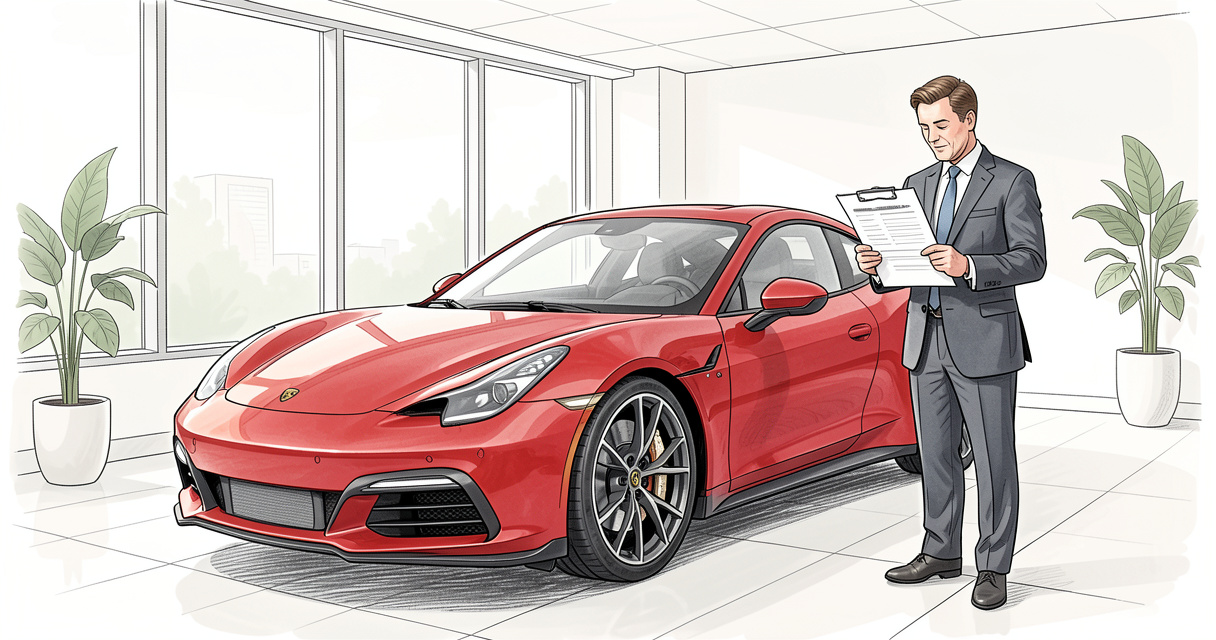
How Much Does Sports Car Insurance Cost in 2026?
| Metric or model | Average cost in 2026 |
|---|---|
| Mazda Miata | $1,980 per year |
| Maserati Quattroporte | $7,090 per year |
| Full coverage average | $1,726 per year |
| Full coverage average | $416 per month |
That table is the fastest honest answer to “how much is sports car insurance per month?” — and also the fastest way to see why the question is impossible to answer in a single figure. A Miata and a Quattroporte are both sports cars by most definitions. The insurance gap between them is roughly 3.6 times.
Average Monthly and Annual Premiums
According to MoneyGeek, full-coverage sports car insurance averages $1,726 per year (2026). According to carinsurancecostpermonth.com, the same full coverage benchmark averages $416 per month (2026). The two figures measure slightly different samples and methods, which is precisely why I present both instead of averaging them into one comforting number.
What the monthly figure tells you is budgeting reality: a sports car owner on a full coverage policy is committing roughly the cost of a small holiday every quarter, before fuel, tyres and servicing. What the annual figure tells you is negotiating room: paying annually rather than monthly usually removes instalment charges, and on a $1,700 policy that quietly saves a meaningful amount.
And remember what “full coverage” means in practice. It is not a legally defined product. It normally stacks liability, collision and comprehensive, but the limits and the valuation method underneath are set by the individual contract.
Model-Level Cost Examples
| Model or metric | Average cost | Source year |
|---|---|---|
| Mazda Miata | $1,980 per year (about $165 per month, derived) | 2026 |
| Maserati Quattroporte | $7,090 per year (about $591 per month, derived) | 2026 |
| Full coverage, annual average | $1,726 per year | 2026 |
| Full coverage, monthly average | $416 per month | 2026 |
According to SoFi, sports car insurance ranges from $1,980 per year for a Mazda Miata to $7,090 per year for a Maserati Quattroporte (2026). The Miata sits below the full coverage average; the Quattroporte sits roughly four times above it. The monthly conversions are my own arithmetic, not a new data source — but they are what a household budget actually feels.
Why the spread? The Miata is cheap to buy, cheap to repair, has a huge parts pool, modest power, and a young-enthusiast ownership base that keeps claims data dense. The Quattroporte is the opposite on every axis: low production volume, imported components, high labour hours per panel, expensive paint, and a total-loss threshold that arrives much faster because the repair ratio is measured against a high vehicle value.
In my experience across Europe, the same pattern holds with different names — an MX-5 quote sits near the bottom of the performance band, while a Maserati, a Porsche 911 or an Aston Martin sits at multiples of it. The badge is not the variable. The repair economy around the badge is.
Why Averages Can Mislead
A national average is a statistical middle, and nobody drives the statistical middle. Six variables will move your premium far more than the benchmark:
- Model and trim — the same car with a performance pack can rate differently.
- Driver age and history — a 22-year-old on a Quattroporte is a different underwriting file entirely.
- Location — theft rates, repairer density and regional pricing all vary.
- Annual mileage — 4,000 miles is not 15,000 miles.
- Deductible — the single fastest lever you control.
- Valuation method — agreed value policies are priced differently from actual cash value.
Read the benchmark as a sanity check, not a target. If a quote lands dramatically below the model average, that is not a bargain — it is a signal that something in the coverage is thinner than you think.
Averages are not quotes. The figures above are 2026 benchmarks drawn from published market data. Your premium will differ based on model, driver profile, location, annual mileage, deductible, valuation method and coverage limits. Never treat a market average as a price you are owed.
Once you know the benchmark, the useful question becomes: which of those six variables can I actually influence, and how? That is what the next section breaks down.
Which Factors Drive Sports Car Insurance Premiums?
Sports car insurance premiums are built from risk predictors, and the predictors insurers use are not mysterious. State Farm and Experian both name the same core set: repair costs, vehicle design, horsepower, driver age, driving history, location, coverage choices and deductibles. The sports car element simply amplifies several of them at once.
Vehicle Performance and Repair Costs
Two things make a sports car expensive to insure, and they are not the same thing. The first is severity: high horsepower plus low weight plus rear-wheel drive produces accidents at higher speed with more damage per event. The second is repair economics.
Consider what a bodyshop actually faces on a modern performance car. Multi-layer paint finishes that must be blended across panels. Low-profile tyres priced per corner rather than per set. Convertible roof mechanisms with motors, sensors and seals. Carbon or aluminium structural components that cannot be straightened, only replaced. Active aerodynamics and radar sensors that need recalibration after a bumper repair.
Theft risk compounds it. Certain performance models are targeted for parts, and a stolen-and-recovered car can carry a diminished-value argument that runs for months.
Driver Profile and Location
Does age affect sports car insurance? Sharply. A driver under 25 on a high-performance vehicle is the most expensive combination in the book, for reasons the claims data supports rather than moralises about. The premium curve falls steeply through the late twenties and flattens in the forties, then rises again modestly with advanced age.
Driving record works the same way in reverse: a clean five-year history is worth real money, and a single at-fault collision or a licence endorsement can reset the rating. Location adds theft density, traffic density, repairer availability and, in several European markets, regional tariff differences that can be substantial across a border.
Coverage Choices and Deductibles
Coverage choices are the part of the premium you control directly. Raising the deductible from a low figure to a realistic one is the simplest premium reduction available. The trade-off is arithmetic, not philosophy: you are accepting the first slice of every claim in exchange for a lower annual cost.
My rule of thumb for owners: set the deductible at the highest amount you could pay tomorrow without changing your plans. Not the highest amount the insurer offers. The highest amount your bank account tolerates.
- Repair cost and parts availability
- Horsepower, weight and performance class
- Theft risk and parts-targeting history
- Driver age
- Driving record and claims history
- Location and storage
- Deductible level
- Coverage limits and add-ons
- Declared modifications
Premium mechanics explain the price. They do not explain the payout. That comes from a different part of the contract entirely — the valuation clause — and it is where the real money is won or lost.
Sports Car Coverage Options That Matter: Agreed Value, Deductibles, and Add-Ons
Here is the gap in almost every article on this subject: they explain what you pay and skip what you receive. On a depreciating hatchback, valuation barely matters. On a sports car — particularly a modified, imported or appreciating one — it is the entire point of the policy.
Agreed Value vs Actual Cash Value
| Coverage type | What it pays | Best for | Watch-out |
|---|---|---|---|
| Agreed value | A fixed sum agreed at inception and written into the policy, paid on total loss without market depreciation | Exotics, classics, modified cars, appreciating models | Usually requires mileage limits, secure storage and a valuation or photographs |
| Actual cash value | Replacement cost minus depreciation — effectively the market value at the moment of loss | Daily-driven, unmodified, mass-produced sports cars | On a low-mileage or modified car, the payout can sit well below what you spent |
| Stated value | A figure you declare, but the insurer still applies depreciation or a market cap at settlement | Drivers who want to document value without specialist conditions | Easily confused with agreed value — check whether the sum is guaranteed |
Is agreed value worth it for a sports car? On a $7,000-a-year Quattroporte policy, yes — the premium difference is small relative to the exposure. On a mass-market Miata driven daily, actual cash value is usually defensible because the market has plenty of comparables. The deciding question is a simple one: if my car is written off in eighteen months, can I replace it, in this condition, with the payout?
If the answer is no, you need agreed value, or at least a valuation report on file.
Deductible Strategy
A higher deductible lowers the premium but raises your out-of-pocket exposure on every claim. There is no universal right answer, but there is a wrong one: choosing a deductible so low that you file small claims. Filing a $700 claim against a $250 deductible can cost you more in premium loading over three years than the claim paid out.
On high-value cars I generally recommend a deductible high enough to make small incidents self-funded and comprehensive protection intact for the events that actually hurt — theft, write-off, fire, major collision.
Add-Ons for Paint, Tires, and Convertible Roofs
These are the three claim categories where sports car owners most often discover a gap after the fact:
- Paint and cosmetic damage — some policies exclude cosmetic repairs or cap them at a fraction of the repair invoice. Special finishes may need separate declaration.
- Tires and wheels — frequently excluded as wear items. Kerb damage to a forged wheel can exceed the deductible alone.
- Convertible roofs — the mechanism is often treated as mechanical rather than bodywork, and vandalism cover may or may not extend to a slashed roof.
- Track and competition use — almost universally excluded. If you plan any circuit time, ask specifically; do not assume.
Read before you sign: disclose every modification — wheels, suspension, exhaust, ECU, wrap, audio, aero — and read the exclusions covering paint, tires, convertible roofs and usage. If the wording is silent on a component you care about, ask for written confirmation. A claims handler six months from now will not honour a phone conversation you cannot document.
Get the coverage structure right and the savings conversation becomes much safer to have, because you know exactly what you are not allowed to cut.
How to Get Cheaper Sports Car Insurance Without Cutting Essential Coverage
Cheap sports car insurance is not a myth, but it is rarely found by chasing the lowest headline number. The cheapest quote on a comparison screen is often the one with the weakest valuation clause — which means the saving is real today and the loss is real at claim time.
Policy Structure Levers
Four structural moves that reduce premium without touching the essentials:
- Raise the deductible to a level you can genuinely absorb.
- Bundle home, motor and liability where the discount exceeds the loss of shopping freedom.
- Pay annually to avoid instalment charges.
- Right-size the limits — over-insuring third-party liability beyond legal and realistic exposure buys nothing.
Driving and Storage Habits
Habits move the price more than most owners expect. A clean record is worth more than every discount code combined. An approved tracking device or immobiliser, where the insurer recognises it, can reduce the theft portion of the premium materially.
Storage matters too: a garaged car in a low-theft area rates differently from one parked on a street in a dense city. And annual mileage is one of the strongest signals available — a sports car driven 4,000 miles a year is not the same risk as one driven 15,000.
Quote Comparison Strategy
Is specialist insurance cheaper for low-mileage sports cars? Sometimes, and it is worth testing rather than assuming. Specialist and collector-style policies frequently price mileage bands aggressively, because a car that sits in a garage and covers 4,000 miles a year rarely generates claims. But the same specialist policy usually comes with conditions: mileage caps, secured storage, no commuting, no track days.
An illustrative example, not a guaranteed rate: owners of low-mileage performance cars often describe comparing a specialist limited-mileage policy against a standard multi-car policy and finding the specialist quote competitive once the mileage band was declared accurately — and also describing the opposite result where a multi-car household discount won. The pattern to take away is not a number. It is that you must request both quotes with identical mileage, identical storage and identical deductible, or the comparison is meaningless.
- Raise the deductible to a level you can fund
- Bundle where the discount is genuinely net-positive
- Maintain a clean driving record
- Fit an insurer-recognised anti-theft device
- Declare an accurate, lower annual mileage if it is true
- Request specialist and standard quotes side by side
Savings only make sense once you know which product category you are actually shopping in — and the sports car market splits into three categories that get confused constantly.
Exotic, Collector, and Performance Cars: How Specialist Policies Differ
Three terms, three different products, and an industry that uses them interchangeably in marketing. The distinction matters because a policy built for one category can be a poor fit — or an unnecessary expense — for another.
| Policy type | Typical vehicle | Key feature | Potential limitation |
|---|---|---|---|
| Standard auto | Mass-produced sports coupé, daily driven | Simple, widely available, often bundled | Actual cash value settlement; limited treatment of modifications |
| Exotic car | Maserati, Ferrari, Aston Martin, imported low-volume models | Agreed value, specialist repair networks, OEM parts commitment | Higher premium; strict usage and storage conditions |
| Collector car | Classics, modern classics, low-mileage preserved cars | Limited mileage bands, appreciation-aware valuation | Mileage caps; commuting often excluded |
| Performance car | Hot hatches, modified coupés, track-capable road cars | Modification disclosure built into the schedule | Track use still excluded; engineering reports may be required |
Exotic Car Insurance
Exotic car insurance is built around replacement and repair capability. The defining feature is not the premium — it is the commitment to agreed value and to parts sourced correctly. NCM makes the point that exotic and sports car insurance does not necessarily mean classic or antique insurance, and that distinction is worth repeating: a 2022 Maserati is an exotic, not a classic, and the policy should reflect a modern vehicle with modern repair requirements.
Collector and Low-Mileage Policies
Collector car insurance is designed for vehicles kept as assets rather than transport. The trade is explicit: you accept mileage limits, secure storage and usage restrictions, and in return you get agreed value and pricing that reflects a car which rarely moves. If you commute in the car, this product is not for you, and misrepresenting usage is one of the fastest routes to a denied claim.
Performance and Modified Vehicles
Performance car insurance exists because modified vehicles break the assumptions of standard underwriting. A car with a different ECU, suspension, exhaust and wheels is not the car the standard policy priced. Specialist policies schedule the modifications and value them — which is exactly why disclosure is non-negotiable.
And when a standard insurer like Admiral says it does not offer a sports-car-specific policy but can cover sports cars, that is not a warning — it is accurate for a large share of owners. A standard policy may be enough. It simply will not stretch to agreed value or scheduled modifications.
Choosing the right category protects the claim. Choosing carelessly inside the right category is how claims still fail.
Common Sports Car Insurance Mistakes and Claim Risks
Why was my sports car insurance claim denied? In my twelve years handling files, the answer was almost never fraud. It was a mismatch between what the policy said and what the owner assumed. Three mismatches account for most of it.
Disclosure Errors
Do I need to declare modifications? Yes — every one, in writing. A lowering kit, a remap, an aftermarket exhaust, a wrap, a changed wheel size, an added tow bar, a retrofitted sound system. The insurer prices the car it was told about. If the car is different, the contract is built on inaccurate information, and in many European jurisdictions that is grounds for reducing or refusing a payout.
I have seen a suspension claim rejected because the car sat 30mm lower than standard. The owner had bought it that way. That detail did not save him.
Valuation Gaps
A low premium with actual cash value settlement can produce a payout that leaves you unable to replace the car. On modified or rare vehicles the gap is often widest: the market value of a standard example does not reflect the cost of the build.
The fix is documentation. Photographs, invoices, a professional valuation, service history — assembled before anything happens, not after.
Usage and Mileage Mismatches
Declaring 4,000 miles and driving 12,000 is a material misrepresentation, not a rounding error. Assuming track or competition use is covered is the other classic: timed events, driver training with timing, and any circuit activity are excluded under virtually every standard and specialist policy unless explicitly added.
Claim denial risks: undisclosed modifications, understated annual mileage, undeclared commuting, track or competition use, unsecured storage where the policy requires a garage, and unreported changes of address. Each is avoidable with a single written declaration at inception.
Every one of those risks is eliminated by a disciplined quote process — which is the last thing to get right.
Step-by-Step: How to Compare Sports Car Insurance Quotes in 2026
How do I compare sports car insurance quotes? With identical inputs, at least three insurers, and the coverage compared line by line rather than the price compared at the bottom.
Prepare Your Vehicle and Driver Details
What details do I need for a sports car insurance quote? Registration, exact model and trim, engine code, current mileage, annual mileage estimate, storage location and type, security devices, driver licence details, claims history for the last five years, and a complete list of modifications with values. Have the modification list written down before you start — not reconstructed from memory mid-call.
Compare Coverage, Not Just Price
Two quotes that differ by $300 a year rarely differ only in price. One may settle on actual cash value, exclude cosmetic paint repairs, or require a higher excess for theft. Normalise the deductible, the limits and the valuation method across every quote before you compare a single figure.
Review Exclusions Before You Buy
Read the exclusions and the claims process section. Where do repairs happen? Is there an approved network? Is a courtesy car included, and for how long? Who decides the valuation in a total loss, and is there an independent appeal route? In several European markets there is an ombudsman or supervisory authority you can escalate to — knowing that before a claim is worth more than a 5% discount.
- Vehicle details: model, trim, engine, current mileage
- Accurate annual mileage and usage type
- Storage: garage, driveway, street
- Driver history and named drivers
- Coverage limits and third-party liability
- Deductible level, normalised across quotes
- Valuation method: agreed value, actual cash value or stated value
- Exclusions: track use, paint, tires, roof, modifications
- Claims process, repair network and escalation route
Run that checklist three times, with three insurers, and you will know more about your own coverage than most people learn in a decade of renewing automatically.
Frequently asked questions
Is sports car insurance more expensive than regular car insurance?
Generally yes, because sports cars cost more to repair, carry higher horsepower and present greater theft appeal. The exact premium still depends on the model, driver, location, annual mileage, deductible and coverage type — a low-value sports car driven carefully by an experienced driver can price close to a family hatchback.
What is the cheapest sports car to insure in 2026?
The available 2026 data places the Mazda Miata at the low end, at roughly $1,980 per year. That is a market average, not a quote — your own figure will move with your driver profile, mileage, deductible and location.
Do I need special insurance for a sports car?
Not always. A standard auto policy can cover a sports car perfectly well. A specialist policy becomes worthwhile when you need agreed value, scheduled modifications, low-mileage pricing or an exotic repair network. Compare policy wording, not the insurer’s label.
Does sports car insurance cover modifications?
Only when they are declared and the policy schedules them. Undisclosed modifications create a valuation gap and can give the insurer grounds to reduce or refuse a claim — even where the modification had nothing to do with the damage.
How much does full coverage sports car insurance cost per month?
The 2026 average monthly cost for full coverage is $416. That is a national average across the category; model-level costs range from around $165 per month for a Mazda Miata to around $591 per month for a Maserati Quattroporte.
Can I get cheap sports car insurance with low annual mileage?
Often, yes. Low annual mileage — 4,000 miles a year, for example — is one of the strongest rating signals available, and specialist or collector-style policies price limited-mileage use aggressively. Confirm the mileage cap in writing and never exceed it without notifying the insurer.
What is agreed value coverage for a sports car?
Agreed value coverage pays a pre-agreed sum if the car is written off, instead of a depreciated actual cash value. It is particularly useful for exotics, modified cars and appreciating models, but it usually comes with mileage limits, secure storage requirements and a valuation on file.
The bottom line on sports car coverage
Four things matter more than anything else in this market. Costs vary enormously by model — from roughly $1,980 a year for a Mazda Miata to roughly $7,090 for a Maserati Quattroporte, against a $1,726 annual and $416 monthly full coverage average. Coverage structure beats headline price: valuation method, deductible and add-ons decide what you actually receive. Disclosure protects the claim: modifications, mileage and usage must be declared in writing. And you should compare specialist and standard quotes side by side before choosing.
To put it plainly: the industry is not designed to make this easy. It is designed to make the default option feel safe. Renewing automatically, accepting the cheapest screen result, assuming the policy covers the car you actually built — those are the three decisions that generate most of the claim files I used to handle.
If I were renewing a sports car policy myself this month, I would spend one hour with a modification list, an honest mileage figure and three quotes normalised to the same deductible, then read the valuation clause twice. That hour protects more value than any discount code will ever save.
So before you renew, ask the only question that really matters: if I filed a claim tomorrow, would this sports car coverage replace my car at the value I believe it is worth? If you cannot answer that with confidence, you have not finished shopping yet.
There is no harmonised European or transatlantic definition, and that is the first thing most drivers get wrong. Insurers use a mix of tests:
- Body style — coupé, roadster, convertible, GT.
- Performance thresholds — horsepower, acceleration, top speed, power-to-weight ratio.
- Value and parts availability — imported components, long repair lead times, limited authorised repairers.
- Claims history of the model within that insurer’s own book.
A fast saloon can be rated as a sports car. A hot hatch can be rated as a performance car. A 30-year-old roadster can fall into collector territory. The category follows the underwriting model, not the badge.
This is exactly where standard insurers and specialist insurers part company. Admiral, for example, states plainly that it does not offer a policy specifically tailored to sports cars but can cover them under its standard products. A specialist like Chubb positions luxury and sports vehicles as a distinct book with its own valuation and repair approach. Both statements are true. They simply answer different questions.
Standard Auto Policy vs Specialist Sports Car Coverage
Here is what most people miss: the question is not “do I need special insurance for a sports car?” The question is “does my policy pay what this car is worth, in the way this car will actually break?”
Four owner profiles should always run a specialist quote alongside a standard one:
- Exotic owners — where parts come from abroad and repair specialists are few.
- Low-mileage drivers — a car used 4,000 miles a year is a different risk from a daily.
- Modified performance car owners — where the value of the build is invisible to a standard policy.
- Collectors — where condition, originality and documentation drive value.
Everyone else — the driver of a modest, unmodified, daily-driven sports coupé — can often stay with a mainstream insurer and be perfectly well covered. I have seen this go wrong too many times in the opposite direction: people paying specialist premiums for a car that never needed them.
Understanding who you are as a risk is the first filter. The second is what the market actually charges for that risk, which is where the numbers get uncomfortable.
Definition box: “Sports car insurance” is not a legal class of cover. It is a marketing and underwriting label applied to standard motor policies with performance-vehicle conditions attached. What determines your protection is the wording: the valuation clause, the modification clause, the mileage declaration, and the usage exclusions. Always compare those four, not the product name.
How Much Does Sports Car Insurance Cost in 2026?
| Metric or model | Average cost in 2026 |
|---|---|
| Mazda Miata | $1,980 per year |
| Maserati Quattroporte | $7,090 per year |
| Full coverage average | $1,726 per year |
| Full coverage average | $416 per month |
That table is the fastest honest answer to “how much is sports car insurance per month?” — and also the fastest way to see why the question is impossible to answer in a single figure. A Miata and a Quattroporte are both sports cars by most definitions. The insurance gap between them is roughly 3.6 times.
Average Monthly and Annual Premiums
According to MoneyGeek, full-coverage sports car insurance averages $1,726 per year (2026). According to carinsurancecostpermonth.com, the same full coverage benchmark averages $416 per month (2026). The two figures measure slightly different samples and methods, which is precisely why I present both instead of averaging them into one comforting number.
What the monthly figure tells you is budgeting reality: a sports car owner on a full coverage policy is committing roughly the cost of a small holiday every quarter, before fuel, tyres and servicing. What the annual figure tells you is negotiating room: paying annually rather than monthly usually removes instalment charges, and on a $1,700 policy that quietly saves a meaningful amount.
And remember what “full coverage” means in practice. It is not a legally defined product. It normally stacks liability, collision and comprehensive, but the limits and the valuation method underneath are set by the individual contract.
Model-Level Cost Examples
| Model or metric | Average cost | Source year |
|---|---|---|
| Mazda Miata | $1,980 per year (about $165 per month, derived) | 2026 |
| Maserati Quattroporte | $7,090 per year (about $591 per month, derived) | 2026 |
| Full coverage, annual average | $1,726 per year | 2026 |
| Full coverage, monthly average | $416 per month | 2026 |
According to SoFi, sports car insurance ranges from $1,980 per year for a Mazda Miata to $7,090 per year for a Maserati Quattroporte (2026). The Miata sits below the full coverage average; the Quattroporte sits roughly four times above it. The monthly conversions are my own arithmetic, not a new data source — but they are what a household budget actually feels.
Why the spread? The Miata is cheap to buy, cheap to repair, has a huge parts pool, modest power, and a young-enthusiast ownership base that keeps claims data dense. The Quattroporte is the opposite on every axis: low production volume, imported components, high labour hours per panel, expensive paint, and a total-loss threshold that arrives much faster because the repair ratio is measured against a high vehicle value.
In my experience across Europe, the same pattern holds with different names — an MX-5 quote sits near the bottom of the performance band, while a Maserati, a Porsche 911 or an Aston Martin sits at multiples of it. The badge is not the variable. The repair economy around the badge is.
Why Averages Can Mislead
A national average is a statistical middle, and nobody drives the statistical middle. Six variables will move your premium far more than the benchmark:
- Model and trim — the same car with a performance pack can rate differently.
- Driver age and history — a 22-year-old on a Quattroporte is a different underwriting file entirely.
- Location — theft rates, repairer density and regional pricing all vary.
- Annual mileage — 4,000 miles is not 15,000 miles.
- Deductible — the single fastest lever you control.
- Valuation method — agreed value policies are priced differently from actual cash value.
Read the benchmark as a sanity check, not a target. If a quote lands dramatically below the model average, that is not a bargain — it is a signal that something in the coverage is thinner than you think.
Averages are not quotes. The figures above are 2026 benchmarks drawn from published market data. Your premium will differ based on model, driver profile, location, annual mileage, deductible, valuation method and coverage limits. Never treat a market average as a price you are owed.
Once you know the benchmark, the useful question becomes: which of those six variables can I actually influence, and how? That is what the next section breaks down.
Which Factors Drive Sports Car Insurance Premiums?
Sports car insurance premiums are built from risk predictors, and the predictors insurers use are not mysterious. State Farm and Experian both name the same core set: repair costs, vehicle design, horsepower, driver age, driving history, location, coverage choices and deductibles. The sports car element simply amplifies several of them at once.
Vehicle Performance and Repair Costs
Two things make a sports car expensive to insure, and they are not the same thing. The first is severity: high horsepower plus low weight plus rear-wheel drive produces accidents at higher speed with more damage per event. The second is repair economics.
Consider what a bodyshop actually faces on a modern performance car. Multi-layer paint finishes that must be blended across panels. Low-profile tyres priced per corner rather than per set. Convertible roof mechanisms with motors, sensors and seals. Carbon or aluminium structural components that cannot be straightened, only replaced. Active aerodynamics and radar sensors that need recalibration after a bumper repair.
Theft risk compounds it. Certain performance models are targeted for parts, and a stolen-and-recovered car can carry a diminished-value argument that runs for months.
Driver Profile and Location
Does age affect sports car insurance? Sharply. A driver under 25 on a high-performance vehicle is the most expensive combination in the book, for reasons the claims data supports rather than moralises about. The premium curve falls steeply through the late twenties and flattens in the forties, then rises again modestly with advanced age.
Driving record works the same way in reverse: a clean five-year history is worth real money, and a single at-fault collision or a licence endorsement can reset the rating. Location adds theft density, traffic density, repairer availability and, in several European markets, regional tariff differences that can be substantial across a border.
Coverage Choices and Deductibles
Coverage choices are the part of the premium you control directly. Raising the deductible from a low figure to a realistic one is the simplest premium reduction available. The trade-off is arithmetic, not philosophy: you are accepting the first slice of every claim in exchange for a lower annual cost.
My rule of thumb for owners: set the deductible at the highest amount you could pay tomorrow without changing your plans. Not the highest amount the insurer offers. The highest amount your bank account tolerates.
- Repair cost and parts availability
- Horsepower, weight and performance class
- Theft risk and parts-targeting history
- Driver age
- Driving record and claims history
- Location and storage
- Deductible level
- Coverage limits and add-ons
- Declared modifications
Premium mechanics explain the price. They do not explain the payout. That comes from a different part of the contract entirely — the valuation clause — and it is where the real money is won or lost.
Sports Car Coverage Options That Matter: Agreed Value, Deductibles, and Add-Ons
Here is the gap in almost every article on this subject: they explain what you pay and skip what you receive. On a depreciating hatchback, valuation barely matters. On a sports car — particularly a modified, imported or appreciating one — it is the entire point of the policy.
Agreed Value vs Actual Cash Value
| Coverage type | What it pays | Best for | Watch-out |
|---|---|---|---|
| Agreed value | A fixed sum agreed at inception and written into the policy, paid on total loss without market depreciation | Exotics, classics, modified cars, appreciating models | Usually requires mileage limits, secure storage and a valuation or photographs |
| Actual cash value | Replacement cost minus depreciation — effectively the market value at the moment of loss | Daily-driven, unmodified, mass-produced sports cars | On a low-mileage or modified car, the payout can sit well below what you spent |
| Stated value | A figure you declare, but the insurer still applies depreciation or a market cap at settlement | Drivers who want to document value without specialist conditions | Easily confused with agreed value — check whether the sum is guaranteed |
Is agreed value worth it for a sports car? On a $7,000-a-year Quattroporte policy, yes — the premium difference is small relative to the exposure. On a mass-market Miata driven daily, actual cash value is usually defensible because the market has plenty of comparables. The deciding question is a simple one: if my car is written off in eighteen months, can I replace it, in this condition, with the payout?
If the answer is no, you need agreed value, or at least a valuation report on file.
Deductible Strategy
A higher deductible lowers the premium but raises your out-of-pocket exposure on every claim. There is no universal right answer, but there is a wrong one: choosing a deductible so low that you file small claims. Filing a $700 claim against a $250 deductible can cost you more in premium loading over three years than the claim paid out.
On high-value cars I generally recommend a deductible high enough to make small incidents self-funded and comprehensive protection intact for the events that actually hurt — theft, write-off, fire, major collision.
Add-Ons for Paint, Tires, and Convertible Roofs
These are the three claim categories where sports car owners most often discover a gap after the fact:
- Paint and cosmetic damage — some policies exclude cosmetic repairs or cap them at a fraction of the repair invoice. Special finishes may need separate declaration.
- Tires and wheels — frequently excluded as wear items. Kerb damage to a forged wheel can exceed the deductible alone.
- Convertible roofs — the mechanism is often treated as mechanical rather than bodywork, and vandalism cover may or may not extend to a slashed roof.
- Track and competition use — almost universally excluded. If you plan any circuit time, ask specifically; do not assume.
Read before you sign: disclose every modification — wheels, suspension, exhaust, ECU, wrap, audio, aero — and read the exclusions covering paint, tires, convertible roofs and usage. If the wording is silent on a component you care about, ask for written confirmation. A claims handler six months from now will not honour a phone conversation you cannot document.
Get the coverage structure right and the savings conversation becomes much safer to have, because you know exactly what you are not allowed to cut.
How to Get Cheaper Sports Car Insurance Without Cutting Essential Coverage
Cheap sports car insurance is not a myth, but it is rarely found by chasing the lowest headline number. The cheapest quote on a comparison screen is often the one with the weakest valuation clause — which means the saving is real today and the loss is real at claim time.
Policy Structure Levers
Four structural moves that reduce premium without touching the essentials:
- Raise the deductible to a level you can genuinely absorb.
- Bundle home, motor and liability where the discount exceeds the loss of shopping freedom.
- Pay annually to avoid instalment charges.
- Right-size the limits — over-insuring third-party liability beyond legal and realistic exposure buys nothing.
Driving and Storage Habits
Habits move the price more than most owners expect. A clean record is worth more than every discount code combined. An approved tracking device or immobiliser, where the insurer recognises it, can reduce the theft portion of the premium materially.
Storage matters too: a garaged car in a low-theft area rates differently from one parked on a street in a dense city. And annual mileage is one of the strongest signals available — a sports car driven 4,000 miles a year is not the same risk as one driven 15,000.
Quote Comparison Strategy
Is specialist insurance cheaper for low-mileage sports cars? Sometimes, and it is worth testing rather than assuming. Specialist and collector-style policies frequently price mileage bands aggressively, because a car that sits in a garage and covers 4,000 miles a year rarely generates claims. But the same specialist policy usually comes with conditions: mileage caps, secured storage, no commuting, no track days.
An illustrative example, not a guaranteed rate: owners of low-mileage performance cars often describe comparing a specialist limited-mileage policy against a standard multi-car policy and finding the specialist quote competitive once the mileage band was declared accurately — and also describing the opposite result where a multi-car household discount won. The pattern to take away is not a number. It is that you must request both quotes with identical mileage, identical storage and identical deductible, or the comparison is meaningless.
- Raise the deductible to a level you can fund
- Bundle where the discount is genuinely net-positive
- Maintain a clean driving record
- Fit an insurer-recognised anti-theft device
- Declare an accurate, lower annual mileage if it is true
- Request specialist and standard quotes side by side
Savings only make sense once you know which product category you are actually shopping in — and the sports car market splits into three categories that get confused constantly.
Exotic, Collector, and Performance Cars: How Specialist Policies Differ
Three terms, three different products, and an industry that uses them interchangeably in marketing. The distinction matters because a policy built for one category can be a poor fit — or an unnecessary expense — for another.
| Policy type | Typical vehicle | Key feature | Potential limitation |
|---|---|---|---|
| Standard auto | Mass-produced sports coupé, daily driven | Simple, widely available, often bundled | Actual cash value settlement; limited treatment of modifications |
| Exotic car | Maserati, Ferrari, Aston Martin, imported low-volume models | Agreed value, specialist repair networks, OEM parts commitment | Higher premium; strict usage and storage conditions |
| Collector car | Classics, modern classics, low-mileage preserved cars | Limited mileage bands, appreciation-aware valuation | Mileage caps; commuting often excluded |
| Performance car | Hot hatches, modified coupés, track-capable road cars | Modification disclosure built into the schedule | Track use still excluded; engineering reports may be required |
Exotic Car Insurance
Exotic car insurance is built around replacement and repair capability. The defining feature is not the premium — it is the commitment to agreed value and to parts sourced correctly. NCM makes the point that exotic and sports car insurance does not necessarily mean classic or antique insurance, and that distinction is worth repeating: a 2022 Maserati is an exotic, not a classic, and the policy should reflect a modern vehicle with modern repair requirements.
Collector and Low-Mileage Policies
Collector car insurance is designed for vehicles kept as assets rather than transport. The trade is explicit: you accept mileage limits, secure storage and usage restrictions, and in return you get agreed value and pricing that reflects a car which rarely moves. If you commute in the car, this product is not for you, and misrepresenting usage is one of the fastest routes to a denied claim.
Performance and Modified Vehicles
Performance car insurance exists because modified vehicles break the assumptions of standard underwriting. A car with a different ECU, suspension, exhaust and wheels is not the car the standard policy priced. Specialist policies schedule the modifications and value them — which is exactly why disclosure is non-negotiable.
And when a standard insurer like Admiral says it does not offer a sports-car-specific policy but can cover sports cars, that is not a warning — it is accurate for a large share of owners. A standard policy may be enough. It simply will not stretch to agreed value or scheduled modifications.
Choosing the right category protects the claim. Choosing carelessly inside the right category is how claims still fail.
Common Sports Car Insurance Mistakes and Claim Risks
Why was my sports car insurance claim denied? In my twelve years handling files, the answer was almost never fraud. It was a mismatch between what the policy said and what the owner assumed. Three mismatches account for most of it.
Disclosure Errors
Do I need to declare modifications? Yes — every one, in writing. A lowering kit, a remap, an aftermarket exhaust, a wrap, a changed wheel size, an added tow bar, a retrofitted sound system. The insurer prices the car it was told about. If the car is different, the contract is built on inaccurate information, and in many European jurisdictions that is grounds for reducing or refusing a payout.
I have seen a suspension claim rejected because the car sat 30mm lower than standard. The owner had bought it that way. That detail did not save him.
Valuation Gaps
A low premium with actual cash value settlement can produce a payout that leaves you unable to replace the car. On modified or rare vehicles the gap is often widest: the market value of a standard example does not reflect the cost of the build.
The fix is documentation. Photographs, invoices, a professional valuation, service history — assembled before anything happens, not after.
Usage and Mileage Mismatches
Declaring 4,000 miles and driving 12,000 is a material misrepresentation, not a rounding error. Assuming track or competition use is covered is the other classic: timed events, driver training with timing, and any circuit activity are excluded under virtually every standard and specialist policy unless explicitly added.
Claim denial risks: undisclosed modifications, understated annual mileage, undeclared commuting, track or competition use, unsecured storage where the policy requires a garage, and unreported changes of address. Each is avoidable with a single written declaration at inception.
Every one of those risks is eliminated by a disciplined quote process — which is the last thing to get right.
Step-by-Step: How to Compare Sports Car Insurance Quotes in 2026
How do I compare sports car insurance quotes? With identical inputs, at least three insurers, and the coverage compared line by line rather than the price compared at the bottom.
Prepare Your Vehicle and Driver Details
What details do I need for a sports car insurance quote? Registration, exact model and trim, engine code, current mileage, annual mileage estimate, storage location and type, security devices, driver licence details, claims history for the last five years, and a complete list of modifications with values. Have the modification list written down before you start — not reconstructed from memory mid-call.
Compare Coverage, Not Just Price
Two quotes that differ by $300 a year rarely differ only in price. One may settle on actual cash value, exclude cosmetic paint repairs, or require a higher excess for theft. Normalise the deductible, the limits and the valuation method across every quote before you compare a single figure.
Review Exclusions Before You Buy
Read the exclusions and the claims process section. Where do repairs happen? Is there an approved network? Is a courtesy car included, and for how long? Who decides the valuation in a total loss, and is there an independent appeal route? In several European markets there is an ombudsman or supervisory authority you can escalate to — knowing that before a claim is worth more than a 5% discount.
- Vehicle details: model, trim, engine, current mileage
- Accurate annual mileage and usage type
- Storage: garage, driveway, street
- Driver history and named drivers
- Coverage limits and third-party liability
- Deductible level, normalised across quotes
- Valuation method: agreed value, actual cash value or stated value
- Exclusions: track use, paint, tires, roof, modifications
- Claims process, repair network and escalation route
Run that checklist three times, with three insurers, and you will know more about your own coverage than most people learn in a decade of renewing automatically.
Frequently asked questions
Is sports car insurance more expensive than regular car insurance?
Generally yes, because sports cars cost more to repair, carry higher horsepower and present greater theft appeal. The exact premium still depends on the model, driver, location, annual mileage, deductible and coverage type — a low-value sports car driven carefully by an experienced driver can price close to a family hatchback.
What is the cheapest sports car to insure in 2026?
The available 2026 data places the Mazda Miata at the low end, at roughly $1,980 per year. That is a market average, not a quote — your own figure will move with your driver profile, mileage, deductible and location.
Do I need special insurance for a sports car?
Not always. A standard auto policy can cover a sports car perfectly well. A specialist policy becomes worthwhile when you need agreed value, scheduled modifications, low-mileage pricing or an exotic repair network. Compare policy wording, not the insurer’s label.
Does sports car insurance cover modifications?
Only when they are declared and the policy schedules them. Undisclosed modifications create a valuation gap and can give the insurer grounds to reduce or refuse a claim — even where the modification had nothing to do with the damage.
How much does full coverage sports car insurance cost per month?
The 2026 average monthly cost for full coverage is $416. That is a national average across the category; model-level costs range from around $165 per month for a Mazda Miata to around $591 per month for a Maserati Quattroporte.
Can I get cheap sports car insurance with low annual mileage?
Often, yes. Low annual mileage — 4,000 miles a year, for example — is one of the strongest rating signals available, and specialist or collector-style policies price limited-mileage use aggressively. Confirm the mileage cap in writing and never exceed it without notifying the insurer.
What is agreed value coverage for a sports car?
Agreed value coverage pays a pre-agreed sum if the car is written off, instead of a depreciated actual cash value. It is particularly useful for exotics, modified cars and appreciating models, but it usually comes with mileage limits, secure storage requirements and a valuation on file.
The bottom line on sports car coverage
Four things matter more than anything else in this market. Costs vary enormously by model — from roughly $1,980 a year for a Mazda Miata to roughly $7,090 for a Maserati Quattroporte, against a $1,726 annual and $416 monthly full coverage average. Coverage structure beats headline price: valuation method, deductible and add-ons decide what you actually receive. Disclosure protects the claim: modifications, mileage and usage must be declared in writing. And you should compare specialist and standard quotes side by side before choosing.
To put it plainly: the industry is not designed to make this easy. It is designed to make the default option feel safe. Renewing automatically, accepting the cheapest screen result, assuming the policy covers the car you actually built — those are the three decisions that generate most of the claim files I used to handle.
If I were renewing a sports car policy myself this month, I would spend one hour with a modification list, an honest mileage figure and three quotes normalised to the same deductible, then read the valuation clause twice. That hour protects more value than any discount code will ever save.
So before you renew, ask the only question that really matters: if I filed a claim tomorrow, would this sports car coverage replace my car at the value I believe it is worth? If you cannot answer that with confidence, you have not finished shopping yet.
Reading time: 19 min
Key takeaways
- Costs swing wildly by model. The 2026 benchmarks I work from put a Mazda Miata at roughly $1,980 per year and a Maserati Quattroporte at roughly $7,090 per year — same coverage category, very different risk.
- Full coverage averages $1,726 per year, or $416 per month, but that national average is a starting point, never a quote.
- Valuation decides your payout. Agreed value versus actual cash value matters more than a $60 difference in premium.
- Disclosure protects the claim. Modifications, annual mileage, storage and track use must be declared in writing, or the claim file becomes a negotiation you will lose.
In 2026, full coverage on a sports car averages $416 per month, and model-level sports car insurance cost runs from about $1,980 to $7,090 per year. Let me be direct: those two numbers sitting in the same sentence is the entire problem with this market. The sticker shock is real, but the bigger risk is buying a generic policy that undervalues the car, excludes the repairs that actually happen, or quietly collapses the moment you file a claim.
I spent twelve years handling claims at NN Group, including cross-border files where a German repair estimate met a Dutch policy wording and a Belgian driver. I have seen a €1,400 paint claim denied over an undeclared spoiler. I have seen a total loss settled at two-thirds of what the owner assumed his car was worth.
This article is about sports car insurance as it actually behaves in 2026 — what it costs, where full coverage falls short, and how to structure a policy so that the payout matches the car in your garage.
What Is Sports Car Insurance and Who Needs It?
Sports car insurance is not a separate legal category of coverage. It is ordinary motor insurance — third-party liability, collision, comprehensive, theft, often roadside assistance — wrapped around a vehicle that insurers treat as higher risk. Nothing in the legislation changes because your car has two seats instead of five.
What changes is the underwriting. A performance vehicle carries higher repair costs, higher theft appeal, higher speed-related severity, and a far greater chance that the owner has modified it. To put it plainly: the label on the product is marketing, the policy wording is the contract. I always tell people to read the second one.
How Insurers Define a Sports Car
There is no harmonised European or transatlantic definition, and that is the first thing most drivers get wrong. Insurers use a mix of tests:
- Body style — coupé, roadster, convertible, GT.
- Performance thresholds — horsepower, acceleration, top speed, power-to-weight ratio.
- Value and parts availability — imported components, long repair lead times, limited authorised repairers.
- Claims history of the model within that insurer’s own book.
A fast saloon can be rated as a sports car. A hot hatch can be rated as a performance car. A 30-year-old roadster can fall into collector territory. The category follows the underwriting model, not the badge.
This is exactly where standard insurers and specialist insurers part company. Admiral, for example, states plainly that it does not offer a policy specifically tailored to sports cars but can cover them under its standard products. A specialist like Chubb positions luxury and sports vehicles as a distinct book with its own valuation and repair approach. Both statements are true. They simply answer different questions.
Standard Auto Policy vs Specialist Sports Car Coverage
Here is what most people miss: the question is not “do I need special insurance for a sports car?” The question is “does my policy pay what this car is worth, in the way this car will actually break?”
Four owner profiles should always run a specialist quote alongside a standard one:
- Exotic owners — where parts come from abroad and repair specialists are few.
- Low-mileage drivers — a car used 4,000 miles a year is a different risk from a daily.
- Modified performance car owners — where the value of the build is invisible to a standard policy.
- Collectors — where condition, originality and documentation drive value.
Everyone else — the driver of a modest, unmodified, daily-driven sports coupé — can often stay with a mainstream insurer and be perfectly well covered. I have seen this go wrong too many times in the opposite direction: people paying specialist premiums for a car that never needed them.
Understanding who you are as a risk is the first filter. The second is what the market actually charges for that risk, which is where the numbers get uncomfortable.
Definition box: “Sports car insurance” is not a legal class of cover. It is a marketing and underwriting label applied to standard motor policies with performance-vehicle conditions attached. What determines your protection is the wording: the valuation clause, the modification clause, the mileage declaration, and the usage exclusions. Always compare those four, not the product name.
How Much Does Sports Car Insurance Cost in 2026?
| Metric or model | Average cost in 2026 |
|---|---|
| Mazda Miata | $1,980 per year |
| Maserati Quattroporte | $7,090 per year |
| Full coverage average | $1,726 per year |
| Full coverage average | $416 per month |
That table is the fastest honest answer to “how much is sports car insurance per month?” — and also the fastest way to see why the question is impossible to answer in a single figure. A Miata and a Quattroporte are both sports cars by most definitions. The insurance gap between them is roughly 3.6 times.
Average Monthly and Annual Premiums
According to MoneyGeek, full-coverage sports car insurance averages $1,726 per year (2026). According to carinsurancecostpermonth.com, the same full coverage benchmark averages $416 per month (2026). The two figures measure slightly different samples and methods, which is precisely why I present both instead of averaging them into one comforting number.
What the monthly figure tells you is budgeting reality: a sports car owner on a full coverage policy is committing roughly the cost of a small holiday every quarter, before fuel, tyres and servicing. What the annual figure tells you is negotiating room: paying annually rather than monthly usually removes instalment charges, and on a $1,700 policy that quietly saves a meaningful amount.
And remember what “full coverage” means in practice. It is not a legally defined product. It normally stacks liability, collision and comprehensive, but the limits and the valuation method underneath are set by the individual contract.
Model-Level Cost Examples
| Model or metric | Average cost | Source year |
|---|---|---|
| Mazda Miata | $1,980 per year (about $165 per month, derived) | 2026 |
| Maserati Quattroporte | $7,090 per year (about $591 per month, derived) | 2026 |
| Full coverage, annual average | $1,726 per year | 2026 |
| Full coverage, monthly average | $416 per month | 2026 |
According to SoFi, sports car insurance ranges from $1,980 per year for a Mazda Miata to $7,090 per year for a Maserati Quattroporte (2026). The Miata sits below the full coverage average; the Quattroporte sits roughly four times above it. The monthly conversions are my own arithmetic, not a new data source — but they are what a household budget actually feels.
Why the spread? The Miata is cheap to buy, cheap to repair, has a huge parts pool, modest power, and a young-enthusiast ownership base that keeps claims data dense. The Quattroporte is the opposite on every axis: low production volume, imported components, high labour hours per panel, expensive paint, and a total-loss threshold that arrives much faster because the repair ratio is measured against a high vehicle value.
In my experience across Europe, the same pattern holds with different names — an MX-5 quote sits near the bottom of the performance band, while a Maserati, a Porsche 911 or an Aston Martin sits at multiples of it. The badge is not the variable. The repair economy around the badge is.
Why Averages Can Mislead
A national average is a statistical middle, and nobody drives the statistical middle. Six variables will move your premium far more than the benchmark:
- Model and trim — the same car with a performance pack can rate differently.
- Driver age and history — a 22-year-old on a Quattroporte is a different underwriting file entirely.
- Location — theft rates, repairer density and regional pricing all vary.
- Annual mileage — 4,000 miles is not 15,000 miles.
- Deductible — the single fastest lever you control.
- Valuation method — agreed value policies are priced differently from actual cash value.
Read the benchmark as a sanity check, not a target. If a quote lands dramatically below the model average, that is not a bargain — it is a signal that something in the coverage is thinner than you think.
Averages are not quotes. The figures above are 2026 benchmarks drawn from published market data. Your premium will differ based on model, driver profile, location, annual mileage, deductible, valuation method and coverage limits. Never treat a market average as a price you are owed.
Once you know the benchmark, the useful question becomes: which of those six variables can I actually influence, and how? That is what the next section breaks down.
Which Factors Drive Sports Car Insurance Premiums?
Sports car insurance premiums are built from risk predictors, and the predictors insurers use are not mysterious. State Farm and Experian both name the same core set: repair costs, vehicle design, horsepower, driver age, driving history, location, coverage choices and deductibles. The sports car element simply amplifies several of them at once.
Vehicle Performance and Repair Costs
Two things make a sports car expensive to insure, and they are not the same thing. The first is severity: high horsepower plus low weight plus rear-wheel drive produces accidents at higher speed with more damage per event. The second is repair economics.
Consider what a bodyshop actually faces on a modern performance car. Multi-layer paint finishes that must be blended across panels. Low-profile tyres priced per corner rather than per set. Convertible roof mechanisms with motors, sensors and seals. Carbon or aluminium structural components that cannot be straightened, only replaced. Active aerodynamics and radar sensors that need recalibration after a bumper repair.
Theft risk compounds it. Certain performance models are targeted for parts, and a stolen-and-recovered car can carry a diminished-value argument that runs for months.
Driver Profile and Location
Does age affect sports car insurance? Sharply. A driver under 25 on a high-performance vehicle is the most expensive combination in the book, for reasons the claims data supports rather than moralises about. The premium curve falls steeply through the late twenties and flattens in the forties, then rises again modestly with advanced age.
Driving record works the same way in reverse: a clean five-year history is worth real money, and a single at-fault collision or a licence endorsement can reset the rating. Location adds theft density, traffic density, repairer availability and, in several European markets, regional tariff differences that can be substantial across a border.
Coverage Choices and Deductibles
Coverage choices are the part of the premium you control directly. Raising the deductible from a low figure to a realistic one is the simplest premium reduction available. The trade-off is arithmetic, not philosophy: you are accepting the first slice of every claim in exchange for a lower annual cost.
My rule of thumb for owners: set the deductible at the highest amount you could pay tomorrow without changing your plans. Not the highest amount the insurer offers. The highest amount your bank account tolerates.
- Repair cost and parts availability
- Horsepower, weight and performance class
- Theft risk and parts-targeting history
- Driver age
- Driving record and claims history
- Location and storage
- Deductible level
- Coverage limits and add-ons
- Declared modifications
Premium mechanics explain the price. They do not explain the payout. That comes from a different part of the contract entirely — the valuation clause — and it is where the real money is won or lost.
Sports Car Coverage Options That Matter: Agreed Value, Deductibles, and Add-Ons
Here is the gap in almost every article on this subject: they explain what you pay and skip what you receive. On a depreciating hatchback, valuation barely matters. On a sports car — particularly a modified, imported or appreciating one — it is the entire point of the policy.
Agreed Value vs Actual Cash Value
| Coverage type | What it pays | Best for | Watch-out |
|---|---|---|---|
| Agreed value | A fixed sum agreed at inception and written into the policy, paid on total loss without market depreciation | Exotics, classics, modified cars, appreciating models | Usually requires mileage limits, secure storage and a valuation or photographs |
| Actual cash value | Replacement cost minus depreciation — effectively the market value at the moment of loss | Daily-driven, unmodified, mass-produced sports cars | On a low-mileage or modified car, the payout can sit well below what you spent |
| Stated value | A figure you declare, but the insurer still applies depreciation or a market cap at settlement | Drivers who want to document value without specialist conditions | Easily confused with agreed value — check whether the sum is guaranteed |
Is agreed value worth it for a sports car? On a $7,000-a-year Quattroporte policy, yes — the premium difference is small relative to the exposure. On a mass-market Miata driven daily, actual cash value is usually defensible because the market has plenty of comparables. The deciding question is a simple one: if my car is written off in eighteen months, can I replace it, in this condition, with the payout?
If the answer is no, you need agreed value, or at least a valuation report on file.
Deductible Strategy
A higher deductible lowers the premium but raises your out-of-pocket exposure on every claim. There is no universal right answer, but there is a wrong one: choosing a deductible so low that you file small claims. Filing a $700 claim against a $250 deductible can cost you more in premium loading over three years than the claim paid out.
On high-value cars I generally recommend a deductible high enough to make small incidents self-funded and comprehensive protection intact for the events that actually hurt — theft, write-off, fire, major collision.
Add-Ons for Paint, Tires, and Convertible Roofs
These are the three claim categories where sports car owners most often discover a gap after the fact:
- Paint and cosmetic damage — some policies exclude cosmetic repairs or cap them at a fraction of the repair invoice. Special finishes may need separate declaration.
- Tires and wheels — frequently excluded as wear items. Kerb damage to a forged wheel can exceed the deductible alone.
- Convertible roofs — the mechanism is often treated as mechanical rather than bodywork, and vandalism cover may or may not extend to a slashed roof.
- Track and competition use — almost universally excluded. If you plan any circuit time, ask specifically; do not assume.
Read before you sign: disclose every modification — wheels, suspension, exhaust, ECU, wrap, audio, aero — and read the exclusions covering paint, tires, convertible roofs and usage. If the wording is silent on a component you care about, ask for written confirmation. A claims handler six months from now will not honour a phone conversation you cannot document.
Get the coverage structure right and the savings conversation becomes much safer to have, because you know exactly what you are not allowed to cut.
How to Get Cheaper Sports Car Insurance Without Cutting Essential Coverage
Cheap sports car insurance is not a myth, but it is rarely found by chasing the lowest headline number. The cheapest quote on a comparison screen is often the one with the weakest valuation clause — which means the saving is real today and the loss is real at claim time.
Policy Structure Levers
Four structural moves that reduce premium without touching the essentials:
- Raise the deductible to a level you can genuinely absorb.
- Bundle home, motor and liability where the discount exceeds the loss of shopping freedom.
- Pay annually to avoid instalment charges.
- Right-size the limits — over-insuring third-party liability beyond legal and realistic exposure buys nothing.
Driving and Storage Habits
Habits move the price more than most owners expect. A clean record is worth more than every discount code combined. An approved tracking device or immobiliser, where the insurer recognises it, can reduce the theft portion of the premium materially.
Storage matters too: a garaged car in a low-theft area rates differently from one parked on a street in a dense city. And annual mileage is one of the strongest signals available — a sports car driven 4,000 miles a year is not the same risk as one driven 15,000.
Quote Comparison Strategy
Is specialist insurance cheaper for low-mileage sports cars? Sometimes, and it is worth testing rather than assuming. Specialist and collector-style policies frequently price mileage bands aggressively, because a car that sits in a garage and covers 4,000 miles a year rarely generates claims. But the same specialist policy usually comes with conditions: mileage caps, secured storage, no commuting, no track days.
An illustrative example, not a guaranteed rate: owners of low-mileage performance cars often describe comparing a specialist limited-mileage policy against a standard multi-car policy and finding the specialist quote competitive once the mileage band was declared accurately — and also describing the opposite result where a multi-car household discount won. The pattern to take away is not a number. It is that you must request both quotes with identical mileage, identical storage and identical deductible, or the comparison is meaningless.
- Raise the deductible to a level you can fund
- Bundle where the discount is genuinely net-positive
- Maintain a clean driving record
- Fit an insurer-recognised anti-theft device
- Declare an accurate, lower annual mileage if it is true
- Request specialist and standard quotes side by side
Savings only make sense once you know which product category you are actually shopping in — and the sports car market splits into three categories that get confused constantly.
Exotic, Collector, and Performance Cars: How Specialist Policies Differ
Three terms, three different products, and an industry that uses them interchangeably in marketing. The distinction matters because a policy built for one category can be a poor fit — or an unnecessary expense — for another.
| Policy type | Typical vehicle | Key feature | Potential limitation |
|---|---|---|---|
| Standard auto | Mass-produced sports coupé, daily driven | Simple, widely available, often bundled | Actual cash value settlement; limited treatment of modifications |
| Exotic car | Maserati, Ferrari, Aston Martin, imported low-volume models | Agreed value, specialist repair networks, OEM parts commitment | Higher premium; strict usage and storage conditions |
| Collector car | Classics, modern classics, low-mileage preserved cars | Limited mileage bands, appreciation-aware valuation | Mileage caps; commuting often excluded |
| Performance car | Hot hatches, modified coupés, track-capable road cars | Modification disclosure built into the schedule | Track use still excluded; engineering reports may be required |
Exotic Car Insurance
Exotic car insurance is built around replacement and repair capability. The defining feature is not the premium — it is the commitment to agreed value and to parts sourced correctly. NCM makes the point that exotic and sports car insurance does not necessarily mean classic or antique insurance, and that distinction is worth repeating: a 2022 Maserati is an exotic, not a classic, and the policy should reflect a modern vehicle with modern repair requirements.
Collector and Low-Mileage Policies
Collector car insurance is designed for vehicles kept as assets rather than transport. The trade is explicit: you accept mileage limits, secure storage and usage restrictions, and in return you get agreed value and pricing that reflects a car which rarely moves. If you commute in the car, this product is not for you, and misrepresenting usage is one of the fastest routes to a denied claim.
Performance and Modified Vehicles
Performance car insurance exists because modified vehicles break the assumptions of standard underwriting. A car with a different ECU, suspension, exhaust and wheels is not the car the standard policy priced. Specialist policies schedule the modifications and value them — which is exactly why disclosure is non-negotiable.
And when a standard insurer like Admiral says it does not offer a sports-car-specific policy but can cover sports cars, that is not a warning — it is accurate for a large share of owners. A standard policy may be enough. It simply will not stretch to agreed value or scheduled modifications.
Choosing the right category protects the claim. Choosing carelessly inside the right category is how claims still fail.
Common Sports Car Insurance Mistakes and Claim Risks
Why was my sports car insurance claim denied? In my twelve years handling files, the answer was almost never fraud. It was a mismatch between what the policy said and what the owner assumed. Three mismatches account for most of it.
Disclosure Errors
Do I need to declare modifications? Yes — every one, in writing. A lowering kit, a remap, an aftermarket exhaust, a wrap, a changed wheel size, an added tow bar, a retrofitted sound system. The insurer prices the car it was told about. If the car is different, the contract is built on inaccurate information, and in many European jurisdictions that is grounds for reducing or refusing a payout.
I have seen a suspension claim rejected because the car sat 30mm lower than standard. The owner had bought it that way. That detail did not save him.
Valuation Gaps
A low premium with actual cash value settlement can produce a payout that leaves you unable to replace the car. On modified or rare vehicles the gap is often widest: the market value of a standard example does not reflect the cost of the build.
The fix is documentation. Photographs, invoices, a professional valuation, service history — assembled before anything happens, not after.
Usage and Mileage Mismatches
Declaring 4,000 miles and driving 12,000 is a material misrepresentation, not a rounding error. Assuming track or competition use is covered is the other classic: timed events, driver training with timing, and any circuit activity are excluded under virtually every standard and specialist policy unless explicitly added.
Claim denial risks: undisclosed modifications, understated annual mileage, undeclared commuting, track or competition use, unsecured storage where the policy requires a garage, and unreported changes of address. Each is avoidable with a single written declaration at inception.
Every one of those risks is eliminated by a disciplined quote process — which is the last thing to get right.
Step-by-Step: How to Compare Sports Car Insurance Quotes in 2026
How do I compare sports car insurance quotes? With identical inputs, at least three insurers, and the coverage compared line by line rather than the price compared at the bottom.
Prepare Your Vehicle and Driver Details
What details do I need for a sports car insurance quote? Registration, exact model and trim, engine code, current mileage, annual mileage estimate, storage location and type, security devices, driver licence details, claims history for the last five years, and a complete list of modifications with values. Have the modification list written down before you start — not reconstructed from memory mid-call.
Compare Coverage, Not Just Price
Two quotes that differ by $300 a year rarely differ only in price. One may settle on actual cash value, exclude cosmetic paint repairs, or require a higher excess for theft. Normalise the deductible, the limits and the valuation method across every quote before you compare a single figure.
Review Exclusions Before You Buy
Read the exclusions and the claims process section. Where do repairs happen? Is there an approved network? Is a courtesy car included, and for how long? Who decides the valuation in a total loss, and is there an independent appeal route? In several European markets there is an ombudsman or supervisory authority you can escalate to — knowing that before a claim is worth more than a 5% discount.
- Vehicle details: model, trim, engine, current mileage
- Accurate annual mileage and usage type
- Storage: garage, driveway, street
- Driver history and named drivers
- Coverage limits and third-party liability
- Deductible level, normalised across quotes
- Valuation method: agreed value, actual cash value or stated value
- Exclusions: track use, paint, tires, roof, modifications
- Claims process, repair network and escalation route
Run that checklist three times, with three insurers, and you will know more about your own coverage than most people learn in a decade of renewing automatically.
Frequently asked questions
Is sports car insurance more expensive than regular car insurance?
Generally yes, because sports cars cost more to repair, carry higher horsepower and present greater theft appeal. The exact premium still depends on the model, driver, location, annual mileage, deductible and coverage type — a low-value sports car driven carefully by an experienced driver can price close to a family hatchback.
What is the cheapest sports car to insure in 2026?
The available 2026 data places the Mazda Miata at the low end, at roughly $1,980 per year. That is a market average, not a quote — your own figure will move with your driver profile, mileage, deductible and location.
Do I need special insurance for a sports car?
Not always. A standard auto policy can cover a sports car perfectly well. A specialist policy becomes worthwhile when you need agreed value, scheduled modifications, low-mileage pricing or an exotic repair network. Compare policy wording, not the insurer’s label.
Does sports car insurance cover modifications?
Only when they are declared and the policy schedules them. Undisclosed modifications create a valuation gap and can give the insurer grounds to reduce or refuse a claim — even where the modification had nothing to do with the damage.
How much does full coverage sports car insurance cost per month?
The 2026 average monthly cost for full coverage is $416. That is a national average across the category; model-level costs range from around $165 per month for a Mazda Miata to around $591 per month for a Maserati Quattroporte.
Can I get cheap sports car insurance with low annual mileage?
Often, yes. Low annual mileage — 4,000 miles a year, for example — is one of the strongest rating signals available, and specialist or collector-style policies price limited-mileage use aggressively. Confirm the mileage cap in writing and never exceed it without notifying the insurer.
What is agreed value coverage for a sports car?
Agreed value coverage pays a pre-agreed sum if the car is written off, instead of a depreciated actual cash value. It is particularly useful for exotics, modified cars and appreciating models, but it usually comes with mileage limits, secure storage requirements and a valuation on file.
The bottom line on sports car coverage
Four things matter more than anything else in this market. Costs vary enormously by model — from roughly $1,980 a year for a Mazda Miata to roughly $7,090 for a Maserati Quattroporte, against a $1,726 annual and $416 monthly full coverage average. Coverage structure beats headline price: valuation method, deductible and add-ons decide what you actually receive. Disclosure protects the claim: modifications, mileage and usage must be declared in writing. And you should compare specialist and standard quotes side by side before choosing.
To put it plainly: the industry is not designed to make this easy. It is designed to make the default option feel safe. Renewing automatically, accepting the cheapest screen result, assuming the policy covers the car you actually built — those are the three decisions that generate most of the claim files I used to handle.
If I were renewing a sports car policy myself this month, I would spend one hour with a modification list, an honest mileage figure and three quotes normalised to the same deductible, then read the valuation clause twice. That hour protects more value than any discount code will ever save.
So before you renew, ask the only question that really matters: if I filed a claim tomorrow, would this sports car coverage replace my car at the value I believe it is worth? If you cannot answer that with confidence, you have not finished shopping yet.

Twelve years inside the claims industry taught me one thing: most people leave money on the table simply because they don’t know the rules. EuroClaim exists to change that — practical guides, no jargon, no insurance PR.