
Reading time: 16 min
Key Takeaways
- Third-party liability is the legal minimum across Europe; check if your policy only covers this abroad.
- Standard cover lasts 30 days in EU for UK policies; longer trips need extension or local policy.
- Rental car insurance often leaves you with a high deductible; credit card coverage has exclusions.
- Country costs vary wildly – from €34/year in Latvia to €348 in Italy (2016 data, likely higher by 2026).
What is European Car Insurance and Why Do You Need It?
Let me be direct: driving in Europe without valid European car insurance cover is a financial time bomb. Over 100,000 British drivers made costly mistakes in 2024 alone – fines up to €5,000, vehicle seizure, and personal liability for damages that can reach hundreds of thousands of euros. The confusion is understandable: insurers don’t shout about their limitations.
At its core, European car insurance means at least Motor Third Party Liability (MTPL) – the compulsory cover that compensates others if you cause injury or damage. EU Directive 2009/103/EC sets the minimum, but each member state sets its own thresholds. For example, France requires unlimited liability for bodily injury, while Poland caps it at €5 million. Here’s what most people miss: your UK comprehensive policy often downgrades to third-party only the moment you cross the Channel.
The legal minimum: third-party liability
In every European country, you must carry at least third-party liability cover to drive legally. Without it, you risk fines, points, and – in serious cases – having your car impounded. The table later in this article shows the exact requirements by country. In my experience across Europe, the most common mistake is assuming your cover is “comprehensive” everywhere. It rarely is unless you explicitly pay for an upgrade.
How long does cover last?
Standard UK policies include up to 30 days of driving in the EU. After that, you need to arrange an extension or buy a local policy. Many Spanish insurers, for instance, won’t insure a foreign-registered car beyond 90 days. To put it plainly: never assume your cover is indefinite.
Warning: Some policies mention “European cover” but only provide third-party liability. Always confirm with your insurer whether comprehensive cover applies abroad.
Next, let’s look at exactly which countries are included – and which are not.
Which Countries Are Covered by Standard European Car Insurance?
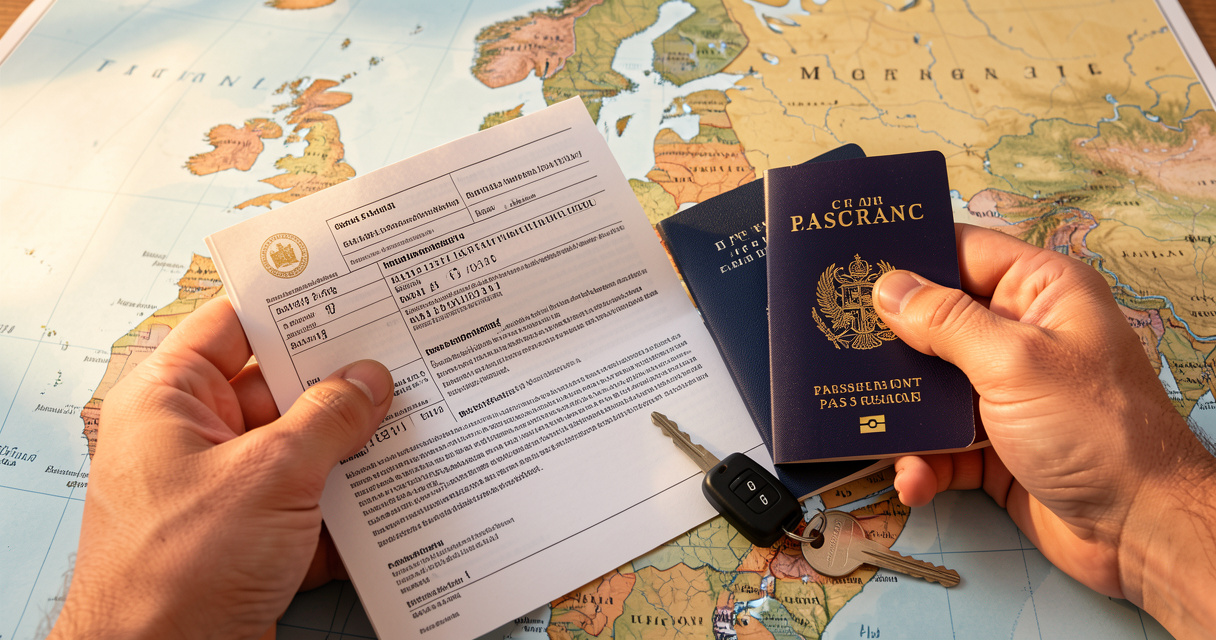
One of the biggest surprises for drivers is discovering their car insurance validity in the EU does not cover every European country. Most UK policies automatically cover all EU member states plus the European Economic Area (EEA): Norway, Iceland, Liechtenstein. However, some non-EU countries like Switzerland, Andorra, and Serbia have reciprocal agreements, but you may need a separate Green Card.
According to Insurance Europe’s 2019 report (based on 2016 data), average MTPL claim costs vary enormously by country – from €1,123 in Malta to €5,856 in France. That difference partly explains why insurers limit coverage in high-claim-cost areas.
EU member states and the European Economic Area
The standard list includes 27 EU countries plus Norway, Iceland, and Liechtenstein. For UK drivers, post-Brexit agreements still guarantee 30-day cover in these nations. But always check – some insurers have withdrawn from covering EU travel after Brexit.
Non-EU countries with reciprocal agreements
Switzerland, Andorra, Serbia, Bosnia and Herzegovina, and Monaco are typically covered, but often require a Green Card (physical proof of insurance) that you must request from your insurer before travel. I’ve seen this go wrong too many times: a driver assumes their cover is automatic, gets stopped at the Swiss border, and faces a fine.
| Country | EU Membership | Typical Minimum Cover Needed |
|---|---|---|
| France | EU | Third-party liability (Green Card not needed for EU) |
| Switzerland | Non-EU (Schengen) | Third-party + Green Card |
| Norway | EEA | Third-party liability (Green Card not needed for EEA) |
| Andorra | Non-EU | Green Card required |
| Turkey | Candidate | Separate insurance required (Green Card accepted) |
Now that you know your destinations, let’s check your policy.
How to Check Your Existing Policy for European Driving Cover
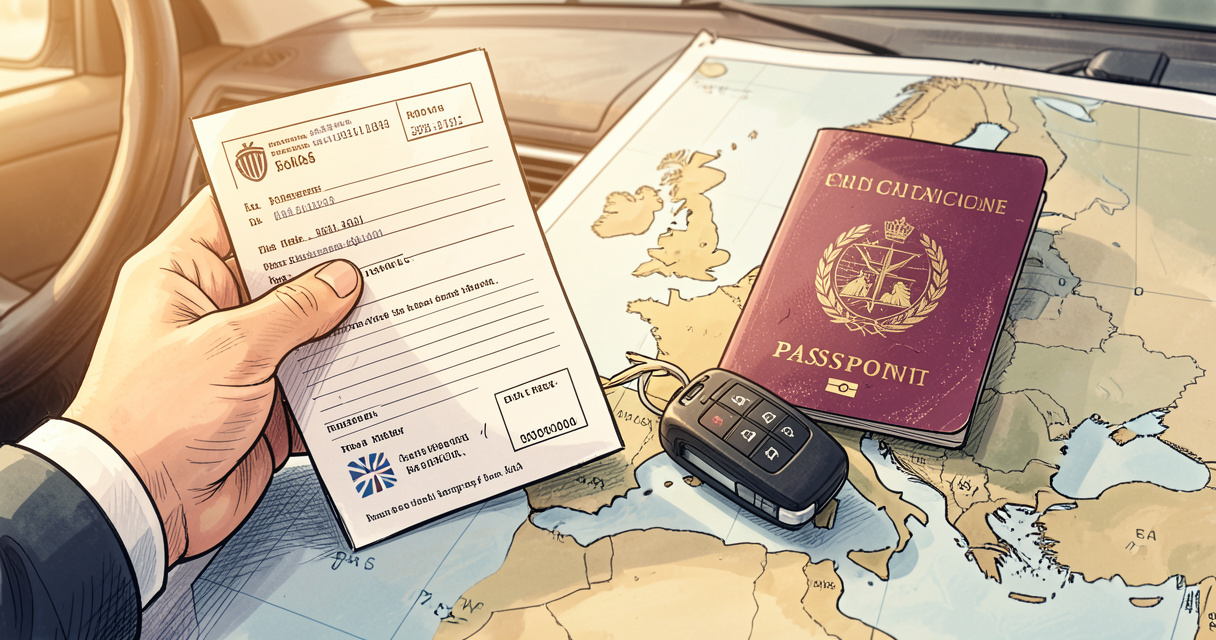
This is the step where most people slip. Here’s the featured snippet checklist that directly answers the question:
- Locate your insurance policy documents or open the provider’s app.
- Look for a section labelled “Driving abroad” or “European cover”.
- Check whether it states “third party only” or “same cover as UK”.
- Note the maximum number of days covered (usually 30).
- Call your insurer to confirm and ask if you can upgrade to comprehensive cover for your trip.
In my experience across Europe, Rhydian Jones from Confused.com advises: “Drivers often think their comprehensive policy travels with them. In reality, many insurers downgrade it to third party abroad.” To avoid this, read the “Geographical Limits” section of your policy.
Policy documents and key sections
Look for the words “territorial limits” or “driving abroad”. If it says “EU including UK” or “EEA”, you’re covered for 30 days at minimum. Some policies extend to 60 or 90 days – but never assume. If you have a pay-as-you-go policy (like black box), European cover is often excluded entirely.
What to ask your insurer
When you call, ask these three questions:
- “Is my cover comprehensive in Europe, or only third-party?”
- “Are there any countries excluded (e.g., Switzerland, Turkey)?”
- “Do I need a Green Card to prove my insurance?”
If your policy doesn’t meet your needs, the next section covers temporary insurance.
Temporary European Car Insurance: When and How to Buy It
Temporary car insurance for Europe is ideal for trips under a month. Comparison sites like GoCompare offer standalone policies that can upgrade you to comprehensive cover. The cost typically ranges from £20 to £50 per week, depending on the vehicle and driver history.
The reality is straightforward: if your current insurer charges a small fee for a comprehensive upgrade (often £10–£30 for the whole trip), that’s usually simpler than buying a new policy. But if they can’t or won’t upgrade, a temporary policy is your next best option.
Short-term policies vs annual add-ons
Annual multi-trip add-ons exist but are rare. Most insurers limit European cover to 30 days per trip, with a maximum of 90 days per year. For a two-week holiday, temporary insurance is cost-effective. For longer stays, look into local policies (see the expat section).
How to compare temporary quotes
Use specialist comparison tools that filter for European cover. Always check the excess amount – some temporary policies have a high voluntary excess (up to £500) that can catch you out. If I were filing this claim myself, I’d pay a bit more for a policy with a £0 excess.
Tip: Before buying temporary cover, ask your insurer for a comprehensive upgrade quote. It might be cheaper and easier to manage.
Next: what about rental cars? The insurance options there are completely different.
Rental Car Insurance in Europe: CDW, Theft Protection and Credit Card Tips
Rental car insurance in Europe can be a minefield. The three main options from rental companies are Basic, Inclusive, and No Deductible rates – each with different levels of cover. Here’s a comparison:
| Option | What’s Covered | Typical Deductible | Price Indicator |
|---|---|---|---|
| Basic (CDW) | Collision damage waiver (waives cost of damage up to the deductible amount) | €500 – €2,000 | Lowest (included in base rate often) |
| Inclusive (Super CDW) | CDW + theft protection, often reduced deductible | €0 – €500 | Medium |
| No Deductible (Zero Excess) | Full waiver of any liability for damage or theft | €0 | Highest |
Credit card coverage (e.g., from American Express or Visa) often sounds perfect but has limitations. According to NerdWallet, most cards cap coverage at $50,000 and exclude certain countries: Ireland, Israel, Italy, and some Eastern European nations. In Italy, rental companies often demand a €2,000 deposit – you pay that upfront and file a claim later. I’ve seen this go wrong: the credit card company denies the claim because the damage was “pre-existing” or the rental contract didn’t meet their terms.
Let me be direct: credit card insurance is a backup, not a primary solution. Always buy the rental company’s Inclusive or No Deductible package if you want peace of mind. The impact on your personal insurance premium if you do need to claim through your card? Your future premiums may increase because the claim goes on your record.
Here’s an anecdote from a colleague: “We once rented in Italy and the rental company demanded a €2,000 deposit – luckily our credit card covered the CDW, but we had to pay upfront and claim later. The whole process took four months.”
Budgeting for your trip? Let’s talk about real costs.
What Does European Car Insurance Cost? Real Data from Europe’s Markets
According to Insurance Europe’s 2019 report (data from 2016), average compulsory third-party liability premiums in Europe ranged from €34 in Latvia to €348 in Italy. Those numbers are now likely 10–15% higher due to inflation. Claims costs vary even more – from €1,123 in Malta to €5,856 in France.
What drives these differences? The cost of medical care, legal fees, and repair labor in each country. In France, bodily injury claims are particularly expensive because courts award high compensation. In Malta, lower wages and cheaper repairs keep costs down.
Premium ranges by country (2019 base)
For a rough 2026 estimate, add 10–15% to the 2016 figures. So Italy might now be around €400/year, Latvia around €40. But these are averages – your actual premium depends on your age, driving history, car model, and location. On Reddit, a driver quoted £600 for a Cayman in a city vs £300 for a 330i – location and theft risk matter more than the car itself.
Factors that affect your premium
- Your driving record – claims history follows you across Europe (under the Bonus-Malus system).
- Vehicle value and theft risk – luxury cars in high-crime areas cost more.
- Annual mileage – high mileage increases risk.
But what if you’re not a UK resident? Let’s look at expat and non-resident options.
Insurance for Expatriates and Non-Residents Driving in Europe
Car insurance for expats in Europe is a blind spot in most online guides. If you’re a US or Canadian citizen moving to Europe, your GEICO or USAA policy will not cover you beyond a few weeks. After 30 days, you must either buy a local policy or import your car and register it in your new country of residence.
European Commission guidelines state that non-residents can drive for up to six months on their home insurance and license, but many insurers refuse to issue long-term cover to non-residents without a local address. The reality is straightforward: if you’re staying longer than a month, you need a local policy. For US tourists renting a car, the rental company’s insurance is your safest bet.
Short-term visitors vs long-term expats
Short-term visitors (up to 30 days) can rely on their existing policy with a European extension. Long-term expats must register their vehicle in the country of residence and buy a local insurance policy. Some countries, like Germany, require proof of registration and insurance before you can drive.
Using overseas insurance specialists
Specialist brokers like Admiral (UK) or AXA (France) offer policies for non-residents, but expect higher premiums – up to 50% more – because you lack a local credit history. Always compare at least three quotes.
Warning: Driving without valid insurance in the EU can lead to fines up to €5,000 and vehicle seizure. It’s not worth the risk.
Finally, let’s wrap up with the practical steps you need before departure.
Essential Steps Before Your Trip: IDP, Green Card, and Emergency Contacts
Before you drive off, you need three things: an International Driving Permit (IDP) if required, a Green Card for certain countries, and emergency contact numbers. Let’s break it down.
When to get an IDP (and where not needed)
Most EU countries accept a valid UK or US license for short stays. However, Austria, Spain, and some Eastern European nations require an IDP for rental cars. Check the European Commission’s driving licence recognition list. You can get an IDP from the Post Office (UK) or AAA (US) – it’s cheap and easy.
How to request a Green Card from your insurer
A Green Card is a physical certificate proving you have insurance valid in the country you’re visiting. Since the EU eliminated paper checks at internal borders, you only need it for non-EU countries like Switzerland, Andorra, and Turkey. Request it at least two weeks before travel – some insurers charge a fee (£10–£20).
Here’s a pre-departure checklist:
- Documents to carry: Insurance certificate, Green Card (if needed), IDP (if needed), passport, rental agreement.
- Contacts to save: Your insurer’s European claims hotline (most have a 24/7 number), local emergency services (112 in EU).
- Apps to download: European accident form (e.g., the official EU Accident Statement app).
To put it plainly: preparation takes 30 minutes and can save you thousands.
Now let’s answer the most common questions drivers ask.
Questions fréquentes
What is car insurance like in Europe compared to the US?
European insurance is generally cheaper than in the US (e.g., Italy average €348 per year vs US $1,500+). However, coverage is often third-party only unless upgraded. Comprehensive cover can be added for a fee.
Do I need an International Driving Permit (IDP) for Europe?
Most EU countries accept a valid US/UK license, but some (e.g., Austria, Spain) require an IDP when driving rental cars. Check the specific country’s requirements before traveling.
Is my UK car insurance valid in Europe after Brexit?
Yes, for trips of up to 30 days. Most UK policies still include third-party cover for EU countries. However, you may need a Green Card as proof of insurance when crossing borders.
How much does European car insurance cost?
According to Insurance Europe 2019 data, average annual premiums for compulsory third-party cover range from €34 in Latvia to €348 in Italy. Claims costs vary even more – from €1,123 in Malta to €5,856 in France.
Can I buy temporary car insurance just for a trip to Europe?
Yes, many comparison sites offer temporary cover for trips under 30 days. It can be a good option if your existing policy only provides third-party cover and you want comprehensive protection.
What does European car insurance cover?
At a minimum, it covers third-party liability (damage to others). If you have comprehensive cover in the UK, it may only be downgraded to third-party abroad unless you pay an upgrade.
How long does European car insurance cover me for?
Standard UK policies typically include 30 days of third-party cover within the EU. For longer stays, you must either arrange an extension or purchase a local policy in the country you’re staying.
Conclusion: Drive with Confidence – Verify Your Cover Today
Let’s recap the key points: your standard policy likely covers Europe for only 30 days and at minimum third-party level. Always check your policy details and contact your insurer before departure. Consider temporary insurance or upgrades for comprehensive coverage on rental cars. Carry an IDP and Green Card if required – they are simple to obtain.
The reality is straightforward: before you pack your bags, take five minutes to verify your insurance – it could save you thousands and a ruined holiday. Your European car insurance protection is your first line of defense. Make sure it’s as strong as your excitement for the road ahead.

Twelve years inside the claims industry taught me one thing: most people leave money on the table simply because they don’t know the rules. EuroClaim exists to change that — practical guides, no jargon, no insurance PR.