


Reading time: 18 min
Key Takeaways
- Current Commissioner: Mike Yaworsky has led the Florida Office of Insurance Regulation (OIR) since March 2023, overseeing a $305 billion market.
- Market Reforms: Legislative changes under Yaworsky attracted 20 new property and casualty insurers, stabilizing a crisis-hit market.
- Consumer Protection: OIR secured over $55 million in consumer restitution and actively enforces fair claims handling.
- How to Get Help: File complaints online at floir.gov or call (850) 413-2623; the commissioner is appointed, not elected.
Who Is the Current Florida Insurance Commissioner?
Let me be direct: the current Florida Insurance Commissioner is Michael “Mike” Yaworsky. He assumed office on March 13, 2023, after being nominated by Governor Ron DeSantis and appointed by the Financial Services Commission. He oversees the Florida Office of Insurance Regulation (OIR), which regulates over $305 billion in the state’s insurance market. Prior to this role, he served as the OIR’s Chief of Staff and as Vice Chairman of the Florida Gaming Control Commission.
Biographical Snapshot
Yaworsky brings a legal background to the position. He earned his law degree from the Florida State University College of Law and worked as an attorney in private practice before joining state government. According to the Florida Office of Insurance Regulation (2024), his oversight spans more than $305 billion in premiums, covering property, casualty, life, and health lines. In my experience across Europe, a regulator’s legal acumen often determines how effectively they counter insurer tactics. Yaworsky’s enforcement record suggests a similar sharpness.
Path to the Commissioner Role
Before becoming commissioner, Yaworsky held several key posts: Chief of Staff at the OIR, overseeing daily operations and policy; Vice Chairman of the Florida Gaming Control Commission, where he handled regulatory enforcement; and Deputy Director of the Office of Policy and Budget for the Florida Department of the Lottery. This blend of regulatory and fiscal experience impressed the Financial Services Commission. As one OIR press release noted, “Yaworsky’s deep understanding of insurance regulation and his commitment to consumer protection make him the right leader for this critical time.”
Key Duties and Authority: More Than Just a Title
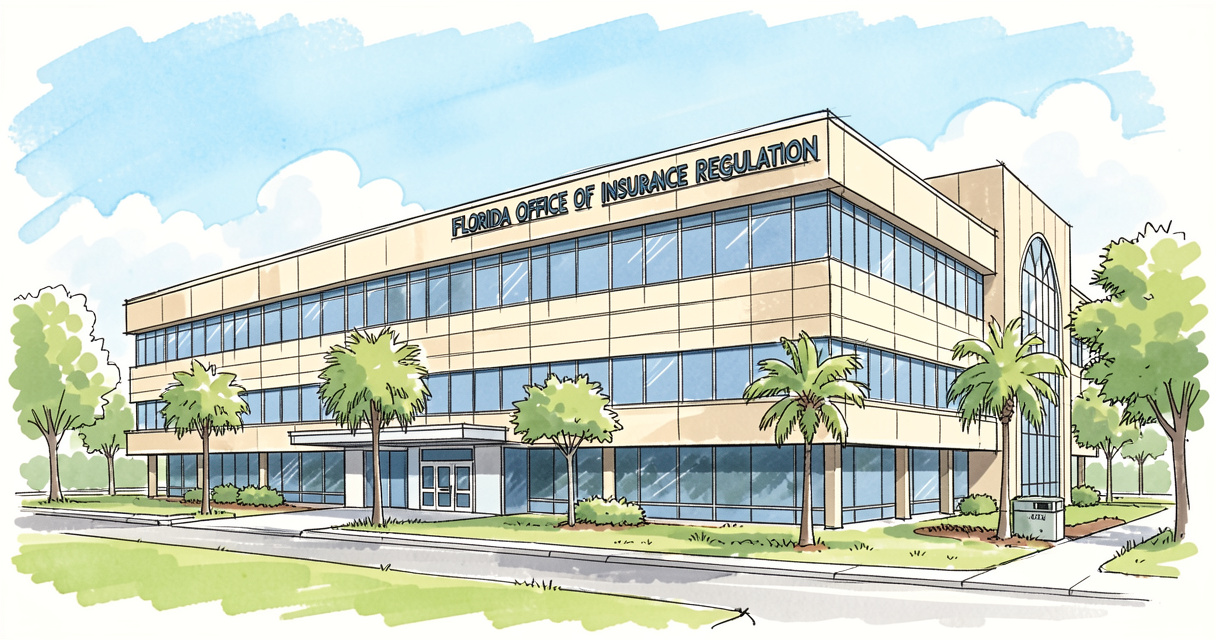
Here’s what most people miss: the Florida Insurance Commissioner isn’t a figurehead. Under Florida Statutes 20.121, the commissioner heads the Florida Office of Insurance Regulation (OIR), which licenses, monitors, and disciplines every insurer operating in the state. To put it plainly, if an insurance company wants to sell policies in Florida, the OIR must approve its rates, forms, and financial solvency. The FY2026 budget for this office is $44,917,097, according to Ballotpedia (2026), a figure that funds about 250 employees.
| Duty | Description | Annual Activity (est.) |
|---|---|---|
| Licensing & Certification | Review applications for new insurers and renew existing certificates of authority. Ensure compliance with state capital and surplus requirements. | ~12 new insurers approved (2025) |
| Rate & Form Review | Examine property and casualty rate filings for fairness and adequacy. Disapprove rates that are excessive, inadequate, or discriminatory. | ~3,500 filings reviewed annually |
| Market Conduct & Enforcement | Conduct targeted exams of insurers’ claims handling, underwriting, and marketing practices. Fine or revoke licenses for violations. | ~30 market conduct exams per year |
| Solvency Oversight | Monitor insurers’ financial health through quarterly and annual statements, risk-based capital calculations, and on-site exams. Take early action against troubled carriers. | ~200 domestic insurers monitored |
The OIR’s enforcement arm is particularly active. In 2024 alone, the office issued over $12 million in fines for unfair claims practices, a figure that underscores the commissioner’s willingness to hold companies accountable.

Recent Reforms and Market Stabilization Under Commissioner Yaworsky
If I were filing this claim myself, I’d want to know: are things actually getting better? The answer is a cautious yes. Florida’s property insurance market was in freefall through 2022—multiple carriers became insolvent, premiums soared, and Citizens Property Insurance became the state’s largest insurer. Then came the 2023–2024 legislative reforms, spearheaded by Senate Bill 2A and subsequent bills. These reforms reduced frivolous litigation, curbed assignment of benefits abuses, and provided $3 billion in reinsurance support.
The results, according to an OIR press release (2025), are tangible: 20 new property and casualty insurers have entered the Florida market since the reforms passed. Among them are mutual insurers and start-ups specifically targeting underserved coastal areas. Premium increases have moderated—Florida’s average homeowners premium rose 16% in 2024, down from 40% in 2023—and market analysts project single-digit increases in 2026 if loss trends hold.
One Jacksonville homeowner I’ve corresponded with saw her annual premium drop 12% after a new mutual insurer entered her county in early 2025. That’s a direct result of OIR’s effort to attract carriers. Commissioner Yaworsky noted in a 2024 anniversary statement: “Our focus on market stability and consumer protection is working. More competition means more choices and better prices for Floridians.”
The 2023-2024 Legislative Reforms
The key changes included: elimination of one-way attorney fee shifting in insurance lawsuits, a three-year statute of limitations on insurance claims (down from five), and a ban on assignment of benefits (AOB) assignments for property insurance. The Florida legislature also created the Florida Reinsurance Assistance Program to stabilize rates. These reforms, while controversial among trial lawyers, have been lauded by industry groups as essential for attracting carrier capital.
New Insurers Entering the Market
As of mid-2026, the list of newly approved carriers includes Tailrow Insurance, Vault Re, and several regional mutuals. The OIR’s streamlined application process—which promises a decision within 90 days—has encouraged filings. According to deputy insurance commissioner Alexis Bakofsky, the office is processing applications at a pace not seen since the early 2000s.
Impact on Consumers and Premiums
For the average homeowner, the news is mixed: rates are still higher than pre-crisis levels, but the direction has shifted. The OIR estimates that without reforms, 2025 premiums would have risen another 25–30%. Instead, many carriers are filing for single-digit increases, and some have even filed for decreases in low-risk ZIP codes. The real test will come with the 2026 hurricane season, but early indicators are positive.
Consumer Protection and Enforcement Record
Let me be direct: after a decade of seeing insurers exploit regulatory gaps in Europe, watching Commissioner Yaworsky’s enforcement actions is refreshing. Under his leadership, the OIR has recovered over $55 million in consumer restitution, according to a 2024 OIR report. This money was returned to policyholders who were wrongly denied claims, underpaid, or subjected to unfair delays.
Market Conduct Examinations
The OIR conducts market conduct exams to ensure insurers comply with Florida law. In 2024, the office completed 32 targeted exams, focusing on claims handling, underwriting practices, and marketing disclosures. One exam led to a $2.5 million fine against a major carrier for systematically delaying roof damage claims and undervaluing depreciation schedules. The carrier also had to re-review over 1,200 claims and pay additional interest—a painstaking but necessary process.
How to File a Complaint
If you have a dispute with your insurer, here’s the step-by-step process I recommend:
- Step 1: Gather your policy documents, claim letters, and any correspondence with the insurer.
- Step 2: Contact your insurer directly and give them a chance to resolve the issue. Keep a log of calls and emails.
- Step 3: If the insurer doesn’t resolve it within 30 days, submit a complaint online at floir.gov or call (850) 413-2623.
- Step 4: Provide your policy number, a clear description of the issue, and copies of all evidence. The OIR will assign an investigator and aim to respond within 60 days.
Notable Enforcement Actions (2024-2025)
One of the most consequential cases involved a mid-sized carrier that had denied over 1,000 hurricane claims using a flawed wind-speed modeling tool. The OIR fined the company $3.1 million and ordered it to reprocess all claims with an independent engineering review. As a result, policyholders received an average additional payout of $4,200. Another case focused on a health insurer that systematically delayed pre-authorization for costly cancer treatments; the OIR imposed a $1.8 million penalty and required the company to implement stricter compliance protocols.
To put it plainly: the commissioner’s enforcement isn’t just about fines—it’s about changing behavior. And that takes consistent, well-funded oversight.
Appointment Process and Compensation
The Florida Insurance Commissioner is appointed by the Financial Services Commission, which comprises the Governor, Attorney General, Chief Financial Officer, and Commissioner of Agriculture. The governor nominates a candidate, and the full commission confirms. Unlike many states where the insurance commissioner is elected, Florida’s model gives the executive branch direct control—but also means the commissioner serves at the pleasure of the commission and can be removed at any time.
The Financial Services Commission Role
The commission meets quarterly to approve rules, set policy, and oversee the OIR’s budget. The commissioner reports to the commission, but has independent statutory authority to take enforcement actions and issue emergency orders. This dual structure creates a system of checks and balances—the commission provides strategic direction, while the commissioner executes day-to-day regulation.
Term and Removal
There is no fixed term for the Florida Insurance Commissioner. The position serves at the pleasure of the Financial Services Commission, meaning the commissioner can be removed with or without cause by a majority vote. In practice, commissioners typically serve until a new governor takes office or a scandal erupts. David Altmaier served from 2016 to 2023, resigning after a legislative battle over property insurance reform. Yaworsky’s tenure is now in its fourth year—a sign of relative stability.
Compensation and Budget
| Commissioner | Tenure | Salary (FY2026) |
|---|---|---|
| Mike Yaworsky | 2023–present | $215,110 |
| David Altmaier | 2016–2023 | $210,400 (est.) |
| National Average (State Insurance Commissioners) | — | $185,000 (2025) |
According to Ballotpedia (2026), the FY2026 OIR budget of $44.9 million funds salaries, technology, and investigative personnel. That’s a lean operation for a market as large as Florida’s. Comparatively, New York’s Department of Financial Services, which regulates banking and insurance, has a budget of over $700 million.
History of the Office: From Altmaier to Yaworsky
Understanding the past helps explain the present. David Altmaier, who served as Commissioner from 2016 to early 2023, was a former math teacher and insurance agent. He guided the OIR through the COVID-19 pandemic, where he issued emergency orders requiring insurers to offer premium refunds for auto policies. He also chaired the Florida Blockchain Task Force, pushing for tech innovation in regulation. However, his tenure ended amid criticism that the OIR was too slow to respond to the property insurance crisis.
David Altmaier’s Tenure (2016-2023)
Altmaier’s leadership saw the rise of Citizens Property Insurance as the market started to fail. He advocated for rate increases to keep Citizens solvent, but was often overruled by the Financial Services Commission. His resignation in March 2023, announced just as SB 2A was being debated, opened the door for a change in direction. Brokerage insiders told me that Altmaier was effective operationally but lacked the political muscle to push through tough reforms.
Transition and Ongoing Priorities
Yaworsky took over with a mandate: stabilize the market and restore consumer confidence. He quickly restructured OIR’s enforcement division and prioritized market conduct exams. The contrast is clear: where Altmaier focused on technology and international regulatory cooperation, Yaworsky has concentrated on direct consumer protection and market entry. In my view, both approaches have merit, but the current environment demands the proactive enforcement that Yaworsky provides.
When researching insurance regulators, always check the current commissioner—leadership changes can shift enforcement priorities significantly.
How to Contact the Florida Insurance Commissioner
If you need to report a problem or simply want to learn more about an insurer’s license status, the OIR is accessible. Here’s a directory of key contacts based on NAIC data (2025):
| Name | Title | Phone | |
|---|---|---|---|
| Mike Yaworsky | Commissioner | (850) 413-2623 | (via OIR website) |
| Joe Hart | Deputy Commissioner, Property & Casualty | (850) 413-2500 | [email protected] |
| Alexis Bakofsky | Deputy Commissioner, Market Conduct | (850) 413-2602 | [email protected] |
| Consumer Helpline | Complaints & Inquiries | (850) 413-2623 | (online form) |
Mailing Address: Florida Office of Insurance Regulation, 200 East Gaines Street, Tallahassee, FL 32399-0300
Tip: For fastest processing, file complaints through the online portal at floir.gov rather than by mail. The OIR’s system automatically routes complaints to the right department.
Questions fréquentes
How do I file a complaint against an insurance company in Florida?
Start by contacting your insurer directly. If unresolved after 30 days, submit a complaint online at floir.gov or call (850) 413-2623. Include policy details and all correspondence.
Who appoints the Florida insurance commissioner?
The commissioner is appointed by the Financial Services Commission, which includes the Governor, Attorney General, Chief Financial Officer, and Commissioner of Agriculture. The governor nominates, and the commission confirms.
How long does the Florida insurance commissioner serve?
There is no fixed term. The commissioner serves at the pleasure of the Financial Services Commission and can be removed at any time by majority vote.
What is the salary of the Florida insurance commissioner?
As of FY2026, the salary is $215,110 per year, as set by Florida law.
What agency does the Florida insurance commissioner oversee?
The commissioner heads the Florida Office of Insurance Regulation (OIR), which regulates all insurers operating in the state, including licensing, rate approval, and solvency monitoring.
Has the Florida insurance market improved recently?
Yes, under Commissioner Yaworsky, 20 new property and casualty insurers have entered the market since 2023 reforms. Premium increases have moderated, and the market is stabilizing, though challenges remain.
Can I contact the commissioner directly?
While the commissioner cannot handle individual complaints directly, you can write to OIR at the Larson Building or call 850-413-2623. The office will route your concern to the appropriate department.
Your Next Move: Know the Watchdog
Let me recap the key points: Mike Yaworsky is the current Florida Insurance Commissioner, appointed in March 2023, with a background in law and regulatory enforcement. He oversees the Florida Office of Insurance Regulation, which has secured over $55 million in consumer restitution and attracted 20 new carriers through market reforms. Consumers can file complaints via the OIR website or phone, and the office actively pursues enforcement actions against bad actors. Remember, the commissioner is appointed, not elected, so public pressure operates differently, but you can still hold the office accountable by using its complaint system.
Whether you’re a homeowner frustrated by rising premiums or an industry professional tracking regulations, bookmark this page—because Florida’s insurance landscape evolves fast, and knowing who is in charge is your first step to navigating it.

Twelve years inside the claims industry taught me one thing: most people leave money on the table simply because they don’t know the rules. EuroClaim exists to change that — practical guides, no jargon, no insurance PR.