

Reading time: 15 min
Key Takeaways
- Damage waiver vs insurance – A waiver is a contractual liability limit, not regulated insurance. It covers physical damage to the rental car but not third-party liability, personal injury, or theft of belongings.
- Cost and deposit holds – Collision damage waiver (CDW) typically runs $30–40/day, and rental companies may still place a deposit hold ($200–500) even when you buy the waiver.
- Alternatives exist, but with exclusions – Credit card coverage, personal auto insurance, and third-party excess policies can replace the waiver, but each has fine-print gaps (e.g., windshield damage, loss of use, administrative fees).
- Decision framework – Buy the waiver if you lack collision coverage, have a high deductible, or rent abroad where your insurer does not apply. Decline it only after verifying your existing coverage and the waiver’s exclusions.
What Is a Car Hire Damage Waiver?
A single scratch on a rental car can cost you over $1,000 in repair fees, administrative charges, and loss-of-use penalties — even before you factor in the deductible. That is the reality travelers face when they decline the car hire damage waiver offered at the counter. Yet many renters are unsure whether to pay the daily fee or rely on their existing insurance or credit card. This confusion leads to either overspending on redundant coverage or taking on massive financial risk.
A collision damage waiver (CDW) — also called a loss damage waiver (LDW) — is a contractual agreement between you and the rental company. In exchange for a daily fee, the company agrees to limit your financial liability for damage to or theft of the rental vehicle. Let me be direct: a waiver is not insurance. It is a promise by the rental company not to pursue you for the full cost of repairs. If you return the car with a dented door and no waiver, the company will charge you the repair bill, plus administrative fees and lost rental income. With the waiver, you walk away — or at most, you pay a reduced deductible.
Damage Waiver vs Insurance: The Critical Difference
I’ve seen this go wrong too many times. Travelers assume the waiver is the same as rental car insurance, but legally they are completely different. Insurance is a regulated product that transfers risk from you to an insurer, with claims handled by a licensed adjuster. A waiver is a contractual clause in the rental agreement that simply says the rental company will not hold you responsible for certain damage. It is not subject to the same consumer protections as insurance. In my experience across Europe, this distinction matters when the company tries to charge you for “loss of use” or administrative fees — the waiver often caps or eliminates those, while insurance may not cover them.
| Aspect | Damage Waiver | Insurance |
|---|---|---|
| Legal nature | Contractual waiver of liability | Regulated risk transfer |
| Coverage scope | Damage/theft of rental car only | Varies (collision, liability, personal) |
| Claims process | No adjuster; rental company decides | Insurance adjuster determines payout |
| Regulation | Minimal (state-level disclosures) | Heavily regulated by insurance authorities |
| Cost structure | Flat daily fee ($20–40) | Premium (often bundled or per-trip) |
Common Names for Waivers (CDW, LDW, PDW)
Rental companies use different acronyms, but they all function similarly. Collision damage waiver (CDW) is the most common, covering collision damage. Loss damage waiver (LDW) is broader, often including theft and some administrative fees. Some add Personal damage waiver (PDW) — though that term is less standard. The key is to read the line item on your rental agreement. If it says “LDW” or “CDW” and the daily fee is $25–40, you are buying a liability limit, not an insurance policy.
How Much Does a Damage Waiver Cost?
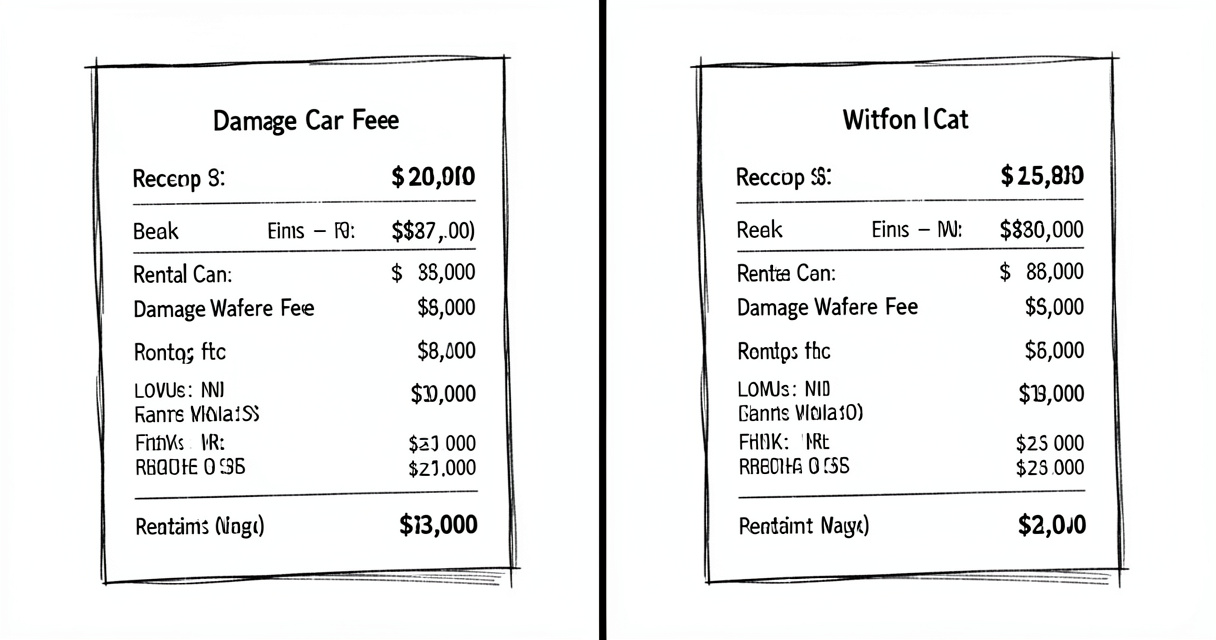
Here’s what most people miss: the damage waiver cost per day is not the only financial hit. According to Investopedia (2024), collision damage waivers cost on average $30 to $40 per day. That adds up quickly — $210–280 for a week-long rental. On top of that, many companies still place a deposit hold on your credit card, even when you purchase the waiver. Kayak reports that a deposit hold of $200–500 is typical, sometimes frozen for days after return. To put it plainly: the waiver reduces your liability risk, but it does not eliminate the deposit burden.
What Affects the Cost?
The price of a waiver varies by vehicle type, rental location, and company. Luxury cars, SUVs, and exotic models command higher daily fees. Airport locations often charge more than neighborhood branches. Your own driving record rarely influences the price — the waiver is a flat product. One way to lower cost: book the waiver in advance through the rental company’s website, as counter add-ons are sometimes pricier.
Hidden Fees and Deposit Holds
Even if you buy the waiver, the rental company may still block a deposit on your card. This hold covers the deductible (usually $500–$1,500) and any incidental charges like fuel or tolls. If you decline the waiver, the deposit hold can be much higher — up to the full value of the car. In my experience across Europe, I have seen holds of €1,500–€3,000 for standard sedans. Always ask: “Do you still place a deposit hold with the waiver?” and “How long does it take to release?”
| Rental Company | Waiver Price/Day (est.) | Typical Deposit Hold |
|---|---|---|
| Enterprise | $30–40 | $300 |
| Hertz | $28–38 | $350 |
| Avis | $32–42 | $400 |
| Budget | $25–35 | $250 |
These are estimates — call your rental location to confirm actual figures. The pattern is clear: the waiver is a significant daily cost, and the deposit hold is an added constraint on your cash flow.
What Does a Damage Waiver Cover and Not Cover?
To answer the featured snippet directly: What does a damage waiver cover?
- Covers repair costs for damage to the rental car, theft, towing fees, and administrative charges.
- Does NOT cover third-party liability for injury or damage to others’ property.
- Does NOT cover personal injury or damage to your personal belongings.
- May exclude damage from off-road driving, speeding, driving under the influence, or damage to specific parts like tires and windshield.
Now let’s break this down in detail. The loss damage waiver typically includes towing fees and administrative charges, according to State Farm (2024). However, the fine print matters. The reality is straightforward: if you crack the windshield, scratch the roof, or blow a tire, the waiver may not help unless the damage is part of a larger collision.
Covered Damages
Under a typical CDW, the rental company waives your liability for the cost of repairing or replacing the vehicle, including theft. Some waivers also cover:
- Towing charges to the nearest authorized repair shop
- Administrative fees (often capped, e.g., $50–100)
- Loss of use (the rental income the company lost while the car is being repaired)
However, coverage for loss of use is not universal — check the rental agreement. If you rely on a third-party excess policy, loss of use is often excluded.
Exclusions and Fine Print
Progressive notes that the waiver does not cover liability-related expenses, damage from off-road or speeding, and may exclude windshield/tires. The Wisconsin Department of Agriculture, Trade and Consumer Protection (DATCP) adds that waivers often exclude damage resulting from driving while intoxicated, drag racing, or unauthorized drivers. Most waivers require the driver to be named on the rental agreement — adding an extra driver usually voids coverage.
One common question: Does a damage waiver cover windshield damage? The short answer: not always. Many waivers exclude glass damage unless it is part of a larger crash. If a rock chip occurs, the rental company may charge you $500–$1,000 for windshield replacement. Ask specifically: “Does your waiver cover single-glass damage?” before you sign.
Third-Party Liability: What the Waiver Does Not Cover
Third-party liability rental car coverage is separate. The damage waiver only protects you against damage to the rental car itself. If you hit another vehicle or injure someone, the waiver will not cover the other party’s costs. You need liability insurance, which in most cases is included in the rental base rate (minimum coverage required by law). However, many travelers mistakenly believe the waiver provides total protection. To put it plainly: if you cause a multi-car pileup, the waiver covers your rental — but you are on the hook for the other cars and injuries unless you have adequate liability coverage.
Transition: Now that you understand exactly what the waiver covers and excludes, let’s look at the alternatives that might save you money without leaving you exposed.
Alternatives to a Damage Waiver: Credit Cards, Personal Insurance, and Excess Policies
Many travelers already have coverage that can replace the rental company’s waiver. The key is knowing the details. Let me compare the most common options side by side.
| Option | Daily Cost | Coverage | Deductible | Pros / Cons |
|---|---|---|---|---|
| Rental Company Waiver | $20–40 | Damage/theft to rental car, some admin fees | $0 (if you buy full waiver) | Simple, no deductible, no claim to your insurer; but expensive and deposit hold may apply |
| Credit Card Insurance | $0–$25 (if premium card) | Reimburses you for damage/theft (secondary in US, primary abroad) | Typically $0–$500 | Free with many cards; but often excludes luxury cars, glass, loss of use, and you must decline the rental company’s waiver |
| Personal Auto Insurance (collision) | Part of premium | Damage to rental car (collision only) | Your regular deductible (often $500–$1,000) | No extra cost; but claim may raise your premiums, deductible applies, and not all policies cover rental abroad |
| Third-Party Excess Insurance | $3–10/day or annual | Refunds the excess (deductible) you pay to the rental company; does not cover loss of use or admin fees | Varies (often $0 excess if you claim) | Cheapest option; but you must pay the rental company first, then claim reimbursement; many exclude glass, tires, and administrative charges |
Credit Card Rental Insurance (How It Works & What to Watch For)
Credit card rental insurance is a popular alternative. Many Visa, Mastercard, and Amex cards offer secondary coverage that reimburses you for damage you pay for. The catch: you must decline the rental company’s waiver and use the card to pay for the rental. Also, credit card coverage often has exclusions — it may not cover certain car types (e.g., trucks, exotic cars), theft of personal items, or loss of use. According to American Express, their coverage is primary for cardholders outside the U.S., but inside the U.S. it is secondary to personal insurance.
Personal Auto Insurance Coverage for Rentals
Many personal auto insurance rental coverage policies extend collision and comprehensive coverage to rental cars. The Wisconsin DATCP (2024) notes that personal auto policies already cover rental cars, but the collision deductible still applies — typically $500–$1,000. If you are an occasional renter and have a low deductible, relying on your personal policy may be cost-effective. However, if you are renting abroad, your policy may not apply outside your home country. Call your insurer before traveling and ask: “Does my collision coverage extend to rental cars in [destination]?”
Third-Party Excess Insurance (Annual vs Per-Trip)
If you rent cars more than once a year, rental car excess insurance (often sold by specialist providers like Car Hire Excess) offers the best value. For a small annual fee (£60–£100) or per-trip fee, you get reimbursement for the excess you pay to the rental company. The catch: you must pay the rental company the full cost upfront, then file a claim with the excess insurer. Also, many policies exclude glass damage, tire damage, and administrative fees. In my experience across Europe, this is a solid option for frequent travelers who understand the reimbursement process.
Should You Buy the Damage Waiver? A Decision Framework
Should I buy damage waiver if I have comprehensive insurance? This is one of the most common questions I hear. The answer: it depends. Here is a decision framework based on your situation.
When to Buy the Waiver
Progressive suggests buying the waiver if you do not have collision coverage on your personal auto policy, have a high deductible (over $1,000), or are renting in a country where your insurer does not provide coverage. Also, if you are an occasional renter (once a year or less), the simplicity of the waiver may be worth the cost. In a stressful foreign rental situation, the last thing you want is to deal with an insurance claim and a language barrier — the waiver lets you hand the keys back and walk away.
When to Decline the Waiver
Decline the waiver if you have verified that your personal insurance or credit card provides primary coverage for the rental car, including the deductible. If you have a low deductible and your policy covers rental abroad, you may be fine. Kayak also notes that frequent renters (more than three times a year) should consider an annual excess policy instead of paying for a waiver each time.
Anecdote: Maria rented a car for a week, declined the waiver because she had a credit card that claimed rental coverage. A rock chipped the windshield. Her credit card excluded glass damage. She ended up paying $800 out-of-pocket — $600 for the windshield replacement and $200 in administrative fees. The waiver would have cost her $210 for the week and covered everything. I have seen this scenario play out too many times. The waiver is not always a rip-off; sometimes it is the simplest safety net.
A Simple Decision Checklist
- Do I have personal auto insurance with collision coverage? (Note: deductible applies, may not cover abroad)
- Does my credit card offer rental coverage? (Call the issuer to confirm exclusions like glass, loss of use, and vehicle type)
- Am I renting within my home country or abroad? (local insurer may not apply abroad)
- How much is the daily waiver vs the potential out-of-pocket cost? (a $300 windshield vs $30/day waiver)
- Am I comfortable dealing with a claim process on my own? (yes? then decline; no? buy the waiver)
If you answer “yes” to coverage from other sources and you are prepared to handle a claim, you can safely decline. Otherwise, the waiver is a reasonable expense.
How to File a Claim If You Have Damage and No Waiver
What happens if I decline the damage waiver and have an accident? You will be responsible for all repair costs, plus administrative fees and loss-of-use charges. You can claim on your personal insurance or credit card coverage, but you may need to pay upfront and a deductible. Here is the step-by-step process.
Immediate Steps After an Accident
- Ensure everyone’s safety and call the police if needed. Get a police report — you will need it for insurance.
- Gather witness information and take photos of the damage from all angles.
- Notify the rental company immediately. They will instruct you on repair procedures (some require you to use their authorized shop).
- Contact your personal insurance provider or credit card concierge to report the claim.
- Keep all receipts — towing, repair, hotel if car is undrivable, and any transportation costs.
Dealing with the Rental Company and Your Insurer
The rental company will charge your deposit or send you an invoice. You will need to pay that amount (or authorize the charge), then submit a claim to your insurer or credit card for reimbursement. Many renters forget that credit card coverage often requires you to pay first and then get reimbursed — it is not a direct payment. Also, be aware that your insurer may increase your premiums after a claim. In my experience across Europe, it is often cheaper to buy the waiver than to pay a deductible and risk a rate hike.
Common Misconceptions About Damage Waivers
There are many myths surrounding the car hire damage waiver. Let me debunk the most persistent ones.
| Myth | Fact |
|---|---|
| “The damage waiver covers everything.” | Only damage to the rental car — not third-party liability, personal injury, or theft of belongings. |
| “It’s just insurance.” | It is a contractual waiver, not a regulated insurance product. Consumer protections differ. |
| “My credit card always covers it.” | Many credit cards exclude glass, loss of use, luxury cars, and require you to decline the rental company’s waiver first. |
| “The waiver is a scam.” | Not a scam, but often overpriced. It provides convenience and clarity — you pay to avoid hassle. |
| “Declining the waiver saves money.” | It can — but only if you have solid alternative coverage. Without it, a single incident can cost you thousands. |
Another misconception: that you can buy a waiver after you drive off. Can I buy a damage waiver after I have already driven off? Generally, no. Waivers must be purchased at the time of rental. Once you decline, you are liable for any damage that occurs. Some companies allow you to return to the counter, but it is rare.
Questions fréquentes
Does a damage waiver cover windshield damage?
Not always. Many waivers exclude glass damage unless it is part of a larger repair. Check the fine print or ask the rental company.
Can I buy a damage waiver after I’ve already driven off?
Generally, no. Waivers must be purchased at the time of rental. Once you decline, you are liable for any damage that occurs.
Does credit card rental insurance cover loss damage waiver?
Credit cards offer secondary coverage that reimburses you for damage you pay for, but they do not replace the waiver. They usually require you to decline the rental company’s waiver first.
Is a damage waiver the same as insurance?
No. A waiver is a contractual agreement where the rental company agrees not to hold you liable. Insurance is a regulated product that transfers risk to an insurer.
What happens if I decline the damage waiver and have an accident?
You will be responsible for all repair costs, plus administrative fees and loss-of-use charges. You can claim on your personal insurance or credit card coverage, but you may need to pay upfront and a deductible.
How much is the deposit when declining the waiver?
Deposit amounts vary by company and vehicle category, typically ranging from $200 to $500. Some premium cars require a higher hold.
Does a damage waiver cover theft of personal belongings?
No. A damage waiver only covers physical damage to the rental car. Personal property is covered only if you buy separate personal effects coverage.
Conclusion and Next Steps
To recap the key points from this guide:
- A car hire damage waiver is not insurance — it is a liability waiver that covers physical damage to the rental car.
- It typically costs $20–40 per day and may involve a deposit hold even if purchased.
- Alternatives like credit card insurance, personal auto policies, or third-party excess insurance can provide coverage, but each has exclusions you must verify.
- Your choice should depend on your existing coverage, the rental location, and your willingness to assume risk.
Before your next rental, take five minutes to verify your credit card’s rental coverage and your insurance policy’s rental car provisions — it could save you hundreds. If you still have doubts, buying the waiver is the safest bet for peace of mind. The cost is small compared to the potential out-of-pocket expense of an uncovered incident.
In my 12 years handling claims across Europe, I have seen too many travelers regret skipping the waiver. Do not be one of them. Make an informed decision, and drive with confidence.

Twelve years inside the claims industry taught me one thing: most people leave money on the table simply because they don’t know the rules. EuroClaim exists to change that — practical guides, no jargon, no insurance PR.